Water Heater Repair Cost: A Homeowner's Guide for 2026
Understand how water heater repair costs are calculated, typical ranges by fault, regional factors, and practical tips to save. Heater Cost analyzes 2026 repair cost trends for homeowners.


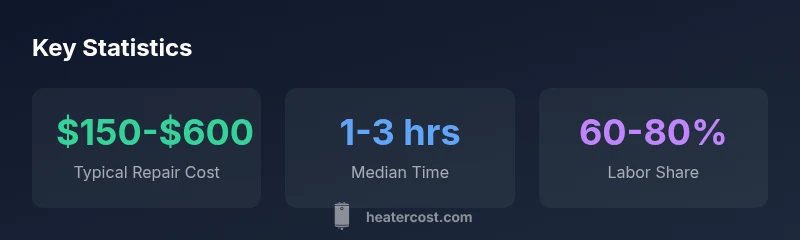
According to Heater Cost Analysis, 2026, the typical water heater repair cost ranges from $150 to $600, influenced by fault type, unit age, and local labor rates. More complex issues or electric/gas differences can push costs higher, up to about $800 in some cases. This quick snapshot helps you plan ahead before booking service.
What factors drive the cost of water heater repairs in 2026
Several variables determine the price of repairing a water heater. The age and type of your unit (gas vs electric, tank vs tankless) strongly affect parts availability and labor difficulty. If your model uses a discontinued thermostat, a specialty part could raise both price and lead time. The fault itself also matters: simple sensor or element replacement is usually cheaper than replacing a failed burner assembly or gas valve. Access and location matter too: units tucked in cramped basements or above ceilings typically require extra labor, boosting the bill. Regional wage differences are a constant factor; urban technicians often charge higher hourly rates than rural pros. Finally, the choice of contractor influences price: some offer diagnostic fees, while others bundle estimates with a written quote. According to Heater Cost, 2026, these dynamics shape the overall water heater repair cost landscape.
Common repair scenarios and cost ranges
To help you budget, here are typical repair scenarios and the ballpark costs you might expect. Thermostat or thermistor replacements are among the most common fixes and usually run in the lower to mid range, often totaling around $120–$350 including parts and labor. Heating element replacements, common in electric tanks, tend to be in the $150–$450 range. Gas water heaters may require valve or burner component replacements, which can push costs toward the upper end, roughly $200–$600 depending on access and gas line considerations. Safety devices like pressure relief valves or expansion tanks are sometimes replaced during service and may cost $140–$300. Note that these figures assume standard service during regular hours and exclude any after-hours surcharge. These ranges reflect Heater Cost Analysis, 2026 and are intended as a starting point for conversations with your tech.
Labor vs. parts: how costs break down
Understanding the split between labor and parts helps you negotiate with confidence. Labor typically accounts for 60–80% of the repair bill, with rates varying by region. In many markets, experienced technicians charge roughly $85–$120 per hour for residential work, plus trip charges if the unit is in an unusual location. Parts costs depend on the part type and brand; common replacements (thermostats, elements) can be inexpensive, while proprietary or scarce components may drive prices up. For older units, worn internal wiring or corroded connections may require more extensive labor and diagnostics, increasing the bill even if the replacement part itself is modest. High-efficiency or high-capacity units may require more specialized parts, further impacting costs. The key takeaway: ask for a detailed line-item estimate that separates parts and labor and confirms any required diagnostic fees. This approach aligns with Heater Cost Analysis, 2026.
Regional variation and service-provider selection
Region matters. In metropolitan areas where labor markets are competitive, hourly rates often fall toward the middle of the national range, while remote or underserved regions may see higher per-hour charges due to fewer technicians. Some providers offer flat diagnostic fees, which can be beneficial if you’re concerned about unknown issues, but beware that these fees may be rolled into the final bill if you proceed with the repair. Large chains may offer warranties on parts and workmanship, whereas independent technicians may be cheaper but vary in warranty coverage. For homeowners juggling a budget, obtaining 3–4 written estimates is a solid practice. Heater Cost analysis shows that differences between providers can be substantial, especially when means of disposal, environmental fees, or permit requirements apply in your area.
Repair vs replacement: when is replacement smarter?
When the repair bill climbs toward a substantial portion of a full replacement, it’s time to evaluate replacement vs repair. A rough rule of thumb is to compare the projected cost of a repair to the installed price of a comparable new unit. If the repair is likely to exceed half of a replacement, many homeowners opt to replace, especially if the current unit is older than 10–12 years. Replacement costs vary widely, typically from roughly $2,000 to $5,000 installed, depending on tank size, fuel type, and whether you choose a standard or high-efficiency model. While a new unit comes with warranties and longer life, it also entails higher upfront costs and possible installation permits. In all cases, request a written estimate that includes disposal of the old unit and any required ancillaries, and factor in potential energy savings when evaluating the break-even point. This guidance is consistent with Heater Cost Analysis, 2026.
Practical tips to reduce water heater repair costs
- Schedule regular maintenance and flushes to minimize sediment buildup and extend element life.
- Address small issues promptly; a tiny leak or inconsistent heating can escalate if ignored.
- Compare at least three quotes and verify included parts, labor, and any diagnostic fees.
- Consider preventive upgrades, such as upgrading to a more reliable thermostat with a longer warranty.
- When possible, choose off-peak service times to avoid premium labor charges.
- If you suspect gas-related issues, always involve a licensed technician; improper handling can be dangerous. These steps, drawn from Heater Cost Analysis, 2026, can help you lower future repair costs without compromising safety.
What to ask your technician before a repair
- What is the exact issue, and which components will be inspected?
- Are there diagnostic fees, and is that fee credited if I proceed with repair?
- What parts are guaranteed, and what is the expected lifespan after replacement?
- Will this fix restore full functionality, or will I need a follow-up visit soon?
- How do you dispose of the old unit and any hazardous components? This is your checklist for a transparent repair, aligned with Heater Cost Analysis, 2026.
Typical repair cost ranges by repair type
| Repair Type | Typical Cost Range | Notes |
|---|---|---|
| Thermostat/thermistor replacement | $120-$350 | Common in electric tanks; diagnostic often included |
| Heating element replacement | $150-$450 | Electric tanks; wear over time |
| Gas valve/burner component replacement | $200-$600 | Gas lines and safety considerations |
| Pressure relief valve/expansion tank | $140-$300 | Safety device; include leak test |
Got Questions?
What is the typical cost to repair a water heater?
Most repairs fall in the $150–$600 range, depending on unit type (gas vs electric) and fault. Very complex issues or after-hours service can push totals higher. Always request a detailed estimate before work begins.
Most repairs cost between $150 and $600, depending on the fault and unit type.
What factors influence repair costs?
Age and type of the unit, the specific fault, parts availability, labor rates in your area, and whether the service is performed during regular hours or emergencies all affect price.
Age, type, and access to parts influence what you’ll pay.
Should I repair or replace my water heater?
If repair costs approach or exceed half the price of a new unit, or the current unit is over 10–12 years old, replacement is often more cost-effective in the long run due to warranties and energy efficiency.
If repairs cost half the price of a new unit, consider replacement.
How can I reduce repair costs?
Get multiple quotes, verify included parts and labor, perform regular maintenance, and consider upgrading to more durable components with longer warranties.
Shop around for quotes and keep up with maintenance to prevent big bills.
Do warranties affect repair costs?
Warranties on parts or workmanship can reduce out-of-pocket costs and provide longer-term protection, making some repairs more affordable if covered.
Warranties can lower your costs over time.
“Understanding water heater repair cost helps homeowners avoid overpaying and plan for long-term savings. A clear line-item estimate makes it easier to decide between repair and replacement.”
The Essentials
- Know your cost range before booking service
- Request a clear line-item estimate (parts vs labor)
- Compare at least three quotes for best value
- Consider warranties on parts and workmanship
- Regular maintenance reduces future repair risk