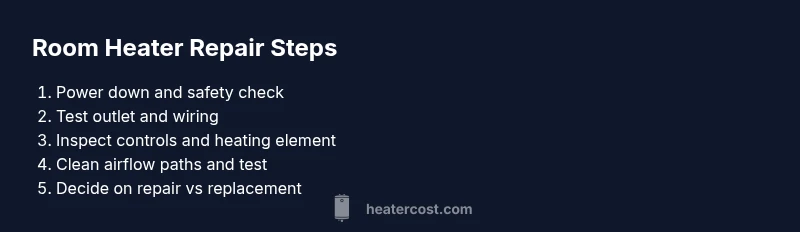
Room Heater Repair: A Practical Troubleshooting Guide
Learn practical, safety-first steps to diagnose and repair common room heater issues. From power checks to component replacements, this guide helps homeowners save time and reduce energy costs.


In this guide you’ll learn how to diagnose and safely fix common room heater problems, including power checks, thermostat tests, cleaning clogs, and when to replace parts or call a pro. The steps emphasize safety, foundational electrical checks, and identifying issues that you can address without specialized tools.
Safety First: Assessing Risks Before You Begin
When you start any room heater repair, your first goal is to minimize risk to yourself and others. Always unplug electric models at the wall outlet and switch off the circuit breaker. For gas-powered heaters, shut off the gas supply and ensure proper ventilation in the room. Keep a portable fire extinguisher nearby and wear safety glasses and gloves. Clear the area of flammable materials and never work on a live electrical component. By prioritizing safety, you protect yourself while you diagnose potential faults.
Understanding How Room Heaters Work: Electric vs Gas
Room heaters come in two broad categories: electric and gas-powered. Electric heaters rely on an electrical supply, heating element coils, a fan, and a thermostat to regulate heat. Gas heaters burn propane or natural gas, using an ignition system and venting exhaust outdoors. While the core concepts are similar—generate and distribute heat—gas models involve combustion safety, venting, and gas line integrity. Knowing the differences helps you tailor your troubleshooting approach and decide when to seek professional assistance.
Common Signs of Trouble You Might See
Look for no heat when the thermostat demands warmth, tripping breakers, or a noticeable burning or chemical smell. Unusual noises, rattling, or clanking can indicate loose parts or debris in the blower. Excessive fan run time or a heater that shuts off unexpectedly may point to thermal switches, dirty air pathways, or a failing control board. Dust buildup, blocked vents, and clogged filters reduce efficiency and can overheat components. Recognizing these symptoms helps you target the right area for inspection.
Diagnosing Power and Electrical Components
Begin with the simplest checks: verify the outlet works by plugging in a different device, and test the wall switch or circuit breaker. Inspect the power cord for cracks or scorch marks, and ensure the plug seats firmly. If your heater has a reset button or fuse, locate and test it according to the owner’s manual. For electrical tests, use a multimeter to confirm continuity and voltage only if you know how to interpret readings safely. Always disconnect power before touching internal parts.
Thermostats and Controls: Are They to Blame?
Thermostats control when heat turns on and off. A miscalibrated or dirty thermostat can cause delayed heating, weak output, or short cycling. Remove access panels per the manual and check for loose wires or corrosion. If the thermostat is damaged or shows erratic readings, replacement may restore proper operation. After any control work, reassemble securely and test the unit in a controlled setting to observe response.
Heating Element and Fire Safety: What to Inspect
In electric models, the heating element or coil can burn out or degrade with age. Look for discoloration, breaks, or visible damage. Do not attempt to bend or force damaged coils; replace the element if needed. For gas heaters, inspect the burner and glow plug for cleanliness and proper flame; a yellow or irregular flame can indicate incomplete combustion or clogged jets, which requires a professional service.
Cleaning, Filtration, and Airflow: Small Fixes, Big Impact
Dust, lint, and pet hair impinge airflow and trap heat, causing inefficiency and overheating. Unplug the unit and use a vacuum with a brush attachment to remove dust from vents and grilles. Clean any accessible filters or screens and ensure air paths are clear. Keep the surrounding area free of clutter to maintain proper airflow and safety. Regular cleaning reduces the likelihood of unexpected shutdowns and extends component life.
Gas vs Electric: Key Safety Considerations
Gas heaters require venting, gas supply checks, and proper combustion safety. Do not attempt gas line repairs unless you are a licensed professional. Electric heaters are generally safer for DIY fixes, but still carry shock risks; use insulated tools and never work on live circuits. Understanding these safety boundaries helps you decide when to DIY and when to call a pro.
When to Repair vs Replace: Guidance for Decision-Making
If the unit is older or if repair costs begin to approach or exceed the cost of a new, more efficient model, replacement may be the wiser choice. Consider energy efficiency, warranty coverage, and the reliability of parts. In some cases, a professional diagnosis can reveal hidden safety issues that justify replacement to protect your home.
Tools & Materials
- Multimeter(For testing electrical continuity and voltage only if you know how to interpret readings.)
- Screwdriver set (Phillips and flat-head)(Used to access internal panels and fasteners.)
- Voltage tester(Non-contact tester is fine for quick checks.)
- Needle-nose pliers(Useful for small connectors and wires.)
- Soft brush and vacuum(Removes dust from vents and internal components.)
- Rags or towels(Clean spills and hold parts without heating.)
- Insulated gloves(Protect hands during handling and tests.)
- Owner’s manual or model-specific guide(Check wiring diagrams and safety cautions.)
- Replacement parts (thermostat, fuses, heating element)(Only if you identify a failed component.)
Steps
Estimated time: 60-90 minutes
- 1
Power down and prepare safely
Unplug electric heaters and switch off the circuit breaker. For gas models, close the gas valve and ensure adequate ventilation. Clear the workspace and put on safety gear so you can inspect without risk.
Tip: Never touch internal parts while power is connected; use dry hands and insulated tools. - 2
Check power source and outlet
Test the outlet with a different device to confirm it’s delivering power. Inspect the cord for signs of wear or damage. If the plug or cord is damaged, replace the cord or unit rather than attempting a risky repair.
Tip: If the outlet trips the breaker, stop and assess the circuit load; do not bypass breakers. - 3
Inspect for obvious damage or obstructions
Look for frayed wires, scorch marks, or loose connectors. Ensure vents and grills are not blocked by furniture, dust, or debris. Remove buildup carefully with a soft brush and vacuum.
Tip: Blocked vents can cause overheating; relocate the heater to improve airflow. - 4
Test thermostat and controls
Open the access panel following the manual and verify control wiring is secure. If readings are inconsistent or the thermostat does not respond, replace the thermostat if you have a spare. Reassemble and test function before leaving.
Tip: Avoid touching sensor elements directly; handle with care. - 5
Inspect heating element and coils
For electric models, check coils for discoloration or breaks. Do not attempt to bend or force damaged coils; replace if signs of wear are present. For gas models, inspect burner and ignition for proper flame and cleanliness.
Tip: Contaminants can change flame characteristics; ensure clean gas jets if you’re trained to do so. - 6
Clean and maintain airflow paths
Remove dust from heat exchanger, blower, and fan blades. Reassemble and ensure the fan spins freely without rubbing. Replace or clean filters if present.
Tip: Regular maintenance reduces overheating risk and extends life. - 7
Test run and safety shutoffs
Plug in and power on the unit in a controlled environment. Listen for normal fan operation and verify heat output. Confirm safety shutoffs engage if the unit overheats.
Tip: Never leave a running heater unattended for long periods until confident the issue is resolved. - 8
Gas-safety check (for gas models)
If you suspect gas-related issues, do not attempt repairs beyond basic inspection. Contact a licensed technician for gas line work or ignition problems. Ensure outdoor venting and carbon monoxide detectors are functioning.
Tip: Gas work carries serious safety risks; professional intervention is essential.
Got Questions?
Is it safe to attempt room heater repair myself?
Many basic checks are safe if you follow safety steps and power down before touching any components. Do not work on gas lines or if you smell gas. If in doubt, contact a professional.
Yes, basic checks can be safe when you power off and follow the guide, but avoid gas lines.
What are the most common symptoms of a failing room heater?
No heat, tripping breakers, unusual smells, or strange noises are typical signs of electrical faults, airflow issues, or degraded components.
No heat or unusual noises are common signals that something is wrong.
Do I need specialized tools to troubleshoot?
A basic toolset and a multimeter cover many checks. More complex repairs may require professional service.
Start with basic tools and a multimeter; call a pro for complex work.
When should I replace instead of repair my room heater?
If the heater is old, inefficient, or safety-critical components fail, replacement can be more cost-effective and reliable over the long term.
If repair costs are high or safety is a concern, replacement is often wiser.
Are there energy-saving steps I can take after repair?
Keep filters clean, seal drafts, and perform regular maintenance to maintain efficiency and reduce energy use.
Keep the unit clean and well-maintained to save energy.
Who should I call for a gas heater repair?
A licensed HVAC technician should handle gas heater repairs due to combustion and gas safety risks.
Call a licensed HVAC pro for gas heater issues.
Watch Video
The Essentials
- Power down before any inspection or handling.
- Identify symptom patterns to target the right component.
- Clean airflow paths to restore efficiency and safety.
- Know when to DIY and when to call a licensed tech.
- Document findings for future maintenance and warranty needs.