Air and Heater Repair: A Comprehensive DIY Guide for Homes
Learn how to diagnose, repair, and maintain your home's air and heating system with practical, safety-minded steps, cost guidance, and maintenance tips. This guide covers common problems, DIY-safe practices, and when to call a professional.


You will learn to diagnose common air and heater issues, perform safe basic maintenance, and know when to call a pro. Gather basic tools, shut off power, and follow a step-by-step workflow to improve efficiency and reliability.
Why air and heater repair matters
Air and heater repair is essential for comfort, safety, and energy efficiency in homes. The process helps reduce energy waste, prevents sudden outages, and extends the life of your heating and cooling system. According to Heater Cost, staying on top of routine checks can lower overall operating costs and improve indoor air quality over time. This guide centers on practical, do-it-yourself-friendly strategies while recognizing when professional help is the smarter choice. Homeowners, renters, and property managers should view air and heater repair as an ongoing maintenance practice, not a one-off fix. By understanding symptoms, basic diagnostics, and safe troubleshooting steps, you can keep your system running smoothly through changing seasons and energy prices.
Common problems and diagnostics
Several issues can signal that air and heater repair is needed. Thermostats that read incorrectly or fail to maintain setpoints can cause uneven heating. Dirty or clogged air filters restrict airflow and reduce efficiency. Unusual noises—rattling, banging, or squealing—may point to loose components or failing bearings. Leaks around ducts or connections can waste heat and raise bills. A sudden drop in heating performance with no obvious cause might indicate a failing transformer, fan motor, or control module. In every case, start with simple diagnostics: check the thermostat settings, replace the filter, inspect exposed wiring for damage, and ensure return and supply ducts are unobstructed.
Safety-first: DIY vs professional help
Safety must come first with air and heater repair. Always shut off power at the circuit breaker before inspecting electrical components, and if your system includes gas, know the location of the gas shutoff valve and leave immediately if you smell gas. Carbon monoxide is a silent danger; install and test CO detectors near sleeping areas and on each floor. If you’re uncertain about gas lines, venting, or combustion safety, hire a licensed HVAC technician. DIY tasks should be limited to non-pressurized, low-risk maintenance like filter replacement and thermostat checks. When in doubt, err on the side of safety and call a pro.
Proactive maintenance to extend life
Regular, proactive maintenance helps air and heater systems run more efficiently and reduces the likelihood of sudden failures. Replace air filters every 1–3 months, depending on usage and allergies. Keep outdoor condensers clear of debris and check that outdoor units have at least 2 feet of clearance. Schedule an annual professional inspection to inspect the heat exchanger, burners, and electrical connections. Consider upgrading to a programmable or smart thermostat to optimize cycling and energy use. Maintain proper humidity, seal leaks in ducts, and insulate exposed refrigerant lines when applicable. These steps save energy and lengthen system life, reducing the risk of costly repairs.
Cost considerations and budgeting for repairs
Costs for air and heater repairs vary widely based on the problem, parts needed, and regional labor rates. Simple fixes like replacing a thermostat or air filter are relatively inexpensive, while repairing burners, control boards, or ductwork can become costly. The Heater Cost analysis notes that energy efficiency upgrades can offset repair costs over time, especially when paired with proper maintenance. For budgeting, plan for routine annual service and have a contingency for unexpected issues. When choosing a contractor, compare quotes, check credentials, and confirm warranty coverage on parts and labor. A transparent plan helps homeowners, renters, and property managers manage cash flow and avoid sticker shock.
Authority sources & further reading
For deeper guidance on home heating systems and energy efficiency, consult authoritative resources like:
- U.S. Department of Energy (https://www.energy.gov/) – HVAC efficiency tips and safety best practices.
- Energy Information Administration (https://www.eia.gov/) – energy usage trends and cost considerations.
- National Renewable Energy Laboratory (https://www.nrel.gov/) – research on efficient heating technologies and system optimization.
Tools & Materials
- Screwdriver set (Phillips and flat-head)(Include small/precision drivers for trim panels)
- Multimeter or voltmeter(Used to verify control voltages safely)
- Non-contact voltage tester( Helps avoid shock during electrical checks)
- Nut drivers and pliers(For ductwork clamps and fittings)
- Duct tape and HVAC foil tape(Sealing minor gaps after repairs)
- Safety gear (gloves, goggles)(Personal protection when handling components)
- Replacement parts (filters, thermostat, fuses)(Only as needed per diagnostics)
- CO detector batteries(Maintain CO detector functionality)
Steps
Estimated time: 45-90 minutes
- 1
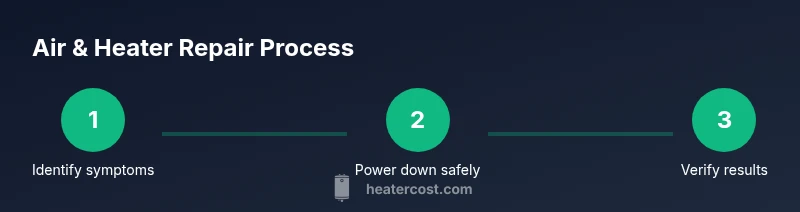
Identify symptoms and safety check
Observe signs of trouble (unheated zones, odd noises, cycling issues). Record exact symptoms and safety concerns. Ensure the area around the unit is clear and free of flammable materials.
Tip: Document symptoms with timestamps to track changes. - 2
Power down and isolate the system
Shut off power at the main breaker. If the system uses a gas supply, locate the shutoff and ensure you do not operate electrical devices near a gas line. Wait at least 5 minutes for any residual energy to dissipate.
Tip: Label breakers to prevent accidental re-energizing. - 3
Check simple inputs first
Inspect the thermostat settings, replace batteries if applicable, and verify the thermostat is communicating with the control board. Check air filters; a dirty filter is a common cause of performance drop.
Tip: Replace a dirty filter before pursuing more complex repairs. - 4
Test basic electrical and control signals
Use a multimeter to verify voltage at the thermostat terminals and the control board. Check fuses and circuit breakers; reset tripped breakers. Inspect for loose wires or burn marks.
Tip: If you see damaged wiring, stop and consult a pro. - 5
Address common component issues
If the unit is hot to touch or burners fail to ignite, inspect gas valve (venting safety) and ignition sequence. For electric systems, inspect contactors and relays for corrosion. Replace worn components as per manufacturer guidelines.
Tip: Only replace parts you are qualified to handle. - 6
Test run and verify operation
Reconnect power, restart the system, and observe startup behavior, ignition, and cycling. Check for even heat distribution and listen for unusual sounds. Re-check filters and ducts after a short run.
Tip: Keep a log of performance over 24–48 hours.
Got Questions?
What are common signs my air and heater needs repair?
Common signs include uneven heating, unexpected noises, frequent cycling, and higher energy bills. Check the thermostat and filter first, then inspect ducts for leaks. If problems persist, schedule a diagnostic with a qualified technician.
Watch for uneven heat, strange noises, and rising energy bills. Start with the thermostat and filters, and call a professional if it continues.
Can I fix air and heater issues myself?
Basic maintenance like filter changes and thermostat checks are suitable for DIY. Electrical and gas-related tasks carry safety risks and should be handled by trained professionals. When in doubt, seek a professional to avoid hazards.
DIY is fine for simple maintenance, but leave electrical or gas work to the pros.
How often should I service my air and heating system?
Most systems benefit from an annual professional inspection plus regular maintenance (filters, sensors, and ducts) every 1–3 months depending on use and environment.
Aim for yearly professional checks and regular simple maintenance.
What is a rough cost range for air and heater repairs?
Repair costs vary with complexity and parts. Expect simple fixes to be less expensive than major component replacements. Contact multiple technicians for quotes and check warranties before committing.
Costs vary; get several quotes and check warranties.
When should I replace rather than repair?
If repairs are frequent, parts are failing repeatedly, or efficiency losses are significant, replacement may be more cost-effective in the long run.
Repeated repairs or efficiency losses often mean replacement is wiser.
Are there safety concerns with gas furnaces?
Yes. Gas furnaces pose CO and fire risks. Ensure detectors are functional, never ignore warning signs, and rely on licensed professionals for installation or complex repairs.
Gas furnaces require caution; use detectors and call a licensed pro for major work.
Watch Video
The Essentials
- Know when to DIY and when to call a pro.
- Regular maintenance reduces risk and saves energy.
- Always prioritize safety and proper testing.
- Document symptoms and results for future repairs.
- Budget for routine service and potential parts replacement.