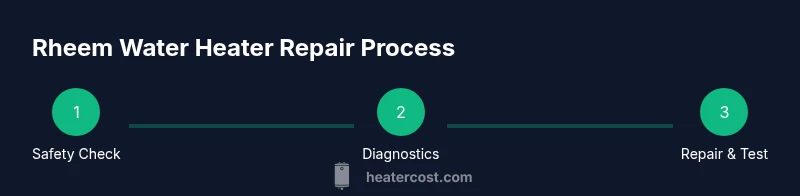
Rheem Water Heater Repair Guide: DIY Safety & Steps
Learn practical Rheem water heater repair steps, safety practices, and maintenance tips to save money. This expert guide from Heater Cost covers common issues, when to DIY, and when to call a pro.


Goal: Diagnose and safely repair common Rheem water heater issues yourself, or decide when to call a pro. This guide walks you through power shutoff, gas safety checks, thermostat and pressure relief valve inspection, heating element or burner checks, and basic maintenance. Gather the right tools, understand warning signs, and follow safety precautions before you begin.
Understanding Rheem Water Heaters and Common Failures
Rheem water heaters are a common choice for homes due to their balance of reliability and serviceability. They come in electric and gas configurations, and most failures fall into a few familiar categories: mineral sediment buildup, thermostat or heating element wear, gas control or ignition issues on gas models, and relief valve or venting problems. Regular maintenance can prevent many of these failures, extending the unit’s life and keeping bills predictable. According to Heater Cost, Rheem models remain popular for their accessible parts and documented service procedures, making DIY diagnosis feasible for many homeowners. Before attempting any repair, identify the model and type (gas vs electric) to ensure you follow the correct procedure and safety steps.
- Sediment buildup reduces heating efficiency and temp consistency.
- Faulty thermostats or elements can cause inadequate hot water or cycling issues.
- Malfunctioning safety components (TPR valve, venting) create safety risks if ignored.
- Professional service may be required for gas-related or high-voltage work.
This section sets the stage for safe, informed troubleshooting. Always refer to the Rheem manual for your exact model and follow local electrical and gas safety rules.
The Heater Cost team emphasizes caution: do not bypass safety devices or operate a water heater with exposed wiring. If any step feels uncertain, skip to professional service to avoid injury or property damage.
Tools & Materials
- Non-contact voltage tester(Verify power is off before touching wires.)
- Multimeter(Test resistance, continuity, and thermostat/element integrity.)
- Wrench set (adjustable)(Used for fittings and access panels.)
- Screwdrivers (flathead and Phillips)(Open panels and detach wiring safely.)
- Bucket and towels(Catch water when draining and protect surfaces.)
- Teflon tape and replacement gaskets(Seal connections during reassembly.)
- Replacement parts (thermostat, heating element, or thermocouple)(Only if you’ve identified a faulty component and have model compatibility.)
Steps
Estimated time: 90-180 minutes
- 1
Power off and secure the area
Locate the main electrical breaker for the water heater and switch it off. If you have a gas model, close the gas shutoff valve. Clear the area of clutter and place a bucket under any draining connections. This step prevents electrical shock and gas leaks during the repair.
Tip: Double-check with your non-contact tester that no live voltage remains before touching wires. - 2
Drain the tank and relieve pressure
Close the cold water supply valve and attach a drain hose to the tank’s drain valve. Open the drain valve to start draining, and carefully vent air through an open hot-water faucet in the house. Wait until the tank is empty or you’ve lowered the water level enough to safely remove panels.
Tip: Use protective gloves; hot water may cause scalds. - 3
Access internal components
Remove access panels and insulation to reveal the thermostat, heating elements (electric models), or burner and gas controls (gas models). Label wires before disconnecting anything so you can reassemble correctly.
Tip: Take a photo of the wiring before you unplug anything. - 4
Test and replace the thermostat
With the power still off, use a multimeter to measure thermostat resistance. If readings are out of spec or the thermostat doesn’t click when cycling, replace it with a compatible Rheem part.
Tip: Only use Rheem-approved parts for reliability and warranty considerations. - 5
Test and replace heating element or burner
For electric models, remove the heating element and test for continuity; replace if the element is open or fused. For gas models, inspect the burner and thermocouple; clean deposits and replace if the flame is irregular or the thermocouple is weak.
Tip: Ensure you reseat gaskets and tighten connections to avoid leaks. - 6
Check safety devices and gas connections
Inspect the pressure relief valve and venting for blockages or corrosion. For gas models, ensure the gas valve operates smoothly and the igniter shows consistent flame behavior. If you detect gas odor, evacuate and call the gas utility.
Tip: Never bypass the T&P valve or safety features. - 7
Reassemble, refill, and test the unit
Reinstall panels, turn cold water supply back on, and purge air from the system by running hot water from a faucet. Restore power (and gas, if applicable) and test water temperature and pressure. Watch for leaks as the unit pressures up.
Tip: Set the water temperature to a safe range (typically 120°F) to avoid scalding.
Got Questions?
Is it safe to DIY Rheem water heater repair?
DIY repair is feasible for basic checks and bulb-free components if you have electrical and gas-handling familiarity. Always isolate power and gas, follow the model manual, and avoid unsafe steps.
DIY work is possible for simple maintenance, but consult a professional for gas or high-voltage repairs.
What are the most common Rheem water heater problems?
Sediment buildup, thermostat or heating element failure, and faulty safety valves are among the most frequent problems. Regular flushing and component testing help prevent surprises.
Sediment, faulty thermostat or heating element, and bad pressure relief valves are the usual culprits.
How do I know when to repair vs replace?
If repair costs approach or exceed the cost of a new unit, or the heater is older and less energy-efficient, replacement is often wiser. Consider warranty status and expected energy savings.
If it’s an old unit or repairs are frequent, replacing with a newer, efficient model may save money long-term.
Can I flush my Rheem water heater myself?
Yes, a basic flush helps remove sediment. Use a bucket, reconnect hoses, and follow steps to avoid scalding and tank damage. Stop if you notice leaks.
Flushing is doable for many homeowners, but be careful with hot water and pressure.
What maintenance should I do yearly?
Annually flush the tank, inspect the anode rod (if present), test the T&P valve, and verify burner or element operation. Regular checks extend life and prevent failures.
Yearly flushing and safety valve checks help prevent big problems.
Watch Video
The Essentials
- Prioritize safety: power, gas, and water must be isolated before work.
- Identify model-specific parts before replacement to avoid incorrect fixes.
- Test thermostats and heating elements with a meter for reliable results.
- Reassemble carefully and test for leaks to ensure a safe return to service.