Is Furnace the Same as AC? A Practical HVAC Comparison for Homeowners
Explore whether a furnace is the same as AC, how these HVAC components differ in function and energy source, and what to consider for upgrades and maintenance.


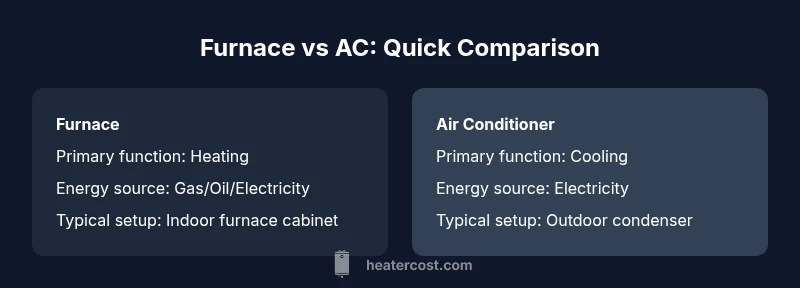
Is furnace the same as ac? Not exactly. A furnace heats indoor air using gas or electricity, while an air conditioner cools by removing heat from the indoors. In many homes they share ducts and a single thermostat, but they are separate appliances with different energy sources and maintenance needs. Understanding their distinct roles helps homeowners plan budgets and upgrades more effectively.
What is the core distinction between heating and cooling components
In residential HVAC, the first question many homeowners ask is is furnace the same as ac, and the answer is no—a furnace and an air conditioner perform different jobs. According to Heater Cost, the furnace provides heat by burning fuel or using electricity to generate warm air that travels through ducts to spaces you rely on for comfort. An air conditioner uses a refrigerant cycle to remove heat from indoor air and expel it outside. Some systems pair these two functions into a single packaged unit or through a heat pump, but the core roles remain distinct: heating versus cooling. This distinction matters for budgeting, energy efficiency, and maintenance planning. When you think about replacing either component, or upgrading to a more efficient setup, you’ll need to evaluate how each device impacts comfort, cost, and reliability. Understanding that is furnace the same as ac is a starting point for a clearer conversation with installers and service providers.
Energy sources and how they drive efficiency and cost
Two of the biggest differences between a furnace and AC are energy sources and how they operate. Furnaces run on natural gas, propane, oil, or electricity to generate heat, while air conditioners rely on electricity to power a refrigerant cycle that absorbs heat from indoor air. Because the energy source affects fuel efficiency, installation requirements, and safety considerations, homeowners should assess the long-term operating costs of each system separately. is furnace the same as ac is not the right framing when evaluating bills, because heating energy often accounts for a larger portion of winter costs. If you’re considering an upgrade, factor in local fuel prices, the efficiency rating of equipment, and potential rebates. The Heater Cost analysis shows that energy costs can vary widely by climate, house size, insulation, and thermostat habits, so a side-by-side comparison helps avoid surprises at the moment of service.
Shared ductwork and control strategies
Even when a home has separate heating and cooling equipment, it's common for ducts and a central thermostat to tie the systems together. This is where the idea of is furnace the same as ac sometimes appears in informal conversations, but the reality is that shared plenum and zoning decisions affect comfort and efficiency. For example, a single thermostat can drive both a furnace and an outdoor ac unit, but you’ll want to ensure the controls account for the season and the mode. Some homes implement zone dampers, separate thermostats, or smart thermostats that adapt to occupancy patterns. The key takeaway: shared infrastructure doesn't equate to a single device—it simply means coordinated operation across two distinct pieces of equipment.
Common configurations in homes (separate vs bundled)
There are several common layouts for heating and cooling, and the choice often hinges on climate, budget, and how a home was originally built. In many residences, a furnace and an AC condenser are separate units linked by ductwork; in others, a packaged unit combines heating and cooling in one cabinet. Some newer homes rely on heat pumps that perform both heating and cooling, blurring the line between furnace and ac in practice. If you're evaluating upgrades, assess the compatibility of existing ductwork, space constraints, noise considerations, and seasonal efficiency incentives. This context helps answer the question is furnace the same as ac in everyday terms—they are not identical, but they can be integrated for comfort and cost savings.
Maintenance and service considerations
Regular maintenance is essential for both heating and cooling components, but service needs differ. A furnace requires annual inspection of burners, heat exchangers, and venting, plus filter changes every 1-3 months depending on usage. An AC system needs refrigerant checks, condenser coil cleaning, and blower maintenance, typically before each cooling season. Understanding the maintenance rhythm for each system helps prevent breakdowns and preserves efficiency. If your goal is a straightforward comparison, remember: is furnace the same as ac is a simplification—each part has its own maintenance cadence, parts, and wear patterns. Scheduling joint inspections at reasonable intervals can save time and reduce total upkeep costs.
Energy efficiency implications of furnace vs AC
Efficiency ratings and payback periods differ between heating and cooling equipment. Gas furnaces are rated by AFUE (Annual Fuel Utilization Efficiency), while air conditioners use SEER (Seasonal Energy Efficiency Ratio) to gauge cooling performance. If you’re contemplating a combined upgrade, consider heat pumps or dual-fuel systems, which can minimize energy use depending on climate. The difference in efficiency metrics matters when calculating long-term costs, rebates, and tax credits. In this context, the phrase is furnace the same as ac illustrates a common misconception; it isn’t a substitute for a technical efficiency comparison.
Cost and budgeting: upfront vs operational costs
Understanding the cost factors for furnace versus AC helps homeowners plan for upfront purchase and ongoing operation. Upfront costs vary with fuel type, efficiency rating, and brand; operating costs depend on local energy prices, climate, and usage. Homeowners should request a cost of ownership analysis that includes installation, maintenance, and expected lifespan. While the question is is furnace the same as ac in casual conversation, the real decision should balance heating needs and cooling comfort with the total cost of ownership.
When a hybrid or integrated system makes sense
In some homes, a hybrid approach—gas furnace paired with an electric air conditioner or heat pump—offers a pragmatic middle path. This setup can deliver reliable heat in cold weather and efficient cooling in warm months. It’s especially common in regions with chilly winters but hot summers. In these cases, you’re not choosing between two separate devices so much as selecting a coordinated system optimized for climate, energy costs, and space. If you’re evaluating replacements, ask installers about compatibility, zoning, duct design, and electrical service.
Replacement cycles and lifespan expectations
Furnaces typically deliver 15–25 years of service with proper maintenance; air conditioners often span 10–15 years with refrigerant integrity and compressor health. Because wear patterns differ, replacement timing should be based on performance, safety, and efficiency rather than age alone. For homeowners researching is furnace the same as ac, the practical takeaway is that you’re selecting two distinct pieces with overlapping lifespans. Planning replacement windows for both components can minimize downtime and reduce disruption.
Practical guidance for homeowners evaluating offers
When shopping, ask for a side-by-side comparison of efficiency, installed cost, warranty terms, and expected maintenance burden for both furnace and AC or a bundled solution. Request independent estimates and a written energy-cost projection. Check local rebates and tax credits for high-efficiency models, and verify that ductwork and electrical service can support a future upgrade. Finally, consider scheduling a pre-season inspection to confirm airflow, refrigerant charge, and combustion safety.
Comparison
| Feature | Furnace system | Air Conditioning system |
|---|---|---|
| Primary function | Heats indoor air | Cools indoor air by extracting heat |
| Energy source | Gas/oil/electricity | Electricity (refrigerant cycle) |
| Typical installation | Furnace cabinet in utility space/basement | Outdoor condenser with indoor unit |
| Maintenance focus | Burner, heat exchanger, venting, filter changes | Refrigerant cycle, coils, blower, filter changes |
| Noise considerations | Indoor and outdoor noise varies by model | Typically quieter indoors, outdoor unit noise depends on system |
| Best for climate | Colder climates needing reliable heat | Warmer climates needing reliable cooling |
| Energy efficiency metrics | AFUE | SEER |
| Typical cost drivers | Fuel type, efficiency, installation | Condenser size, efficiency, installation |
The Good
- Clarifies separate roles for heating and cooling
- Helps identify upgrade paths aligned with climate
- Highlights maintenance schedules for reliability
- Encourages energy-efficiency considerations in budgeting
Negatives
- Can oversimplify modern hybrid solutions like heat pumps
- Requires evaluating two separate systems instead of a single unit
Separate heating and cooling components often provides clearer upgrades and better climate-specific efficiency.
For mixed climates, maintain separate furnace and AC to tailor performance and efficiency. If space or simplicity is a priority, explore integrated solutions like heat pumps where appropriate, but ensure you evaluate total cost of ownership.
Got Questions?
Is a furnace the same as an air conditioner?
No, they serve different functions. A furnace heats, an AC cools. They can be paired in a home, but they are distinct devices with separate maintenance needs.
No—furnace heats the space and AC cools it; they often work together but aren’t the same device.
Can a single unit do both heating and cooling?
Yes, packaged units or heat pumps can provide both heating and cooling, or separate components can be controlled through a common thermostat. Evaluate climate needs and upfront costs.
Yes, some systems handle both heating and cooling in one package or via a coordinated setup.
What should I consider when choosing between separate furnace and AC vs a heat pump?
Consider climate, energy costs, upfront and operating costs, space, and rebates. A heat pump can perform both heating and cooling but may have higher initial costs.
Think about climate, energy prices, and rebates when deciding.
How often should I service my furnace and AC?
Furnaces typically require annual inspections; AC units also benefit from yearly checks, with filters replaced every 1-3 months. Regular servicing helps prevent unexpected failures.
Annual checks for both, with periodic filter changes.
What are common signs I need to upgrade either system?
Frequent breakdowns, rising energy bills, uneven heating or cooling, unusual noises, and equipment aging are common upgrade signals.
Watch for frequent breakdowns, higher bills, and uneven comfort.
The Essentials
- Define each function: heating vs cooling, before budgeting
- Compare energy sources and efficiency metrics (AFUE vs SEER)
- Assess ductwork and controls compatibility
- Consider climate when choosing separate vs integrated solutions
- Plan for maintenance of both systems to maximize lifespan