Difference Between Heater and AC: A Practical Guide
Explore the difference between heater and ac, how they work, efficiency metrics, and which system fits your climate and budget. A Heater Cost buying guide for homeowners, renters, and property managers.


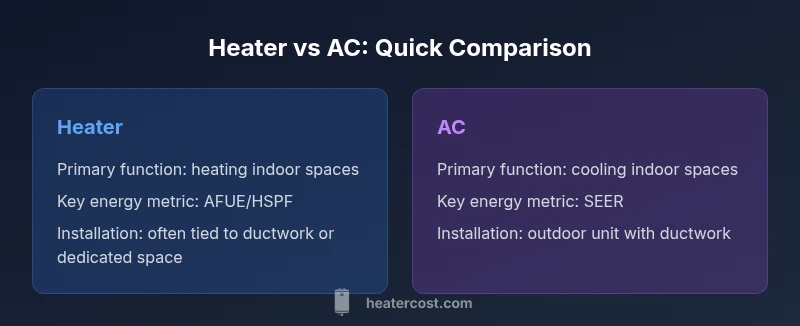
At a glance, the difference between heater and ac is straightforward: a heater generates warmth to heat indoor spaces, while an air conditioner cools by removing heat from indoors. They address opposite seasons, use different energy paths, and have distinct installation needs, efficiency metrics, and maintenance needs. Choosing the right option depends on climate, budget, and long-term energy goals, making this a pivotal decision for any home.
Why the difference matters
Understanding the difference between heater and ac matters because it shapes every decision from sizing and installation to energy efficiency and long-term maintenance. In most homes, these systems are the primary climate-control assets, and getting them wrong can mean persistent comfort gaps, higher bills, and more frequent repairs. The difference between heater and ac isn't just seasonal; it's about how each device converts energy, distributes it, and interacts with your home's insulation and airflow. For homeowners, renters, or property managers, a clear view of these roles helps set expectations for performance, upfront costs, and ongoing costs. In this section we establish the basic definitions, explain where each system typically lives in a home, and outline common configurations (central, ducted, ductless, or standalone units). By framing these distinctions early, you can evaluate trade-offs more confidently and avoid overpaying for features you won't use. This primer also helps align your choices with local climate, energy pricing, and your building's design constraints.
How heating and cooling systems work
Both heaters and air conditioners are designed to exchange energy with your living space, but they do so in opposite directions and with different hardware. A heater turns energy into heat that is distributed throughout rooms via ducts, radiators, or radiant panels, raising indoor temperatures during cold weather. In contrast, an air conditioner uses electricity to drive a refrigeration cycle that moves heat from inside to outside, producing cooling and dehumidification. In central systems, a furnace or heat pump handles heating, and a central air handler or furnace powers cooling through the same ductwork. Ductless mini-splits separate hot and cold air paths into individual zones, enabling targeted comfort without extensive ducting. Heat pumps blur the line by providing both heating and cooling from a single exterior unit and indoor air handler. This flexibility is a major reason many homes consider hybrid or dual-purpose installations. The layout matters: homes with existing ductwork can often retrofit a furnace with cooling or upgrade to a heat pump; homes without ducts may opt for ductless systems or compact space heaters. Regardless, understanding the hardware—compressors, burners, heat exchangers, and thermostats—helps you forecast installation requirements, noise considerations, and maintenance needs.
Energy efficiency and performance metrics
Efficiency metrics for heaters and ACs differ because they measure different outcomes. For furnaces and heat pumps, annual fuel utilization efficiency (AFUE) and heating performance metrics like HSPF gauge how effectively energy is turned into usable heat over a year. For air conditioners, efficiency is summarized by SEER (seasonal energy efficiency ratio) and EER, which rate cooling performance relative to energy use. A high AFUE indicates lower fuel consumption for heating, while a high SEER/EER means lower electricity use for cooling. Thermostat controls, staging, and variable-speed operation further influence real-world performance by reducing energy waste during partial loads. Another factor is humidity control and indoor air quality, where some cooling systems offer integrated dehumidification and filtration features. When comparing options, look for labeling from trusted programs or regional energy authorities that reflect performance under typical conditions. The difference between heater and ac in this regard is not solely about peak output—it includes how the system modulates heat, the consistency of delivery, and how well it works with your home’s insulation and windows to maintain comfortable indoor temperatures across seasons.
Cost considerations: upfront and operating costs
Cost considerations for heating and cooling projects cover more than the sticker price. Upfront costs include equipment price, installation labor, ductwork modifications, and permits if required by local codes. Operating costs depend on energy prices, climate, and how efficiently the system runs. A furnace or heat pump with high efficiency and smart controls can reduce annual energy use, while a central AC with a large outdoor unit may demand more upfront investment but deliver strong cooling performance on hot days. Maintenance costs vary by system type: filters, coil cleaning, refrigerant checks, and periodic professional tune-ups. Duct sealing and insulation quality also affect long-term costs, because heat loss or gain through building envelope leaks increases energy usage. The key is to estimate total cost of ownership over the system’s life, including potential replacements and component failures. Heaters may rely on natural gas, oil, or electricity, whereas AC units rely primarily on electricity; regional energy prices and available fuels influence long-term economics. A thoughtful evaluation by homeowners, renters, or property managers should balance climate needs with budget constraints and expected usage.
Climate, usage patterns, and sizing
Climate is the deciding factor when weighing heater vs ac options. Regions with cold winters and mild summers may benefit from a robust heating system with supplementary cooling features, whereas hot climates demand strong air conditioning and efficient dehumidification. Sizing is essential: an oversized system cycles on and off, wasting energy and reducing comfort; an undersized unit struggles to reach target temperatures during peak periods. The difference between heater and ac becomes particularly clear when considering seasonal demand. In single-season setups, you might prioritize heating efficiency or cooling capacity, while in year-round comfort, a balanced approach often makes sense. For homes with existing ductwork, integrating a compatible heating and cooling solution can minimize renovation costs. In newer builds, architects and HVAC pros often design modular, zoned systems that deliver individualized comfort without overworking equipment. Finally, consider supplementary measures such as insulation upgrades and air-sealing to maximize performance regardless of the main system.
Hybrid and integrated systems: heat pumps and zoning
Hybrid systems combine heating and cooling responsibilities, often using a heat pump for year-round comfort and a furnace or backup heat source for extreme cold. This approach can provide efficient cooling and heating with fewer energy spikes. Zoning enhances efficiency by dispersing conditioned air only to occupied spaces, which reduces heat loss and improves comfort. Ductless mini-splits are flexible solutions for retrofit projects where ductwork is limited or impractical, delivering targeted comfort in specific rooms or zones. The difference between heater and ac is also a matter of control strategy: older, single-zone systems may underperform, while modern variable-speed compressors, smart thermostats, and app-based monitoring offer dynamic response to changing conditions. For property managers, zoned systems can help manage energy use across rental units with greater precision and predictable utility costs. In summary, hybrid and integrated options provide a pathway to improved energy performance without discarding familiar comforts. Evaluate climate, energy costs, and the building's layout before choosing a model.
Buying guide: what to compare
When purchasing heating or cooling equipment, a structured checklist helps separate wishful thinking from practical value. Key comparison criteria include: compatibility with existing energy sources (gas, electricity, propane), system type (furnace, heat pump, central AC, ductless), energy efficiency ratings (AFUE, SEER, HSPF), equipment longevity and warranties, installation complexity, noise levels, and maintenance requirements. Budget for both upfront costs and long-term operating costs; in many markets, the cheapest option may not yield the best lifetime value if it runs inefficiently or requires frequent repairs. Pay attention to indoor air quality features, such as filtration and humidity control, which can influence comfort and health. If you live in a mixed climate or plan to use a single system year-round, prefer hybrid solutions or heat pumps with supplemental heating to meet cold-weather needs. Finally, verify compliance with local codes and incentive programs that can offset costs. A methodical comparison using real-world scenarios—bedrooms, living spaces, and home offices—helps identify the best fit.
Maintenance and longevity
Maintenance routines extend the life of heaters and ACs and keep performance steady. Regularly replace or clean filters; schedule professional inspections at least once a year; check refrigerant levels when applicable; inspect ductwork for leaks and seal as needed; ensure proper airflow by keeping vents unobstructed; test thermostat and controls for accurate readings; clean outdoor units and protect condensate lines from clogs. Longevity depends on usage, climate, and maintenance discipline; with proper care, central heating and cooling equipment can deliver reliable service for many seasons. Keep a service log to track service dates, parts replaced, and recommended upgrades. In rental properties, maintain a transparent service plan for tenants, including flexible scheduling and clear communication about upkeep responsibilities. Understanding the maintenance demands of each option helps you budget for future replacements and avoid unexpected outages.
Common myths and misperceptions
Many homeowners assume bigger units always perform better; in reality, oversized equipment wastes energy and creates uncomfortable temperature swings. Another common myth is that heat pumps are unreliable in cold climates; modern heat pumps with cold-climate refrigerants can perform well down to moderately low temperatures. Some people think newer is always better; while newer systems bring efficiency gains, the best choice depends on climate, home design, and energy rates. Finally, some believe that maintenance can be skipped for single-season use; in fact, even less-used units benefit from periodic checks to prevent corrosion, refrigerant leaks, and degraded performance. Debunking these myths helps homeowners make informed decisions based on building physics rather than marketing claims.
Next steps for homeowners
With the basics clarified, you can begin a practical evaluation of your home. Start by listing your climate profile, energy costs, and comfort priorities; gather existing equipment information, including model numbers and age. Request quotes from licensed HVAC contractors who can perform a load calculation and design a solution that fits your home layout, whether you choose a furnace, heat pump, central AC, or ductless system. Consider long-term energy savings, maintenance plans, and warranties when comparing proposals. To support your decision, refer to third-party energy efficiency labels and eligibility for local incentives that reduce upfront cost. The Heater Cost team recommends treating this as a strategic investment: select a system that meets your climate needs, integrates with your building envelope, and offers durable performance with reasonable maintenance. Document decisions, monitor energy costs, and revisit your plan as your home evolves or climate patterns shift.
Comparison
| Feature | heater | air conditioner (AC) |
|---|---|---|
| Primary function | Heat indoor spaces | Cool indoor spaces |
| Common installation | Furnace/ducted or standalone heater | Central AC with outdoor unit and ductwork |
| Energy efficiency metrics | AFUE/HSPF and thermostat controls | SEER and EER; humidity control |
| Typical lifespan with maintenance | 15-25 years with proper service | 10-15 years with regular service |
| Operating costs emphasis | Fuel/electricity depends on unit type | Electricity costs vary with cooling load |
| Best climate fit | Cold seasons with heating needs | Hot seasons with cooling needs |
| Noise considerations | Furnace or heat pump noise varies | Outdoor compressor noise possible |
The Good
- Clarifies which system best matches your climate and budget
- Helps estimate ongoing energy costs and ROI
- Encourages considering hybrid or heat-pump solutions
- Improves home comfort planning with zoning and controls
- Highlights installation implications and maintenance needs
Negatives
- May overwhelm homeowners with technical metrics
- Regional energy prices can make direct cost comparisons misleading
- Short-term costs may appear higher than perceived benefits
A climate-appropriate, energy-efficient solution is essential; for many homes, a hybrid or heat-pump-based approach balances heating and cooling efficiently.
Choose a system that matches your climate, insulation, and budget. If winters are cold and summers mild, a hybrid or high-efficiency furnace paired with central AC may be optimal. In moderate climates, a heat pump that provides year-round comfort can offer strong energy efficiency and simplicity.
Got Questions?
What is the main difference between a heater and an AC?
The heater generates warmth to heat indoor spaces, while an AC removes heat to cool them. They use different energy paths and have distinct installation and maintenance needs.
Heaters create heat; ACs move heat out to cool spaces. The full article dives deeper into efficiency and costs.
Can a single system do both heating and cooling?
Yes. Many homes use heat pumps or hybrid systems that provide both heating and cooling. Some rely on separate units optimized for each function.
Yes—heat pumps and hybrid systems can handle both heating and cooling.
Energy metrics to compare
Look at AFUE and HSPF for heating, SEER for cooling, and overall COP where available. Compare systems using consistent labels and energy guides.
Check AFUE, HSPF, and SEER ratings to estimate energy use.
Heat pumps in cold climates
Modern cold-climate heat pumps perform well in many situations, but extreme cold can require backup heat. Evaluate climate data and contractor guidance.
Heat pumps can work in cold weather, but extreme cold may need a backup heat source.
Install costs differences
Installation costs depend on ductwork, equipment, and permits. Central systems may involve more upfront work, while ductless options can be cheaper per zone.
Costs vary; central systems may need more work, while ductless options can be cheaper per zone.
New vs replacement timing
If the current system is unreliable or inefficient, upgrading now can reduce outages and energy costs over time. Consider warranties and incentives when timing a replacement.
If it’s unreliable or costly to operate, consider replacing now, especially if incentives are available.
The Essentials
- Identify your climate needs before choosing a system
- Consider heat pumps for year-round comfort in mild to moderate climates
- Evaluate energy efficiency metrics relevant to each option
- Plan for ductwork, space, and insulation during installation
- Budget for maintenance and potential upgrades over time