How to Fix a Heater in an Apartment: A Practical Step-by-Step Guide
Learn how to diagnose and fix common apartment heater issues safely. This practical guide covers power checks, thermostat calibration, filter cleaning, and maintenance tips to improve comfort and energy efficiency.


This guide helps you diagnose and fix common apartment heater issues without professional help. You’ll learn to verify power, check the thermostat and wiring, clean filters, calibrate controls, and perform safe performance checks. If you encounter gas smells, carbon monoxide risks, or a non-repairable fault, contact a licensed technician immediately.
Understanding apartment heater types and safety basics
When homeowners, renters, and property managers ask how to fix heater in apartment, they often start by identifying the type of heater in the space. Common apartment heaters include electric resistance units (space heaters), hydronic baseboard heaters, and central systems controlled by a thermostat. This quick survey helps you tailor your approach and avoid unnecessary repairs. According to Heater Cost analysis, regular, simple maintenance can extend the life of most residential heaters, reduce energy waste, and improve safety. In any case, safety comes first: never tamper with gas lines, keep combustibles away, and install detectors for carbon monoxide if you operate gas or combustion-based equipment. Operational basics like ensuring power supply, outlet integrity, and proper ventilation are universal prerequisites. If you’re unsure about your unit type or if you smell gas, stop and call a licensed professional immediately.
Safety first: immediate steps before touching the heater
Before you touch the heater, ensure your safety and the safety of others. Start by turning the unit off at the power switch or circuit breaker, and unplug it if possible. Keep children and pets away from the device and surrounding area. If you notice a gas odor, faint hissing, or any sign of combustion problems, evacuate the space and call emergency services. Use protective gloves and eye protection if you must handle components, and never bypass safety devices. Ventilate the room by opening windows if you can do so safely. These precautions reduce the risk of burns, electrical shock, and carbon monoxide exposure while you troubleshoot.
Diagnose electrical power and circuit issues
Many apartment heater problems stem from a simple power or wiring issue. Start by confirming the outlet or power strip is providing electricity: plug another device in to test, or reset the circuit breaker if the breaker has tripped. Inspect the power cord for cuts or damage—a damaged cord is a fire hazard and should be replaced. If you have a GFCI outlet, press the reset button to restore power. For wall-mounted or built-in units, verify that any on-board fuse or circuit path is intact. If power is present but the heater still refuses to start, the fault may lie in the control board or thermostat, which often requires professional assessment. Remember: never bypass safety switches or wiring protections.
Inspect and clean filters and vents
Dust, lint, and debris can block airflow and reduce heater performance. Start by turning off power, then remove any grills or covers to access the intake and exhaust paths. Use a soft brush or a small vacuum attachment to remove dust from louvers, fins, and internal surfaces. Wipe surfaces with a microfiber cloth to remove stubborn grime. If your unit uses a washable air filter, remove it, rinse it with water, and let it dry completely before reinstalling. Reassemble the unit and ensure all vents are clear. Regular cleaning improves efficiency and prolongs service life.
Thermostat and controls: calibration and replacement
Thermostats regulate when the heater turns on and off, so accurate readings are critical for comfort and energy use. Check the displayed temperature against a room thermometer to verify accuracy. If the thermostat reads a different value, recalibrate according to the manufacturer’s instructions, or replace the device if calibration is not possible. For programmable or smart thermostats, ensure the firmware is up to date, and check that the thermostat is communicating properly with the heater. Incorrect settings can cause short cycling or insufficient warmth, especially in apartments with zoned or centralized heating.
Gas heater considerations: when to call a pro
Gas heaters require extra caution. If you smell gas, hear a hissing sound, or notice flame irregularities, evacuate the area and contact the gas utility or emergency services immediately. Do not relight or attempt repairs yourself. For routine maintenance like igniter cleaning or burner inspection, you should still rely on a licensed technician to perform any inspection or adjustments that involve gas lines, venting, or combustion safety. Regular carbon monoxide detectors should be installed in spaces with gas-fired equipment, and batteries should be checked twice yearly.
Common issues and fixes: no heat, uneven heat, odd noises
No heat can result from power problems, thermostat misreads, or blocked vents. Uneven heat is often caused by clogged filters, closed vents, or an imbalanced system. Unusual noises may indicate loose components, loose ductwork, or motor issues. Start with a power check, thermostat calibration, and filter cleaning as above. If the problem persists, note when the noise occurs and the specific location, which helps a professional diagnose rattles, squeaks, or rumbling sounds without guesswork. Documenting recent changes or maintenance can also speed up repairs.
Cost considerations and energy efficiency tips
Energy costs rise with inefficient operation. Simple actions like keeping thermostat setbacks when away, sealing drafts around doors and windows, and cleaning filters can deliver noticeable savings. Using a space heater only in occupied rooms, rather than heating the whole apartment, reduces waste. When replacing equipment, compare efficiency ratings (e.g., AFUE or SEER where applicable) and consider units with smart thermostats that optimize energy use. Heater Cost analysis suggests that regular maintenance, timely filter replacement, and proper sizing are key to reducing bills over the life of your heater.
Maintenance checklist you can follow monthly
Create a monthly checklist to keep your heater operating reliably. Inspect the area around the unit for dust buildup and clear obstructions. Confirm the thermostat reads correctly and is not drifting. Clean air intakes and exhausts, replacing filters if needed. Test safety devices and detectors, and verify that vents remain open and unobstructed. Keep a log of maintenance dates and any unusual performance notes to help with future troubleshooting. Consistent upkeep prevents minor issues from becoming costly failures.
When to replace vs repair: indicators
Ask whether the expected remaining lifespan, energy use, and repair costs justify replacement. If a repair would exceed 50% of the cost of a new unit or if the heater is more than 10-15 years old and shows repeated failures, replacement may be the wiser choice. Consider the impact on energy bills, insurance, and service availability in your area. In a rental or multi-unit building, coordinate with management to ensure any major replacement meets building codes and tenant safety requirements.
Tools & Materials
- Screwdrivers (Phillips and flat-head)(For removing covers and thermostat screws)
- Vacuum cleaner with brush attachment(Dust removal from grills and vents)
- Soft brush(Dislodge stubborn dust from fins and crevices)
- Microfiber cloth(Wipe down surfaces and lenses without scratching)
- Replacement air filter (if applicable)(Use if your unit uses a replaceable filter)
- Safety gloves and goggles(Personal protection during cleaning and inspection)
- Voltage tester or multimeter (optional)(Only if you are trained to test electrical circuits)
- Notebook or smartphone for notes(Document readings and changes)
Steps
Estimated time: 60-90 minutes
- 1
Power down and safety check
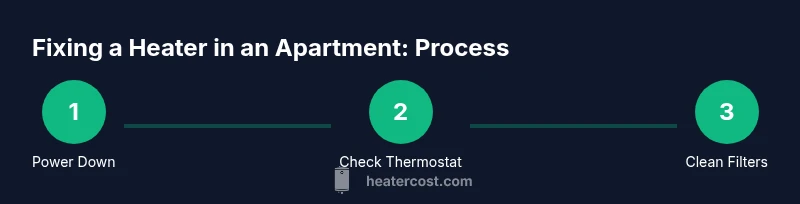
Turn off the heater at the switch and unplug it from the outlet or switch the circuit breaker. Verify there are no exposed wires or scorch marks. Keep kids and pets away. This protects you from shocks and reduces fire risk before inspection.
Tip: If you smell gas, leave the area and call the utility or emergency services immediately. - 2
Inspect for obvious hazards
Look for damaged cords, loose components, or blocked vents. Clear clutter around the unit and ensure air paths are unobstructed. A simple exterior check can prevent risky conditions from escalating.
Tip: Take photos before and after any intervention to track changes. - 3
Check thermostat and controls
Set the thermostat to a temperature above room temperature and observe whether the heater engages. If it doesn’t, test other controls (alternate modes, timers). Verify batteries in wireless thermostats are fresh.
Tip: Verify that smart thermostats are connected to the heater and not in a disconnected state. - 4
Test heating output and airflow
Power the unit back on and listen for the motor and blower. Feel for warm air at the vents. If there is no warmth, recheck the power path and address obvious blockages; persistent lack of airflow indicates a deeper fault.
Tip: If airflow is weak or absent, do not force airflow as it can damage internal components. - 5
Clean exterior and grills
Remove dust from grills and fins with a soft brush; vacuum away debris from intake/exhaust paths. Wipe surfaces with a microfiber cloth. A clean unit runs more efficiently and reduces overheating risk.
Tip: Avoid using liquid cleaners directly on electrical components. - 6
Check and replace filters
If your unit uses a filter, remove, inspect, and replace or wash according to the manufacturer’s instructions. A clean filter improves airflow and heat delivery.
Tip: Use the exact filter size recommended by the maker to avoid air leaks. - 7
Reset controls or recalibrate
Reset any timer or digital control to default settings. If needed, recalibrate the thermostat according to the device manual. Confirm that the unit responds correctly to temperature changes.
Tip: Document the current settings after recalibration for future reference. - 8
Final test and safety check
Power the system back on and run a full cycle to verify heat delivery and safe shutdown. Check for unusual smells or noises. If anything seems off, stop and escalate to a qualified technician.
Tip: Keep a written maintenance log to track issues and repairs over time.
Got Questions?
What should I do first when my apartment heater won't start?
Check power at the outlet and the circuit breaker, then verify the thermostat is set correctly. Ensure vents aren’t blocked and that the unit isn’t in lockout mode. If power is present but the heater still won’t respond, proceed with a safe inspection of the control panel or call a professional for a deeper diagnosis.
First, check power and the breaker, then look at the thermostat and vents. If it still doesn’t run, you may need a pro for a deeper check.
Is it safe to fix electrical or gas heaters yourself?
DIY fixes are suitable for non-hazardous tasks like cleaning, filter replacement, and basic inspections. Do not service gas lines, burners, or internal electrical components if you are not trained. For gas smells or suspected leaks, leave the area and call the utility or emergency services.
You can do cleaning and basic checks, but don't touch gas lines or wiring if you're not trained.
How do I know if I need replacement vs repair?
If repairs would cost more than a reasonable fraction of a new unit or the heater is aging, replacement may be wiser. Consider energy efficiency, ongoing reliability, and the building’s heating needs. Consult a professional for a precise assessment.
If the cost of repair is high or the unit is old and unreliable, replacement could be best.
What maintenance should I perform monthly?
Inspect for dust buildup, test safety devices, clean vents, and replace or wash filters as recommended. Check thermostat accuracy and look for unusual noises. Keeping a log helps you track patterns over time.
Do a quick monthly check of dust, safety devices, vents, and filters, and note any changes.
Can adjusting the thermostat really lower energy costs?
Yes. Programmable or smart thermostats help optimize heating schedules when you’re away. Small adjustments, like lowering the setpoint by a few degrees, can reduce consumption without sacrificing comfort. Pair with weather-stripping and regular maintenance for best results.
Yes—smart thermostats and proper scheduling can cut energy use without losing comfort.
What should I do if I smell gas around the heater?
If you smell gas, evacuate immediately and call your gas provider or emergency services. Do not operate electrical switches or flames. Once cleared, a licensed technician should inspect for leaks and ensure safe re-ignition.
Leave the area and call emergency services if you smell gas. Do not use switches or flames.
Watch Video
The Essentials
- Power safety first; unplug before touching any unit.
- Thermostat accuracy directly affects comfort and costs.
- Regular cleaning and filter maintenance improve efficiency.
- Know when to escalate to a licensed professional, especially for gas units.
- Maintain a maintenance log for ongoing issues and fixes.