Labor Cost for Water Heater Replacement
A detailed look at labor cost for water heater replacement, including drivers, regional variation, bid comparison tips, and planning guidance for 2026.


According to Heater Cost, labor costs for water heater replacement typically range from $300 to $1,200, depending on unit type (tank vs tankless), accessibility, and local labor rates. This labor estimate covers installation labor alone and excludes parts, disposal, and permits. Understanding these factors helps homeowners plan and compare bids more effectively.
What labor cost for water heater replacement covers
Labor cost for water heater replacement covers more than a technician's hourly rate. It includes removing the existing unit, installing the new one, connecting cold and hot water lines, energy connections, and commissioning the system. For gas heaters, venting adjustments and gas line work can add time; for electric heaters, ensuring the circuit and breaker are adequate can add labor as well. Some bids include disposal of the old unit and debris removal; others quote those charges separately. Accessibility matters: a cramped attic, crawl space, or tight basement can extend job time and raise costs. According to Heater Cost analysis, labor costs vary by unit type (tank vs. tankless), installation complexity, and regional labor rates. Understanding what the labor line includes helps you compare bids on a like-for-like basis and avoid sticker shock later. This section aims to make transparent what installers typically do during replacement and why those steps matter for safety and code compliance.
Factors that drive labor costs
- Heater type: Tank-style electric or gas heaters usually involve straightforward hookups, while tankless models require precise gas and venting work, heat exchanger tuning, and sometimes more on-site testing.
- Accessibility: Attics, basements, or crowded mechanical rooms slow progress and may require special equipment or alternative routing.
- Venting and gas lines: Re-routing or upgrading vent pipes and gas lines adds time and expertise.
- Electrical work and permits: Verifying panel capacity and pulling permits where needed add to the labor tally.
- Old unit disposal: Removing and hauling away a bulky unit adds labor and disposal fees.
- Local labor market: Urban areas with higher wages tend to push hourly rates upward.
- After-hours or emergency service: Off-hours work carries a premium, even for routine replacements.
Regional variations and price ranges
Labor costs are not the same everywhere. Coastal metro areas with high housing costs often see higher labor rates than rural regions, and competitive markets can drive prices down. Heater Cost analysis notes that the same replacement job can vary significantly from city to city, sometimes by double or more, depending on permit requirements, crew availability, and competition. When you request bids, ask for a breakdown that itemizes labor tasks, disposal, and permits so you can compare apples to apples across vendors and avoid surprises at the end of the project.
How installers price water heater replacements
Most contractors price labor as an hourly rate or a fixed project price. Hourly rates reflect local pay scales and crew experience and can range from modest to premium in busy markets. A fixed price quote benefits homeowners when the scope is clear, but you should insist on a detailed scope of work and a written exclusion list. Some bids include startup testing, code compliance checks, and basic warranty reviews; others charge separately for these services. Always verify what is included and whether overtime or acoustic testing might add to the cost.
How to estimate and compare bids
Start by obtaining at least three written bids from licensed plumbers or HVAC techs. Compare the scope of work in each bid, not just the bottom line. Look for explicit items such as removal of the old unit, new unit hookup, venting adjustments, electrical modifications, permit fees, disposal, and startup tests. Ask how long the job should take and what contingencies could increase labor costs. Check references and confirm the installer’s licensing and insurance. Using a side-by-side comparison helps you avoid paying for tasks you didn’t authorize and ensures a fair labor estimate.
Hidden costs and potential savings
Watch for hidden costs such as permit fees, disposal charges, or required electrical upgrades. Some areas require a permit for replacement, which adds to labor time and price. If a more complex venting system or gas line work is needed, the labor portion can rise. You can save by planning maintenance, bundling services, or scheduling during off-peak seasons. Getting a bundled estimate that includes disposal and permits can simplify budgeting and reduce the chance of scope creep.
Step-by-step planning for a replacement project
- Define your goals (energy efficiency, reliability, warranty). 2) Decide on tank vs tankless and consider local incentives. 3) Gather quotes with a consistent scope. 4) Check permit requirements and disposal rules in your area. 5) Schedule a pre-install assessment to confirm space, ventilation, and electrical capacity. 6) Review the final bid, confirm the included labor tasks, and sign a contract with a clear start date. 7) Prepare for a potential follow-up visit for commissioning and safety checks.
What to ask your installer before scheduling
Use these questions to ensure you understand the labor costs: What’s included in the labor line? Are disposal and permit fees included or separate? What’s the expected install time and number of workers? Will you need a permit or electrical upgrades? Do you offer a written scope of work and a warranty on labor? Can you provide references from similar replacements? How do you handle unexpected issues or delays? Getting clear answers helps you compare bids and avoid surprises.
Labor cost ranges by replacement scenario
| Scenario | Labor Cost Range | Notes |
|---|---|---|
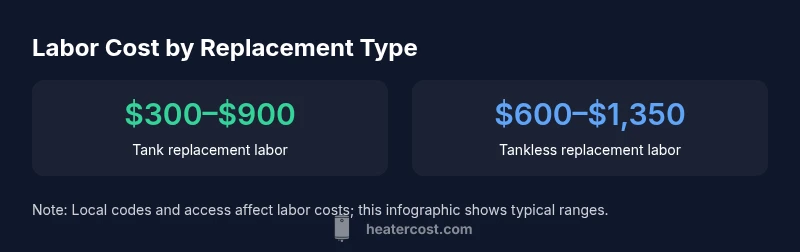
| Tank water heater replacement | $300–$900 | Electric/gas, standard install, basic venting |
| Tankless water heater replacement | $600–$1,350 | Higher labor due to venting and line work |
| Add-on services (disposal/permit) | $50–$350 | Depends on local rules and debris handling |
Got Questions?
What factors influence labor costs for water heater replacement?
Labor costs are driven by the heater type, job accessibility, venting and gas line work, electrical needs, permits, and disposal. Regional labor markets and after-hours service can also shift the total.
Labor costs depend on heater type, access, permits, and local rates.
Are tankless replacements more expensive to install than traditional tanks?
Yes, tankless installations often require more precise gas line work, venting, and testing, which can raise labor costs compared with traditional tank replacements.
Tankless installs typically cost more in labor.
Does disposal of the old unit affect labor costs?
Disposal and debris removal add to labor time and may be charged as separate line items or bundled into a service package.
Disposal can add to your labor costs.
Do permits affect labor costs?
Permitting can add both time and fees to labor. Some regions require permits where others do not, impacting the bid.
Permits can add time and cost.
What should I ask for in a bid?
Ask for a detailed scope, itemized labor tasks, inclusion of disposal and permits, warranty on labor, and a clear start date.
Ask for a clear scope and itemized labor.
How long does replacement typically take?
Most replacements take several hours, depending on access and unit type; set aside a window of 2–4 hours for standard jobs and longer for tankless.
Plan for a 2–4 hour window, longer for tankless.
“Labor cost for water heater replacement is highly variable because it hinges on unit type, access, and local labor markets. Homeowners should insist on a transparent scope and compare bids to avoid surprises.”
The Essentials
- Identify labor as a major cost driver
- Obtain multiple bids with a clear scope
- Include disposal and permits in budgeting
- Tankless installs may involve more labor
- Carefully read bids to avoid surprises