Heater Won't Ignite? Quick, Safe Troubleshooting Guide
Urgent troubleshooting for a heater that won't ignite. Learn common causes, step-by-step checks, safety tips, and when to call a pro. Brought to you by Heater Cost.


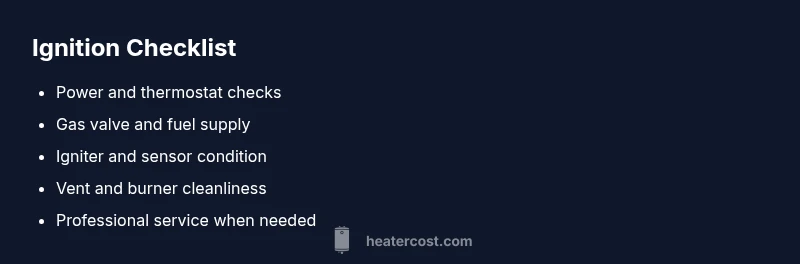
If your heater won’t ignite, start with the simplest checks: confirm the power is on, the thermostat is set to heat, and the fuel supply (gas or electricity) is active. Many ignition failures come from a tripped breaker, a closed gas valve, or a dirty igniter. This quick guide from Heater Cost helps you troubleshoot quickly.
What to Know About Heater Ignition Systems
heating systems vary widely, from electric furnaces to gas-fired boilers and direct-vent furnaces. In all cases, ignition is a safety-critical step. When a heater won’t ignite, it’s usually a symptom of an upstream issue rather than a single faulty component. Understanding whether you have a gas-fired unit with a standing pilot, an intermittent pilot, or a fully electronic ignition helps you target the fix quickly. In 2026, most residential heaters use electronic ignition, thermocouples, and sensors that guard against unsafe ignition. If you notice unusual smells, smoke, or a clicking noise without ignition, treat it as urgent and follow safety steps immediately.
According to Heater Cost, ignition failures are most often caused by a simple power or control fault, a closed fuel valve, or a dirty ignition surface. Replacing an igniter or sensor is common, but failures can also stem from thermocouple deterioration or blocked venting. The goal is to restore safe ignition while avoiding risky improvised fixes.
Quick Safety First: Before You Inspect
Safety is non-negotiable when dealing with heating equipment. Always power down the unit before touching electrical components or gas lines. If you smell gas, hear hissing, or suspect a gas leak, evacuate and call your gas utility or emergency services immediately. Use a carbon monoxide detector in the area and never bypass safety interlocks. When in doubt, pause and contact a licensed technician. Heaters that won’t ignite can indicate broader issues that require professional intervention, especially if the unit is old or has a history of ignition problems.
Keep children and pets away from the equipment during inspections. If you have a gas furnace, avoid leaning near the burner area; let the technician handle any disassembly or ignition tasks.
Common Causes of a Heater That Won't Ignite
There are several frequent culprits behind ignition failure:
- Power or controller issues: a tripped breaker, blown fuse, or faulty relay can prevent ignition even if you hear a spark.
- Thermostat or control wiring faults: if the thermostat doesn’t signal heat, the igniter won’t engage.
- Fuel supply problems (gas heaters): gas valve closed or gas line shutoff can stop ignition.
- Pilot light or thermocouple problems: an out pilot or degraded thermocouple is a common failure, especially in older systems.
- Dirty igniter or burner: soot, dust, or moisture can inhibit ignition or sensor readings.
- Venting issues: blocked vents can cause safety interlocks to prevent ignition.
Most of these issues are solvable with basic safety steps, but some require professional service, particularly gas line and venting problems.
Immediate Checks You Can Do Safely
Before you call for service, try these non-invasive checks:
- Verify power: ensure the furnace or heater is plugged in and the outlet is live. Reset the breaker if needed.
- Check the thermostat: confirm it’s set to heat, the temperature is above the current room temp, and there are no error signals on the control board.
- Inspect the gas valve: for gas furnaces, make sure the gas shutoff valve is fully open. If you smell gas, leave the area immediately.
- Listen for ignition cues: a faint click may indicate the ignition trying to light; repeated clicking without ignition points to ignition components.
- Visual inspection: look for condensation on vents or soot around the burner. Do not touch hot surfaces.
If any step feels unsafe, abort and contact a professional.
Gas vs Electric: Tailored Troubleshooting Path
Gas-fired systems rely on a pilot or electronic ignition and a gas valve. If gas is present but ignition fails, the problem could be the thermocouple, igniter, or valve. Electric heaters depend on power supply, thermostats, and heating elements. For electric units, check circuit breakers, fuses, and the integrity of the heating coils.
For either type, avoid attempting to bypass safety features. Ignition faults can indicate gas leaks or electrical faults that require licensed expertise. If ignition is inconsistent or only occurs under certain conditions, log the symptom details (time, temperature, error codes) to share with a technician.
Maintenance and Prevention to Avoid Ignition Failures
Proactive maintenance reduces ignition issues:
- Schedule annual inspections for gas heaters to test igniter, thermocouple, and gas valve safety.
- Replace worn ignition components at the manufacturer’s recommended intervals and clean the burner area to remove dust and debris.
- Keep vents clear; ensure exterior intake and exhaust are free of obstructions.
- Use a fresh air supply and proper combustion air to avoid incomplete ignition.
- Consider upgrading older systems to modern electronic ignition to improve reliability and safety.
Regular professional checkups help catch wear and tear before a failure occurs, protecting your home and reducing emergency repair costs.
When to Call a Pro and What to Expect
If basic checks don’t restore ignition, or you notice gas odors, flame color changes (yellow rather than blue), or abnormal noises, call a licensed technician. Expect a diagnostic assessment, part testing, and possibly replacement components such as the igniter, thermocouple, or control module. A typical service visit for ignition issues may involve a safety inspection, in-depth ignition testing, and a written estimate for parts and labor. Costs vary by region and unit type, but planning for a professional evaluation is wise when you suspect fuel or electrical system faults.
Real-World Scenarios and Quick Fixes
Homeowners often report ignition failures in the first- and second-generation furnaces. In many cases, a simple reset or cleaning the ignition surface resuscitates ignition. If the unit has an older pilot-lit system, reigniting per the manual is sometimes enough. However, if you continue to observe trouble after a reset, or you’re uncertain about any step, engage a pro. The goal is to restore safe, reliable heat without risking safety or causing further damage.
Steps
Estimated time: 60-90 minutes
- 1
Power down and safety check
Turn off the heater and disconnect power if accessible. If you’re comfortable, inspect the outlet or switch for signs of damage. This step minimizes shock risk before any further checks.
Tip: Never bypass safety interlocks; a quick visual check can prevent serious hazards. - 2
Test thermostat and controls
Set the thermostat to heat and a higher temperature than room temp. Listen for any diagnostic codes on the unit’s display and ensure mode selections (auto/heat) are correct.
Tip: Note any error codes to share with a technician, improving diagnostic speed. - 3
Check fuel or power supply
For gas systems, ensure the gas valve is fully open and there’s no gas odor. For electric units, verify the circuit breaker is on and no fuses are blown.
Tip: If you smell gas, evacuate and call the utility company immediately. - 4
Inspect ignition components
For gas systems, check the pilot light and thermocouple for wear and proper flame color. For electric systems, inspect the igniter or heating element for signs of damage or scorching.
Tip: Do not touch hot surfaces; allow components to cool before handling. - 5
Clean and reseat connections
Gently clean any soot on burners and reseat ignition wires or connectors. Corroded or loose connections can prevent ignition.
Tip: Use a dry brush or compressed air; avoid liquids near electrical parts. - 6
Test ignition again and plan next steps
Restore power and attempt ignition. If it still fails, document results and prepare to contact a pro with the observed symptoms.
Tip: Include model, serial, and any error codes when requesting service. - 7
When to call a professional
If ignition remains unresolved after these steps, or you suspect gas issues, schedule a service with a licensed technician. They will perform safety tests, check venting, and replace faulty parts if needed.
Tip: Professional support reduces risk and ensures code-compliant repairs.
Diagnosis: Heater won't ignite
Possible Causes
- highPower issue (breaker tripped or unplugged)
- highThermostat or control wiring fault
- highGas supply interrupted or gas valve closed
- highPilot light out or thermocouple degraded
- mediumIgniter or ignition module failure
- lowDirty burner or blocked vent causing ignition failure
Fixes
- easyCheck and reset the circuit breaker, and verify outlet power. If power is off, flip the breaker fully off then on, and test again.
- easyTest and re-seat thermostat wiring; replace or recalibrate if signals fail to reach the control board.
- easyEnsure gas valve is fully open and gas supply is active; if gas smells are detected, evacuate and call the utility.
- mediumRelight pilot or replace the thermocouple if worn; follow the manufacturer’s ignition procedure safely.
- hardInspect and replace igniter/ignition module; clean connections and verify spark or hot surface ignition.
- mediumClean burner, remove debris, and clear any restricted vents; recheck airflow and pressure.
Got Questions?
Why won't my gas heater ignite even though the pilot light is lit?
A lit pilot is a good sign, but ignition still requires a functioning thermocouple, clean burner, and reliable gas supply. Check for flame color and sensor connections. If the pilot stays lit but ignition fails, the issue is often the thermocouple or ignition module.
If the pilot is lit but ignition fails, the thermocouple or ignition module is often the culprit. Check connections and sensor cleanliness, and consider professional service for replacement.
Is it safe to relight a pilot light myself?
Relighting a pilot is possible with the right instructions, but you must follow the manufacturer’s safety steps. If you smell gas, do not attempt a relight; instead, evacuate and call the utility.
Relighting a pilot can be safe if you follow the manual and take proper precautions, but if you smell gas, don’t try it and call for help.
What should I check first if my thermostat shows heat but nothing ignites?
First verify power to the unit and ensure the thermostat wiring is intact. Then confirm the thermostat signal reaches the control board. A miswired thermostat can prevent ignition even when heat is requested.
Check power and wiring. If the thermostat isn’t communicating with the control board, ignition won’t start.
How can I prevent ignition problems in the future?
Schedule annual professional maintenance, clean burners and vents, and replace worn igniters or thermocouples per manufacturer guidance. Regular upkeep reduces emergency repairs and prolongs system life.
Regular maintenance and timely part replacements prevent many ignition problems.
When should I replace my heater instead of repairing?
If ignition failures happen frequently, or the unit is old and inefficient, replacement may be more cost-effective. A professional can help weigh the options based on energy costs and reliability.
If failures keep happening and efficiency is low, replacement may be the better option.
What signs indicate a dangerous gas issue?
Gas odors, hissing, or unusually colored flames (orange/yellow) require immediate evacuation and a call to your gas utility. Do not operate the unit until inspected by a professional.
Gas smells or hissing means danger—evacuate and call for help right away.
Watch Video
The Essentials
- Prioritize safety checks before inspections.
- Power, thermostat, and fuel supply are the usual suspects.
- Gas-related ignition issues require professional attention.
- Document symptoms and codes for faster service.