Car Heater Troubleshooting: Fix Cold Air in Your Vehicle
Learn fast, practical steps to fix a car heater blowing cold air. Diagnose thermostat, blend door, coolant, and heater core issues with safe, expert guidance from Heater Cost.


Most often, a heater blowing cold air in the car means the climate control blend door is stuck or the thermostat is failing, not enough hot coolant, or a faulty heater core. Start by checking coolant level and thermostat operation, verify the heat setting is warm, and listen for a faulty blend door actuator. If unresolved, seek professional help.
Understanding Why Your Car Heater Blows Cold Air
A car’s heater relies on hot coolant circulating from the engine through a device called the heater core. Air blown over the heater core becomes warm and travels through the cabin. When cold air comes out, the issue is usually related to the cooling system, the blend door that mixes hot and cold air, or the climate control electronics. Problems with the thermostat can prevent the engine from reaching its normal operating temperature, which means the coolant isn’t hot enough to transfer heat. A stuck blend door or a faulty actuator can keep cold air flowing even when the system wants to deliver heat. Finally, a clogged heater core or air trapped in the cooling system can dramatically reduce heat output. Rapid symptoms include little to no warmth, fluctuating temperatures, and air that alternates between warm and cool without changing climate settings. Diagnosis starts with simple checks and progresses toward component testing, keeping safety top of mind.
Common Causes of Cold Air in Car Heaters
- Low coolant level or coolant leaks: If the system isn’t filled properly, the heater core won’t heat reliably. Check the reservoir and hoses for signs of wetness or staining.
- Thermostat stuck open: The engine may run cooler than normal, so the heater never reaches its peak heat. A thermostat stuck open tends to keep the engine cool and the cabin cool as well.
- Stuck blend door or faulty blend door actuator: The blend door controls how much hot versus cold air enters the cabin. A jammed door or a failed actuator can send cold air even at high heat settings.
- Heater core blockage or restriction: Sediment or mineral buildup can restrict hot coolant flow through the heater core, reducing heat output.
- Air in the cooling system: An air pocket can prevent proper coolant circulation, causing erratic heating.
- Climate-control electrical issues: A failing control module or wiring problems can mislead the system into delivering cold air.
Safety and Quick Checks You Can Do Before Deep-Diving
Before tearing into components, ensure the ignition is off and the engine is cool if you plan to inspect hoses under the hood. Do not open hot coolant components or the radiator cap while the engine is hot. Check the simplest settings first: confirm the heater is set to warm, the fan is on, and the temperature control isn’t overridden by the AC function or auto mode. Listen for unusual sounds from the dash when cycling heat, which can indicate a stuck actuator. If you smell coolant or see coolant pooling under the car, stop and seek professional help, as that could indicate a leak needing repair.
Diagnostic Flow: Symptom-to-Diagnosis Overview
- Confirm the symptom: heater blows cold air even when set to heat. 2) Check coolant level and look for leaks. 3) Verify engine temperature reaches normal range and thermostat is operating. 4) Test blend door actuator by cycling temperature and listening for door movement. 5) Inspect heater hoses and heater core for heat transfer and blockages. 6) If none of these steps resolve the issue, consider electrical faults or professional service.
Step-by-Step Fixes You Can Try Now (Most Common Cause: Blended Door / Thermostat)
- Ensure the engine is cool, then check the coolant level in the reservoir and radiator. Top up if needed with the correct type of coolant. Allow the engine to reach normal operating temperature and test heat delivery again. Tip: do not overfill and check for leaks after topping off.
- With the engine cold, locate the thermostat housing. If you suspect a stuck open thermostat, replace it following the vehicle’s service manual. A wrong thermostat can result in consistently cool cabin temperatures even if the heater is on heat.
- Access the blend door actuator under the dashboard. Listen for a click when switching heat from cold to hot. If you hear no movement or the air temperature doesn’t change, replace the actuator or inspect the linkage for binding. Tip: disconnect the battery before working near airbags or wiring to avoid shorts.
- Check for air in the cooling system by running the engine and monitoring the gauge. If you notice spongy heat or bubbles in the coolant, bleed or flush the system per the manufacturer’s procedure. Safety: never open the radiator cap when hot; allow the engine to cool first.
- If the heater core feels cool to the touch while the hoses at the firewall are hot, the core may be clogged. A professional flush or replacement is often required. Step-by-step procedures vary by model; consult your service manual before attempting a heater-core flush.
- After performing these steps, run the engine to normal temperature, set climate to heat, and confirm the cabin warms consistently. If heat remains inconsistent, seek professional diagnosis for possible wiring or control module issues.
Preventive Tips to Avoid Cold Air Symptoms in the Future
- Schedule regular cooling-system service: coolant replacement intervals and leak checks help maintain proper heater performance.
- Keep coolant topped up between services and fix leaks promptly to prevent air pockets.
- Test the blend door actuator during routine HVAC inspections to catch failures early.
- Use the correct coolant type and follow vehicle-specific guidelines to prevent mineral buildup in the heater core.
- Pay attention to temperature fluctuations and address electrical or sensor warnings early to avoid cascading HVAC problems.
When to Seek Professional Help and What to Expect
If you’ve gone through basic checks and the heater still blows cold air, it’s time to contact a licensed technician. Electrical faults, control-module failures, or a degraded heater core often require specialized diagnostic tools and safe disassembly of interior components. A professional will typically perform a pressure test on the cooling system, test the blend-door actuator with a scan tool, and confirm HVAC operation across multiple modes. They’ll also inspect for leaking heater-core coolant and ensure proper heat delivery without compromising engine cooling.
Steps
Estimated time: 45-60 minutes
- 1
Verify symptom and safety
Confirm the heater is indeed blowing cold air and ensure the engine is cool before touching any components. Set climate control to heat and full fan, then observe if anything changes. Safety tip: avoid opening hot components or pressing on airbag areas.
Tip: Take pictures of wiring harnesses before disconnecting connectors. - 2
Check coolant level
Open the hood and locate the coolant reservoir. If the level is low, top up with the correct coolant. Look for leaks around hoses and the radiator. After topping off, run the engine to normal temperature to see if heat improves.
Tip: Do not overfill; air pockets can form if the system isn’t vented properly. - 3
Inspect thermostat operation
With the engine cold, locate the thermostat housing and inspect for leaks. Consider replacing the thermostat if you notice slow warm-up or persistent cool engine temperature while driving.
Tip: Follow your vehicle’s service manual for the exact replacement procedure. - 4
Test blend door actuator
Access the blend door actuator under the dash. Change temperature and listen for actuator movement. If there is no movement or inconsistent air temperature, replace the actuator or inspect the linkage for binding.
Tip: Power off the car and disconnect the battery before handling electrical components. - 5
Bleed air from the cooling system
If you suspect air pockets, run the engine and bleed the cooling system per your model’s procedure. Look for a steady rise in temperature on the gauge and consistent heat output in the cabin.
Tip: Do not remove the radiator cap when the engine is hot. - 6
Assess heater core condition
Feel heater hoses at the firewall; if they’re warm but the cabin isn’t, the core may be blocked. A professional flush or replacement is often required.
Tip: Heater-core work is labor-intensive; plan for a shop visit if complexity arises.
Diagnosis: Car heater blows cold air even when set to heat
Possible Causes
- highLow coolant level or coolant leaks
- highThermostat stuck open
- mediumStuck blend door actuator or faulty blend door
- lowHeater core blockage or restriction
- lowAir in cooling system
- lowHVAC control wiring/fuse issues
Fixes
- easyCheck coolant level and top up if needed; inspect for leaks and repair as necessary
- mediumTest and replace thermostat if it’s stuck open
- mediumTest and replace blend door actuator or repair linkage
- hardFlush or replace heater core if blocked
- easyCheck fuses and climate-control wiring; repair if faulty
Got Questions?
Why is my car heater blowing cold air even when I set it to heat?
Common causes include a stuck blend door actuator, a thermostat that isn’t regulating temperature, or low coolant. Electrical issues in the HVAC controls can also cause incorrect heat delivery.
Common causes are a stuck blend door, thermostat problems, or low coolant. Electrical HVAC issues can also play a role.
Can a blown fuse cause the heater to blow cold air?
Yes. A blown fuse in the climate-control circuit can disable heater controls or the blower. Inspect fuses related to the HVAC system and replace if needed after confirming no short circuits.
A blown HVAC fuse can disable heat delivery; check fuses and replace if needed.
Is a clogged heater core the likely reason for cold air?
A clogged heater core can reduce heat output. It’s more common in older vehicles or those with coolant neglect. A professional flush or core replacement is often required.
A clogged heater core reduces heat; often needs professional service.
What maintenance can prevent this issue?
Regular coolant changes, checking for leaks, and periodic HVAC system inspections help prevent cold-air symptoms. Ensure the blend door and actuators are checked during routine service.
Regular coolant maintenance and HVAC checks prevent cold-air issues.
When should I see a mechanic for car heater problems?
If basic checks don’t restore warmth after topping up coolant or replacing a thermostat, seek professional diagnosis. Electrical issues or hidden leaks require expert tools.
If heat remains absent after basic checks, see a mechanic.
Can turning off the AC help when the heater is cold?
Turning off AC can help ensure the system isn’t cooling the air improperly, but it won’t fix a damaged heater. Use the heating mode with fan on high to test heat delivery.
Turning off AC may help reduce cooling, but won’t fix a broken heater.
Watch Video
The Essentials
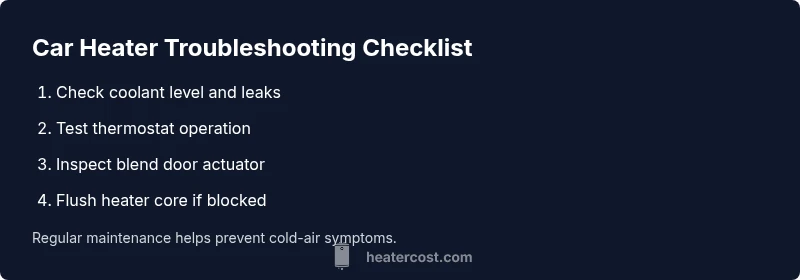
- Check coolant level and thermostat first
- Verify climate settings and blower operation
- Test blend door actuator and door movement
- Seek professional help if heat is still absent