How to Replace a Water Heater with a Tankless System
A practical, step-by-step guide to replacing a traditional water heater with a tankless system. Learn sizing, venting, utilities, costs, and maintenance for homeowners exploring this upgrade.


You will replace a traditional storage water heater with a tankless system. This guide helps you assess suitability, size the unit, plan venting and utilities, compare gas vs electric options, and decide when to hire a licensed professional for installation and permits. It emphasizes safety, code compliance, and a realistic timeline.
Is Tankless System Right for You?
If you're replacing a storage tank water heater, a tankless model can offer continuous hot water, space savings, and potential energy savings. But it isn't a universal fix. The decision depends on your home layout, hot-water demand, climate, and how the system will be installed in your existing utility room. According to Heater Cost, tankless systems shine for households with frequent, high hot-water use and tight spaces, but the payback depends on usage and local energy costs. For homes with very low hot-water demand or where the existing venting and electrical/gas capacity limit installation, a tankless unit may not deliver the expected benefits.
When comparing, consider your peak flow: how many fixtures may run simultaneously, such as showers, dishwashers, and washing machines. In colder climates, a tankless unit may struggle to deliver hot water if sized too small. Sizing should balance incoming water temperature, desired hot-water temperature, and the length of showers. This is where an online calculator or a consult with a licensed plumber or HVAC contractor becomes valuable, ensuring you don't pay extra for over- or under-sized equipment. The Heater Cost team recommends getting a formal load calculation and a site assessment before any purchase.
Sizing Your Tankless Water Heater
Sizing is the most critical step. Tankless water heaters are rated by gallons per minute (GPM), not by tank capacity. To estimate the right size, start with your peak hot-water demand: a typical family might run a shower and a faucet simultaneously, plus appliances like a dishwasher or washing machine. Electric tankless units commonly deliver lower base GPM than gas models, but high-efficiency electric options can meet modest needs. A common rule of thumb is 4–6 GPM for a modest family with 1–2 bathrooms, rising to 7–9 GPM for larger homes or frequent simultaneous use. Always calculate based on your climate: colder incoming water reduces usable GPM. Use a load calculator and, if in doubt, involve a licensed plumber or HVAC contractor to avoid undersizing or oversizing.
Beyond GPM, consider temperature rise: how much the water temperature must increase to reach your desired hot-water temperature. Each fixture adds to the load, so plan for combined demand. When you size, allow for future changes (additional bathrooms, guests, new appliances) to avoid another replacement soon. The goal is a unit that delivers enough hot water at your chosen temperature without triggering cold-water bursts during peak use.
To validate sizing, document your home’s daily hot-water patterns for a week: note showers, baths, laundry runs, and appliance use. This data helps you compare models and avoid over-investment. If you plan to retrofit a tankless system into an older home, you may need structural adjustments or venting changes. A professional assessment helps ensure your chosen model aligns with existing pipes and vents, minimizing retrofit complexity.
Electrical, Gas, and Venting Considerations
The fuel source drives most installation decisions. Electric tankless heaters require a robust electrical circuit, often a dedicated service or a panel upgrade to handle high startup current. Gas tankless models need proper venting and adequate gas supply—improper venting can cause dangerous exhaust buildup and poor performance. In colder climates, venting and pipe sizing are critical to maintain hot-water delivery. Before purchasing, confirm that your home’s electrical panel can accommodate the new unit, or budget for a service upgrade. For gas installations, ensure gas lines are sized to meet the unit’s needs and that exhaust venting is compliant with local codes. Always hire licensed professionals for gas line work and vent installation to avoid leaks or improper venting. Heater Cost’s guidance emphasizes code-compliant setups and a professional assessment to prevent future failures.
During installation, ensure the new unit is mounted securely, with appropriate clearances and access for maintenance. Use high-quality, corrosion-resistant connections and apply appropriate sealants and thread compounds where required. Maintain a blockage-free vent path and check for gas or water leaks after installation. Finally, schedule a post-installation inspection to verify code compliance and system safety.
Installation Steps You Can Take vs When to Hire a Pro
While some homeowners can handle prep work, many steps require licensed professionals. Here’s a practical breakdown:
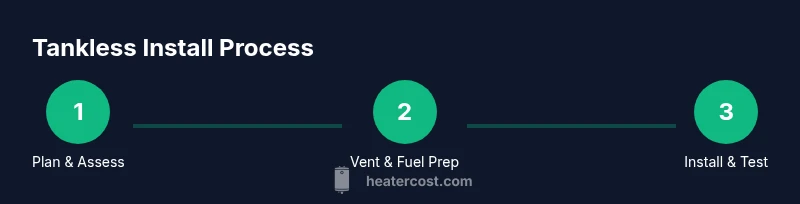
- Plan and evaluate space: Assess where the tankless unit will mount, measuring clearance and accessibility for service.
- Shut off utilities: Turn off the main water supply and power or gas to the existing water heater. This is non-negotiable for safety.
- Remove old unit: Disconnect electrical/gas lines, drain the tank, and detach from the existing plumbing. Keep corrosion-free connections for reuse or safe disposal.
- Prepare venting and fuel supply: If venting needs updating or a gas line upgrade is required, call a licensed contractor to install or certify the ventilation route.
- Install the tankless unit: Mount hardware, connect water lines with proper fittings, and route electrical or gas connections. Ensure anti-siphon protections and backflow prevention.
- Test and calibrate: Refill, purge air, verify temperatures, and check for leaks. Run multiple fixtures to confirm consistent hot water.
- Permits and inspection: If required in your area, obtain permits and have an inspection to finish the project legally and safely.
The Heater Cost team suggests scheduling a professional check after installation to confirm efficiency and safety, especially when converting from a storage tank to a tankless system.
Costs, Incentives, and Budgeting
Costs vary widely based on unit type (electric vs gas), flow rate, and whether existing venting or gas lines must be upgraded. In general terms, the price of the unit and installation can fall within a broad range, with more complex retrofits, venting challenges, or multiple units pushing the total higher. When budgeting, distinguish between the core unit cost and installation labor, which can vary with local labor rates. Many homeowners also explore energy-saving incentives, rebates, or tax credits that may apply to tankless installations. Based on Heater Cost analysis, the payback period depends on your household’s hot-water usage, energy prices, and climate. Be prepared for potential permit costs and any necessary upgrades to electrical service or gas supply.
Planning ahead helps you avoid surprises. Request multiple quotes that itemize parts and labor, and verify that vendors include venting, gas line work, or electrical updates as needed. A careful comparison prevents sticker shock and ensures you get a compliant, efficient system that matches your home’s hot-water needs.
Maintenance and Longevity
Tankless heaters are designed for long life with proper maintenance. Regular descaling is essential in hard-water areas to preserve efficiency and extend life. Many units require yearly or semi-annual service to flush mineral buildup, check inlet and outlet temperatures, and inspect the venting path. An annual professional inspection helps detect corrosion, leaks, or loose connections before they become major problems. With decent maintenance, a tankless system can outlast many storage tanks and operate with high energy efficiency. Finally, use a water-softening system if you have hard water to reduce mineral buildup and preserve performance over time. Consistent monitoring and occasional service keep the system running smoothly for years to come.
Heater Cost Verdict
The Heater Cost team recommends homeowners evaluate hot-water needs, local energy costs, and home venting/gas capacity before committing to a tankless upgrade. When sized correctly and properly vented, a tankless system can deliver on-demand hot water and space savings while lowering energy waste. If you have adequate utility capacity, warm climates, and high daily hot-water use, tankless is a compelling option. If space is tight, your existing venting is complex, or you expect only light hot-water need, a storage tank may remain a simpler, lower-cost choice. The Heater Cost verdict is to approach with a formal load assessment, compare multiple models, factor in potential upgrades, and work with licensed professionals to ensure safety and compliance.
Tools & Materials
- Gas shut-off valve(Shut off gas supply before disconnecting the old heater)
- Electrical panel and wiring access(Ensure panel can support a high-demand electric tankless unit)
- Venting kit and ducting(Code-compliant venting for gas models; check clearance)
- Water isolation valves(Isolation valves for service and maintenance)
- Pipe fittings and connectors(Copper/PEX fittings with proper thread sealant)
- Shut-off tools and wrenches(Adjustable wrenches, pliers, and torque wrench if specified)
- Teflon tape and thread sealant(For watertight and gas-tight seals)
- Leak detector and gas sensor(Optional but recommended after installation)
- Mounting hardware(Bracket, screws, and anti-tip supports)
Steps
Estimated time: Estimated total time: 1-2 days
- 1
Plan and assess
Measure space, assess venting routes, and confirm fuel type compatibility. Confirm that a tankless model can meet your peak demand and fit your utility room without obstructing access for maintenance.
Tip: Document current plumbing and electrical layouts to simplify the retrofit. - 2
Shut off utilities and prepare
Turn off water, power, and gas to the existing heater. Open nearby faucets to relieve pressure and drain the tank if present.
Tip: Double-check that all power and gas lines are isolated before handling any components. - 3
Remove old heater and prepare connections
Disconnect electrical or gas lines, drain remaining water, and detach the storage tank from the supply and venting. Prepare the space for mounting the tankless unit and inspect the vent path.
Tip: Keep old hardware if reusing compatible parts is allowed by local code. - 4
Install mounting and venting
Mount the wall bracket, install venting or vent kit, and ensure there is clear clearance around the unit. Verify vent slope and seals. Connect supply lines with proper fittings.
Tip: Follow manufacturer guidelines for mounting height and orientation. - 5
Connect utilities and plumbing
Run water lines to the unit, connect electrical or gas service, and install isolation valves. Apply Teflon tape on threaded connections and check for leaks after testing.
Tip: Perform a dry fit before final tightening to avoid cross-threading. - 6
Test, calibrate, and inspect
Fill the system, purge air, set temperature, and run multiple fixtures to confirm consistent hot water. Schedule a professional inspection if required by code.
Tip: Document test results and keep a copy of the inspection report for records.
Got Questions?
Do I really need a professional to install a tankless water heater?
For gas tankless models, venting, gas line sizing, and code compliance typically require a licensed professional. Electric units may also require a qualified electrician for a dedicated circuit. A DIY approach can be risky and may void warranties.
Gas or electric tankless installs usually need a licensed pro due to venting, electrical, and safety codes.
How do I know which size tankless unit I need?
Sizing is based on peak hot-water demand (GPM) and temperature rise. Consider the number of bathrooms, fixtures, and climate. Use a load calculator and consult a professional to select a model that meets your needs.
Use a GPM calculator and consider climate; a pro can help with precise sizing.
Are there rebates or tax credits for tankless upgrades?
Many regions offer energy-efficiency incentives on tankless systems, but availability depends on local programs and installation details. Check with local utilities and state programs for current offers.
Check local utility programs and state incentives for potential rebates.
Will a tankless heater save me money?
Tankless systems can save energy by heating water on demand, reducing standby heat loss. Savings vary with usage, fuel type, and climate, and payback periods depend on local energy costs.
Savings depend on usage and fuel; a well-sized unit often improves efficiency.
Is maintenance hard for tankless systems?
Maintenance is generally straightforward but requires periodic descaling in hard-water areas and annual professional inspections for optimal performance.
Maintenance is simple but regular descaling and yearly checks are important.
Can I replace a tank with a tankless system in a small home?
Yes, but sizing and venting must be carefully planned. In some setups, space and venting constraints may require adjustments or compromises.
A small home can work with tankless, but proper sizing and venting are key.
Watch Video
The Essentials
- Assess hot-water needs before buying
- Size by GPM, not tank capacity
- Vent and fuel readiness are critical
- Plan for permits and professional help
- Maintain system for longevity