How to Choose the Right Heater for Water in 2026
A comprehensive guide from Heater Cost on heater for water options, sizing, efficiency, installation, and total cost of ownership for homeowners and property managers.


A heater for water is any appliance that raises water temperature for taps, showers, and appliances, including storage tank water heaters (gas or electric), tankless models, heat pumps, and solar systems. The best option depends on demand, climate, energy costs, fuel availability, installation space, venting needs, and maintenance requirements in homes and small businesses.
Understanding heater for water types
According to Heater Cost, a heater for water covers a spectrum of technologies designed to deliver hot water for showers, sinks, dishwashers, and laundry. The most common categories are storage-tank heaters (gas and electric), tankless or on-demand units, heat-pump water heaters, and solar-water-heating systems. Each type brings distinct advantages and tradeoffs in recovery rate, standby losses, upfront costs, and long-term operating costs. Start by assessing your home’s hot-water demand: how many bathrooms, how many people use hot water simultaneously, and whether you need continuous supply for appliances or a big laundry day. Space constraints, fuel availability, and climate will heavily influence the best fit. For example, tankless models save space and provide endless hot water but may require larger gas lines or electrical upgrades; heat-pump heaters offer efficiency gains in moderate climates but depend on ambient temperatures. Solar systems excel with abundant sun but require roof space and upfront investment. A balanced decision considers reliability, cost of ownership, and climate realities.
Estimating demand and sizing your water heating system
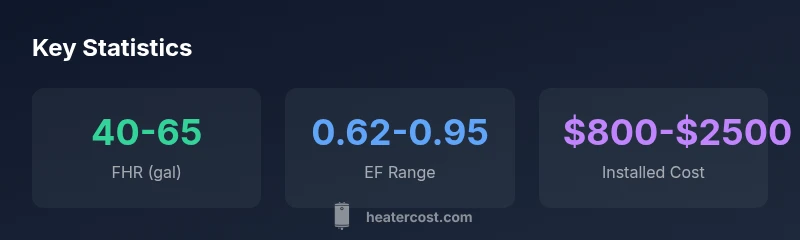
Sizing begins with estimating peak hourly demand. Create a quick inventory of fixtures likely to draw hot water at the same time (showers, dishwashers, laundry, etc.) and translate that into a target first-hour rating (FHR) or flow rate (GPM). The goal is to avoid cold-water surprises during morning routines or busy cleaning cycles. Compare FHR or GPM across models and remember that climate and fuel influence actual performance. Cold incoming water in winter lowers immediate output, so you might opt for a unit with a higher FHR or larger GPM if you anticipate growth in demand. Leave margin for future needs—adding a bathroom, upgrading appliances, or increasing occupancy can change your hot-water profile over time. In practice, many households find that a mid-range FHR with a well-matched tankless option can provide flexibility and resilience.
Efficiency and operating costs: EF, standby losses, and energy costs
Efficiency is a key driver of long-term costs. The energy factor (EF) or equivalent efficiency metric predicts annual energy use, while standby losses in storage tanks represent energy wasted while water sits heated. Higher EF models typically deliver lower operating costs but may come with higher upfront prices. Heater Cost analysis shows that the best long-term value often comes from balancing upfront costs with ongoing savings, tailored to your climate and energy prices. In colder regions with expensive electricity, gas storage or tankless gas units can be favorable, while in milder climates with high electricity costs, heat-pump water heaters may offer the strongest savings. For solar-water-heating systems, consider seasonal performance and the reliability of your solar resource. The key is to quantify annual energy use and align it with local energy rates to estimate true ownership costs.
Installation considerations: space, venting, permits, and professionals
Your installation plan should account for space availability, venting requirements, electrical capacity, and local permit rules. Gas heaters require proper venting, dedicated fuel lines, and compliance with gas codes, while electric models depend on panel capacity and breaker space. Tankless units may need gas line upgrades or higher-amperage circuits, and storage tanks need a solid platform with proper access for maintenance. Always check local permit requirements before ordering equipment. Plan for safe vent routing and adequate clearance for service access. Hire licensed plumbers or electricians as required, and verify warranty terms before installation. A well-planned setup reduces safety risks and ensures optimal performance from your heater for water.
Cost, financing, and payback: what you should expect
Total cost includes equipment, installation, venting, electrical work, and any necessary upgrades. Prices vary widely by type and region, with electric storage models at the lower end and tankless or heat-pump systems at the higher end due to sizing, venting, and installation complexity. While upfront costs can be substantial, consider long-term energy savings, maintenance needs, and replacement intervals. Financing options, energy-efficiency rebates, and tax credits can improve economics. Evaluate total cost of ownership over the unit’s life, factoring in energy costs, service intervals, and expected lifetimes to determine which option delivers the best value for your home. A careful cost-benefit analysis helps you avoid over- or under-sizing the system.
Practical tips for choosing and maintaining your water heater
Start with clear objectives: consistent hot water, reasonable energy costs, and simple maintenance. Use independent reviews and ENERGY STAR ratings to compare models. Schedule annual professional inspections and flush tanks to reduce sediment buildup; for tankless systems, periodic descaling may be needed to maintain flow. Keep temperature around 120°F (49°C) to balance comfort and safety. Document maintenance tasks and service intervals, and consider an extended warranty if offered. The Heater Cost team recommends prioritizing total cost of ownership, not just upfront price, and considering installation complexity early in the decision process.
Common water heater types and their general characteristics
| Model Type | Key Characteristic | Typical Efficiency (EF) |
|---|---|---|
| Storage Tank (Gas) | Stores hot water for ready supply | 0.59-0.70 |
| Storage Tank (Electric) | Store 30-80 gallons depending on tank size | 0.90-0.95 |
| Tankless (Gas) | On-demand heating with variable flow | 0.82-0.92 |
| Tankless (Electric) | On-demand heating with high efficiency | 0.90-0.98 |
Got Questions?
What is the most energy-efficient heater for water?
The most energy-efficient choice depends on your usage pattern and climate, but high-efficiency tankless or heat-pump water heaters often deliver strong long-term savings. Compare EF ratings and expected operating costs for your home.
The most efficient option depends on your usage, but high-efficiency tankless or heat-pump models frequently offer the best long-term savings.
How long does it take to recover hot water with a tankless heater?
Tankless heaters heat water on demand, so there is typically no recovery period in the traditional sense. Output depends on flow rate and incoming water temperature.
Tankless units heat water on demand; there’s usually no recovery delay, just dependent on flow and incoming water temperature.
What is the typical cost to install a water heater?
Installation costs vary widely by type, region, and required upgrades. Electric storage is often less expensive to install than gas or tankless options, which may require venting or electrical work.
Installation costs vary a lot by type and home upgrades; electric storage is usually cheaper to install than gas or tankless options.
Are there tax credits or rebates for water heaters?
Yes, some energy-efficient water heaters may qualify for federal or state incentives. Check current programs and eligibility for your location and the specific model.
Yes, some efficient water heaters qualify for incentives; check federal, state, and local programs for details.
How often should a heater for water be serviced?
Most systems benefit from an annual professional inspection. Tankless units may require periodic descaling, especially in hard water areas.
Annual professional service is usually recommended, with descaling for some tankless units in hard water areas.
“Choosing the right heater for water is a balance between peak hot-water demand, climate, and long-term energy costs—not just upfront price.”
The Essentials
- Assess your hot-water demand before selecting a heater for water.
- Compare EF and energy costs across storage, tankless, and heat-pump options.
- Evaluate space, venting, and installation requirements early.
- Include maintenance and replacement costs in the long-term plan.
- Check for available energy-efficiency incentives or rebates.