Fan-Forced Heaters vs Radiant: A Comprehensive Comparison for Homeowners
A thorough side-by-side analysis of fan-forced heaters (heater like fan) and radiant heaters, covering heat delivery, noise, energy use, safety, and costs. Learn how to select the right heater for your space with a practical decision framework.


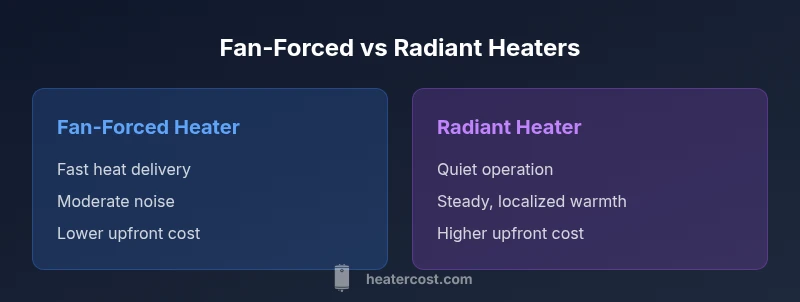
In short, a heater like fan (a fan-forced heater) delivers heat quickly to small and medium spaces, but may be noisier than radiant options and can drive higher energy use during peak heat bursts. Radiant heaters provide quiet, targeted warmth and steady comfort with little air movement, making them ideal for bedrooms or reading nooks. The best choice depends on room size, noise tolerance, and energy costs.
What is a heater like fan and where does it fit in home heating?
A heater like fan refers to a type of space heater that uses an integrated blower to distribute warmed air. The defining feature is the built-in fan that moves air across a heating element. This design enables rapid heat delivery, making it popular for quick warm-ups in living rooms, home offices, and drafty spaces. Homeowners often encounter these devices in portable tabletop or floor-standing forms, and in some compact wall-mounted designs. When we talk about a heater like fan, we’re usually comparing it to radiant options that heat objects directly without relying on circulating air. In real homes, the choice often comes down to how fast warmth is needed and how much air movement is acceptable in the room.
Fan-forced heaters: mechanism, benefits, and drawbacks
Fan-forced heaters work by circulating air through a metal coil or ceramic element. A fan accelerates heat dispersion, producing quick warmth but also creating noticeable air movement and some noise. Benefits include fast heat, flexibility, and relatively affordable entry costs. They excel in rooms that get cold quickly or where occupants come and go, such as entryways or home offices. Drawbacks include potential noise, drafts, and uneven warmth in larger spaces where the air can stratify. For the homeowner evaluating a heater like fan, it’s essential to assess sleeping areas, layout, and whether you prefer warm air that fills a space or targeted warmth.
Radiant heaters: mechanism, benefits, and drawbacks
Radiant heaters emit infrared energy that warms people and objects directly, with little air movement. This produces a quiet, steady warmth and can feel more natural in bedrooms or reading nooks. Benefits include low noise, more consistent comfort near seating areas, and reduced dust circulation. Drawbacks can include slower time to heat a larger room and a lack of broad air distribution. When comparing a heater like fan to radiant models, consider whether you prioritize silent operation over speed of heat or if you need uniform warmth across the entire space.
Key performance criteria: heat output, distribution, and control options
Heat output is typically measured in watts or BTUs. Fan-forced units may deliver high wattage quickly, and many models offer multiple heat settings and fan speeds for greater control. Radiant heaters may deliver lower wattage but still provide comfortable warmth via infrared energy, with controllability via thermostats and some models enabling zoning. It’s important to compare not just peak output, but how evenly heat is distributed. In small rooms, a radiant heater may feel too focal, while in a drafty hallway, a fan-forced unit could be overkill.
Noise, airflow, and comfort considerations
Airflow from a fan-forced heater can cause noticeable drafts, especially near vents or in tight spaces. In contrast, radiant heaters operate with minimal air movement, leading to quieter operation. For people sensitive to sound—children, light sleepers, or home offices—radiant models can be more comfortable. Noise levels also depend on the fan’s speed and the heater’s overall construction. When evaluating a heater like fan, test noise in the actual room where it will be used and consider whether you need a model with a quiet mode or a higher-velocity fan for rapid heat.
Space planning, placement, and safety considerations
Placement matters for any space heater. A fan-forced heater should have clear clearance around the intake and outlet and should not be placed where occupants frequently sit in the direct blast of warm air. Radiant heaters, by contrast, benefit from being directed toward seating areas and away from flammables. Both types require tip-over protection, overheat protection, and proper electrical outlet usage. If you’re using a heater like fan in a bedroom, consider a model with low-profile design and a thermal cutoff to mitigate accidental exposure to hot surfaces.
Operating costs, efficiency, and maintenance over time
Energy costs depend on usage patterns and climate. Fan-forced heaters can be efficient for short bursts, but continuous operation may raise electricity use. Radiant models often exhibit lower air movement, which can translate to energy savings for intermittent use. Maintenance typically includes cleaning air intakes, inspecting the cord, and ensuring that fans or infrared elements are functioning. Regular cleaning can help sustain performance and prolong life. When evaluating a heater like fan, compare energy efficiency ratings and projected annual operating costs based on your typical usage.
Buying framework and decision trees for homeowners
To decide between a heater like fan and radiant options, start with room size and typical occupancy. If you need fast heat in a drafty entry or an office, a fan-forced unit may win. If you want silent warmth in a bedroom or reading nook, radiant is often the better fit. Consider energy costs, maintenance, and warranty coverage. A practical approach is to map your rooms by warmth needs and pick a primary unit with a secondary, quieter option for other spaces.
Installation tips, common pitfalls, and maintenance routines
Even the best heater like fan will underperform if installed incorrectly. Ensure the device is plugged into a dedicated outlet and kept away from curtains, furniture, or bedding. For radiant heaters, avoid directing heat toward flammable objects and ensure they have proper clearance. Routine maintenance includes cleaning grills, inspecting the thermostat, and replacing worn components. If you’re unsure about electrical compatibility or safety, consult a licensed electrician or heating professional.
Comparison
| Feature | Fan-forced heater | Radiant heater |
|---|---|---|
| Heat delivery pattern | Fast heat distribution via convection and blower | Direct radiant warmth with minimal air movement |
| Noise level | Moderate to high depending on model | Low to very low; mostly silent |
| Energy efficiency & operating cost | Good efficiency for quick warm-up; may incur higher energy use during cycles | Efficient for targeted warmth; often lower air leakage |
| Best for | Small-to-medium rooms needing rapid warmth and air fill | Quiet spaces and areas where stable, localized warmth is preferred |
| Best-case room size | Smaller living spaces, entryways, home offices | Bedrooms or seating areas where quiet warmth is valued |
| Initial price range | Lower upfront cost on many models | Mid-to-high upfront cost depending on materials and features |
| Maintenance | Moderate; moving parts include the fan | Lower; fewer moving parts in many radiant models |
| Safety features | Overheat protection, tip-over switch | Overheat protection, tip-over common; tilt switches less frequent |
The Good
- Fast heat delivery for quick warmth in busy spaces
- Often lower upfront cost and portable options
- Good control with multiple heat settings and fan speeds
- Flexible placement and quick heat-up in drafty rooms
Negatives
- Noise from the fan and air movement;
- Less even heat distribution in larger rooms; can cause drafts
- Higher energy use during short, rapid heating cycles
- More moving parts that may require maintenance
Fan-forced heaters win for speed in small spaces; radiant heaters win for quiet, steady warmth in quiet rooms
Choose a heater like fan if you need rapid warmth and flexibility in smaller areas. If you prioritize quiet operation and consistent warmth near seating or sleeping areas, radiant options are typically the better long-term choice.
Got Questions?
What is a heater like fan and how does it work?
A heater like fan uses a built-in blower to distribute warm air quickly throughout a room. It blends convection and forced air to achieve fast heat delivery, which can be beneficial in spaces that need rapid warmth.
A heater with a built-in fan blows warm air to heat a room quickly.
Are fan-forced heaters safe for bedrooms?
Yes, but choose models with overheat protection, tip-over switches, and a quiet mode if available. Place them away from bedding and curtains, and never leave unattended in sleeping areas.
Yes, with the right safety features and careful placement.
Which costs more to operate, fan-forced or radiant heaters?
Operating costs depend on usage. Fan-forced heaters can be cheaper upfront but may cost more to run over time in high-use spaces, while radiant heaters often use less energy for steady, localized warmth.
Costs depend on how you use them; radiant models can be more efficient for steady warmth.
Do fan-forced heaters heat evenly?
Heat distribution from fan-forced units can be uneven in larger rooms due to air currents and layout. Smaller spaces or near the heat source often feel warmer first.
Not always even in big rooms; best in smaller areas.
Can I use either type in a large living room?
For large rooms, you may need multiple units or a radiant system with strategic placement. A single fan-forced heater can warm a small portion of a large space quickly but may leave corners cooler.
You might need multiple heaters or a different approach for large rooms.
What maintenance do fan-forced heaters require?
Regular cleaning of air intakes, checking the cord, and ensuring the blower fan operates smoothly are standard. Replace worn parts and test safety features periodically.
Keep the intake clean and inspect safety features regularly.
The Essentials
- Assess room size to match heat delivery style
- Choose fan-forced for rapid warming in drafty spaces
- Prefer radiant for silent, localized warmth
- Balance upfront costs with expected operating costs
- Factor safety features and maintenance into the decision