Descaling Solutions for Tankless Water Heaters: Costs, Methods, and Maintenance
Discover how descaling solutions for tankless water heaters remove mineral buildup, boost efficiency, and extend life. This guide covers methods, safety, costs, and maintenance to keep your system running at peak performance.


Descaling solution for tankless water heater is used to remove mineral buildup that reduces heat transfer and efficiency. A safe, properly diluted descaling solution preserves internal components while dissolving scale from the heat exchanger and flow paths. This quick guide explains what products to use, how to apply them, and when to call a professional for hard-water systems.
Understanding why descaling matters for tankless water heaters
Descaling is not just a maintenance chore; it directly affects how efficiently your system heats water. In hard-water regions, mineral scale forms on heat exchangers and within small passages, reducing heat transfer. Over time this buildup can cause longer heating cycles, uneven water temperatures, and higher energy use. A descaling solution for tankless water heater is specifically formulated to dissolve mineral deposits without corroding metal surfaces. According to Heater Cost, regular descaling helps maintain peak efficiency, preserves warranty conditions where applicable, and extends the lifespan of critical components like heat exchangers and flow restrictors. For homeowners, this means steadier hot water and lower operating costs in the long run.
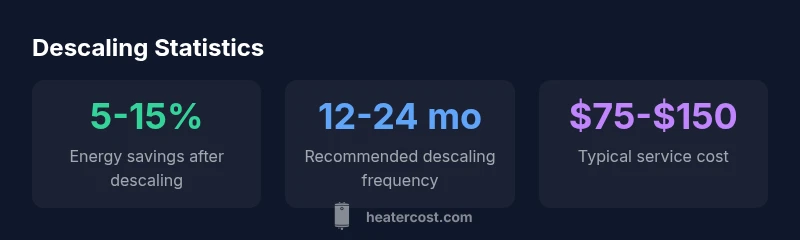
If you’re unsure about your water hardness or the right product, start with a test or consultation from a qualified technician. A simple hardness test can guide how often you should descale and which solution type to choose. In many homes with moderately hard water, a routine descaling every 12–24 months aligns with manufacturers’ maintenance recommendations. The goal is to sustain consistent heating performance while minimizing the risk of costly repairs from scale-related blockages.
How descaling solutions work: chemistry and mechanism
Descaling solutions rely on chemistry to dissolve mineral salts such as calcium carbonate and magnesium deposits that form on the heat exchanger and along flow paths. Acidic cleaners, when used correctly, react with carbonate scales to convert solid minerals into soluble compounds that rinse away with the water flow. A well-formulated descaling solution for tankless water heater will balance cleaning strength with material compatibility, reducing the risk of pitting or corrosion. In practice, technicians follow a controlled process: isolate the unit, circulate the solution through the system, monitor flow rates and temperatures, and perform a thorough rinse to restore proper flow and heat transfer. For homeowners, understanding this process helps you evaluate service options and ensure you’re using a compatible product for your model.
Types of descaling solutions: acids, cleaners, and DIY options
There are several classes of descaling products used in tankless water heater maintenance:
- Acid-based descalers: Most effective for heavy mineral buildup, but require careful handling, ventilation, and proper dilution. They’re typically used by professionals.
- Chelated cleaners: Gentler than strong acids, useful for moderate buildup and preserving gaskets and seals.
- DIY options: Some homeowners use white vinegar or citric acid baths for light scale, though results vary and not all manufacturers endorse DIY methods.
Choosing the right solution depends on water hardness, the heater model, warranty requirements, and the extent of buildup. Always start with the least aggressive method that achieves your goal and follow the manufacturer’s guidelines. If you’re uncertain, consult a professional to select the safest and most effective product for your unit.
Safety and ventilation considerations
Descaling involves handling concentrated cleaners that can irritate skin, eyes, and lungs. Always wear protective gloves and eye protection, and ensure adequate ventilation if you’re working indoors. For gas or electric tankless heaters, shut off power and water supply according to the manufacturer’s instructions before commencing any descaling procedure. Keep a clear workspace to avoid accidental spills touching electrical components. If you have doubts about venting or chemical compatibility, err on the side of professional service. Safety data sheets (SDS) for descaling products provide detailed handling instructions that should be followed closely.
Step-by-step: DIY descaling vs professional service
DIY approach (light to moderate scale, be sure to verify compatibility):
- Turn off power and water supply to the heater.
- Drain the unit and set up a circulation loop with the descaling solution.
- Circulate for 20–60 minutes depending on product instructions.
- Rinse thoroughly with clean water and flush lines until pH is neutral.
- Refill, restore power, and test hot water delivery.
Professional approach (recommended for heavy buildup or warranty considerations):
- A technician assesses the unit, water hardness, and scale extent.
- They select a suitable descaling product, perform controlled circulation, and conduct a comprehensive rinse.
- They may also perform a system flush, inspect seals and connections, and verify proper operation. Expect some downtime and a formal maintenance report.
Choosing the right descaling solution for your model
Verify compatibility with your heater’s make and model and check warranty requirements. Some manufacturers prohibit certain acids or DIY approaches that could void coverage. For most households, using a manufacturer-approved descaling product or a proven chelated cleaner yields good results with lower risk. Keep an eye on concentration guidelines and recommended contact times, and avoid mixing products unless explicitly advised. If you have a high mineral content or aged equipment, professional descaling is often the safer, more effective choice.
Maintenance plan to prevent future scale buildup
Prevention is better than frequent descaling. Consider installing a water conditioner or a pre-filter to reduce mineral load, especially in areas with hard water. Schedule annual inspections or service calls to verify heat exchanger integrity and flow rates. Keep a simple maintenance log noting dates of descaling, replacement parts, and performance metrics like hot water temperature stability and recovery time. A proactive plan helps sustain efficiency and reduces the likelihood of emergent failures.
Comparison of descaling methods for tankless water heaters
| Descaling Method | Pros | Cons | Typical Cost Range |
|---|---|---|---|
| Chemical Descaling Solution (Acid-based) | Effective against mineral buildup | Requires safe handling and ventilation | 75-150 USD per service |
| DIY Vinegar Bath | Low upfront cost, simple | Less effective for heavy scale | 0-40 USD (materials) |
| Professional System Flush | Thorough cleaning, long-lasting results | Higher cost, extended downtime | 100-250 USD |
Got Questions?
What is a descaling solution for tankless water heaters?
A descaling solution for tankless water heaters is a cleaning product designed to dissolve mineral buildup inside the heat exchanger and related passages. It can be acid-based, chelated, or a safe DIY option, depending on the unit and water quality. Always follow manufacturer guidelines and safety recommendations.
A descaling solution helps dissolve mineral buildup inside your heater. Use the product your manufacturer recommends and follow the safety steps.
How often should I descale my tankless water heater?
Most hard-water homes benefit from descaling every 12 to 24 months. Softer-water homes may extend intervals. Always refer to the heater’s manual and consider a water hardness test to tailor your schedule.
Descale every year or two depending on water hardness and the manufacturer’s guidance.
Can I use household vinegar to descale a tankless unit?
Vinegar can be used for light scale in some models, but it’s not universally recommended. It may not remove heavier buildup and could affect seals or warranties. Use a product approved by the manufacturer or seek professional advice.
Vinegar isn’t always recommended. Check your manual or ask a pro before using it.
Is professional descaling necessary for hard water areas?
In hard-water regions, a professional descaling service ensures complete scale removal and proper system flushing. It also reduces warranty risk when certain chemicals or methods are required. DIY methods may miss hidden buildup.
In hard water areas, a pro can ensure a thorough clean and protect your warranty.
What are common signs that scaling is affecting performance?
Look for slower hot water recovery, fluctuating temperatures, and higher energy bills. Noisy operation or reduced flow can also indicate mineral deposits. If you notice these signs, consider testing water hardness and scheduling a descale.
If hot water is slow to recover or you hear odd noises, it might be time to descale.
“Descaling a tankless heater is essential in hard-water areas to maintain efficiency and extend equipment life. Regular maintenance saves money on repairs and keeps hot water reliable.”
The Essentials
- Assess water hardness before choosing a descaling approach
- Use manufacturer-approved descaling products to protect warranties
- DIY methods suit light scale; heavy buildup needs professional service
- Schedule descales every 12-24 months in hard-water areas
- Monitor performance after descaling to confirm improvements