What Maintenance Is Needed for a Tankless Water Heater
Learn what maintenance is needed for a tankless water heater, including descaling, filter care, vent checks, and when to schedule a professional service. Practical, homeowner-friendly guidance from Heater Cost.


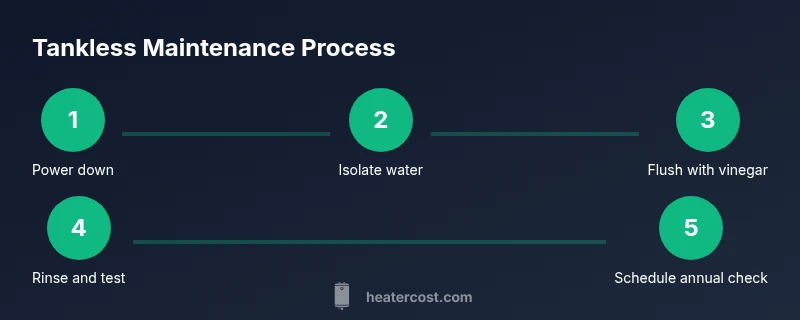
Maintenance for a tankless water heater centers on preventing mineral buildup, cleaning and inspecting inlet filters, checking venting and combustion air, and scheduling an annual professional inspection. Start by powering off the unit, isolating water lines, and setting up a descaling flush with vinegar and a small pump. Then rinse, test, and record any changes in performance.
Understanding why maintenance matters for a tankless water heater
If you’re asking, what maintenance is needed for a tankless water heater, the answer is straightforward but essential: keep mineral buildup in check, ensure clean water flow, verify venting and fuel connections, and schedule an annual professional check. Tankless systems are compact and efficient, but they rely on clear water paths and unobstructed vents to operate safely and efficiently. Regular maintenance helps preserve energy efficiency, extends the unit’s life, and prevents unexpected cold-water surprises during peak demand. For homeowners, adopting a simple, seasonal maintenance habit can save money and avoid costly repairs later, while preserving hot water reliability in every season.
Key takeaway: consistent care reduces sediment-related efficiency losses and helps protect your investment over time.
Regular maintenance tasks you should perform annually
A proactive maintenance routine covers several areas. Start by inspecting and cleaning inlet filters to maintain proper water flow. Check the unit’s exterior for signs of corrosion or moisture and inspect the venting pathway for obstructions. Verify that electrical connections or gas lines are secure, and confirm that the purge valve and service ports are accessible. If your water is hard, annual descaling is recommended to minimize mineral buildup inside the heat exchanger. Maintain a simple record of dates and findings so you can track changes over time. By following a consistent annual schedule, homeowners can keep the system operating at peak efficiency with fewer surprises.
Descaling: removing mineral buildup and when to do it
Mineral buildup is a common cause of reduced efficiency in tankless water heaters, especially in hard water areas. Descaling involves circulating a vinegar solution through the heat exchanger to dissolve mineral deposits. You’ll typically perform this with a small pump and hoses, following the manufacturer’s instructions. Plan for a dedicated maintenance window since the process can take about 60 to 90 minutes, plus time to flush and rinse. Always follow safety steps, including powering off the unit and isolating water lines. After descaling, restore water flow slowly, run hot water to clear residual solution, and recheck performance and temperature consistency.
Note: Always use food-grade white vinegar or a manufacturer-approved descaling solution, and never use highly concentrated acids without guidance from a professional.
Filter care and sensor checks
Inlet filters remove sediment and particulates that could impede flow. Remove and rinse filters with clean water, or replace if damaged or clogged. Inspect sensors and the control board indicators for error codes or unusual readings. If you notice fluctuating temperatures, longer wait times for hot water, or inconsistent flow, these can be indicators of dirty sensors or restricted filters. Keeping filters clean and sensors calibrated helps the unit respond quickly to demand and maintain comfort levels in your home.
Venting, gas lines, and combustion air considerations
Venting integrity is critical for safety and efficiency. Inspect vent pipes for any blockages, cracks, or loose fittings. Ensure the vent termination is clear of debris and that there’s adequate combustion air for gas-powered models. If you smell gas, hear a whistling sound, or notice improper flame color, shut down the system and contact a licensed technician immediately. Regular vent inspection reduces the risk of carbon monoxide exposure and supports compliant venting in accordance with local codes.
Water quality and pressure: influences on performance
Water quality affects the lifespan of a tankless heater. High mineral content and pressure spikes can accelerate scale buildup and wear on seals. Consider testing your water hardness and monitoring incoming pressure. If hard water is present, a pre-filter or conditioner may reduce mineral carryover. Maintaining stable water pressure helps the unit operate smoothly and reduces turbulence that can shorten component life.
Creating a DIY maintenance plan that sticks
A practical maintenance plan combines a yearly descaling task with quarterly checks of filters, pressure, and venting visibility. Create a simple calendar reminder and log each maintenance activity, noting any changes in temperature stability or hot-water supply. Because every home uses a different water source and installation, tailor your plan to your system’s age, model, and local water conditions. A documented routine makes it easier to identify when performance drifts toward less efficiency.
Troubleshooting common symptoms and quick remedies
If you notice reduced hot water or longer intervals between heating cycles, first check filters and venting to rule out simple causes. Strange noises, leaks at connections, or tripped service ports require careful inspection and possibly professional intervention. For temporary performance dips, a scheduled flush and filter maintenance may restore operation. Keep a log of symptoms and actions to help a technician diagnose future issues more quickly.
When to hire a professional and what to expect
While many maintenance tasks are DIY-friendly, certain steps—especially gas line work, venting reconfigurations, or complex descaling—are best left to licensed professionals. A technician can verify vent integrity, calibrate sensors, check for gas leaks, and assess the overall health of the heat exchanger. Expect a safety-first approach, documentation on codes and components, and a clear quote for any recommended replacements or repairs.
Tools & Materials
- 5-gallon bucket(For mixing and flushing solution)
- White vinegar (5% acidity)(Descaling solution; do not use concentrated acids)
- Submersible pump (for descaling)(Pump circulating solution through lines)
- Hoses (garden-type, two lengths)(Attach to service ports and pump)
- Wrench set and screwdrivers(For loosening service ports and fittings)
- Teflon tape and thread sealant(Optional for resealing connections)
- Soft cloths or towel, PPE gloves(Safety and cleanup)
- Manufacturer’s manual or model-specific descaling kit(Follow model-specific instructions)
Steps
Estimated time: 60-120 minutes
- 1
Power down and isolate
Turn off electrical power or gas supply to the unit. Shut off the cold-water inlet valve and isolate the hot-water outlet to prevent backflow during maintenance. Disconnect any nearby power sources to ensure a safe workflow.
Tip: Confirm no energy is reaching the unit with a non-contact voltage tester before starting. - 2
Prepare descaling setup
Attach hoses to service ports and set up the pump with a 50/50 mixture of vinegar and water in the descaling bucket. Ensure the bypass valve is configured to loop water through the heater and back to the bucket as per the model’s instructions.
Tip: Use manufacturer guidance to avoid over-pressurizing lines. - 3
Flush the heat exchanger
Run the descaling solution through the unit for the recommended duration (often 45–60 minutes). This circulates the solution through the heat exchanger to dissolve mineral buildup.
Tip: Keep an eye on pressure gauge or flow rate; significant drops indicate blockages. - 4
Rinse and clear
Disconnect the descaling setup and flush the system with clean water to remove vinegar residue. Run hot water to ensure residual solution is expelled from the outlet.
Tip: Repeat rinse if a strong vinegar odor persists. - 5
Inspect and reassemble
Recheck all connections for leaks, secure fittings, and verify that service ports are closed after flushing. Restore wiring or gas supply as per the manual.
Tip: Take photos of connections before disassembly to aid reassembly. - 6
Test performance
Turn the unit back on and test a full hot-water cycle. Check for stable temperature and consistent flow. Note any irregularities for future reference.
Tip: Record baseline temperatures and flow rates for future comparisons. - 7
Document and schedule
Log the maintenance date, method used, and outcomes. Schedule the next annual descaling or professional inspection based on water quality and local code.
Tip: Set calendar reminders to ensure no maintenance is skipped. - 8
Safety and care reminders
Keep all chemicals, tools, and connections out of reach of children. Do not operate the unit if you detect gas leaks or damaged venting. If unsure, call a professional.
Tip: Never bypass safety controls to save time.
Got Questions?
How often should I descale a tankless water heater?
Descaling frequency depends on water hardness and usage, but many homeowners descale annually, especially in hard-water areas. If you notice reduced hot water flow or warmer water nearby, it’s a good signal to descale sooner.
Descale your unit yearly in hard-water areas, and listen for signs like reduced flow or inconsistent temperatures that indicate a descaling need.
Can I use vinegar to descale my tankless heater?
Yes, diluted white vinegar is commonly used for descaling. Use a setup that circulates the solution through the heat exchanger according to the manufacturer’s recommendations, and never mix with other cleaners.
Yes, you can use diluted white vinegar for descaling by circulating it through the heater as directed by your manual.
Is maintenance required if my water is soft?
Soft water reduces mineral buildup but does not eliminate it. Regular checks, especially on filters and venting, remain important for reliability and efficiency.
Even with soft water, regular checks of filters and venting help keep your heater efficient.
What signs indicate I should call a professional?
Call a pro if you detect gas smells, flame issues, gas line concerns, visible leaks, or persistent error codes after basic maintenance. A pro can assess vent integrity and heat exchanger health.
If you smell gas, see leaks, or have unusual error codes, contact a licensed professional.
What steps are involved in a professional maintenance visit?
A pro typically inspects venting, checks for leaks, tests combustion efficiency, cleans or replaces filters, and verifies electrical or gas connections. They may perform a more thorough descaling if required and advise on replacement parts.
During a pro visit, expect vent checks, leaks tests, and a thorough system inspection with recommendations.
Can I perform maintenance while the unit is hot?
No. Perform maintenance only after powering off and isolating water and energy supplies to prevent scalding and electrical or gas hazards.
Never work on a hot heater; switch off power and shut off water before starting.
Watch Video
The Essentials
- Regular descaling prevents mineral buildup and maintains efficiency.
- Clean filters and inspect venting to ensure safety and performance.
- Document maintenance dates to guide future service needs.
- Know when to DIY and when to hire a professional for safety-critical steps.