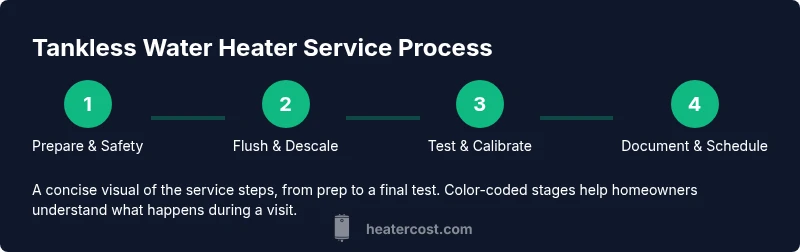
Tankless Water Heater Service: A Homeowner's Guide
Learn how to service a tankless water heater with step-by-step guidance, safety tips, and maintenance best practices. This Heater Cost guide covers descaling, inspections, and scheduling to protect efficiency and extend unit life.


Tankless water heater service is the routine inspection, flushing, and minor maintenance of on-demand units to keep them efficient and reliable. A typical service includes descaling mineral buildup, inspecting gas or electrical connections, checking venting, and calibrating thermostats. According to Heater Cost, professional service can extend unit life and prevent costly emergencies.
What is tankless water heater service?
Tankless water heater service refers to the scheduled maintenance of on-demand heating systems that heat water without a storage tank. Unlike traditional tank heaters, these units rely on rapid, high-efficiency heat exchange, which can accumulate mineral scale and airflow or gas/electrical connection wear over time. A typical service review includes verifying power or gas supply, inspecting venting, testing safety components, and performing a controlled flush to remove mineral buildup. Regular service helps sustain efficiency, prevent sudden shutoffs, and extend the system’s lifespan. The Heater Cost team notes that keeping these units in good shape can also contribute to better hot-water consistency and energy savings, especially in homes with hard water or high usage.
Why mineral buildup matters for tankless systems
Mineral scale inside a tankless heat exchanger reduces flow, restricts heat transfer, and increases energy use. Over time, scale can cause uneven temperatures, longer recovery times, and premature wear on seals and gaskets. Because tankless models heat water on demand, even small deposits can hinder performance more noticeably than in storage heaters. Regular flushing and descaling help maintain a steady supply of hot water and protect the exchanger surfaces from erosion. If you notice cooler water, fluctuations in temperature, or longer wait times for hot water, a service visit is a wise precaution.
What a professional service visit typically covers
During a service, a qualified technician will inspect the unit’s exterior and accessibility, verify venting and exhaust integrity, test safety devices, and confirm electrical or gas connections are secure. The core task is a controlled flush of the heat exchanger to remove mineral buildup, followed by a system test to ensure correct operation. A good service also includes recalibrating the thermostat, inspecting the pressure relief valve, and confirming that clean water flows through all cold and hot ports. Regular service helps catch wear before it causes a breakdown and supports warranty compliance where applicable.
Descaling options and safety considerations
Descaling a tankless water heater usually involves circulating a descaling solution through the unit’s flow path to dissolve mineral deposits. Pro technicians choose methods based on water chemistry, equipment layout, and manufacturer recommendations. Common approaches include a vinegar flush or a professional-grade descaler, carefully used with proper containment and ventilation. It’s important to follow safety protocols to avoid chemical exposure and to protect heating elements. If you’re unsure, defer to a licensed technician who can select the safest, most effective method for your model.
Troubleshooting basics between visits
Between scheduled services, watch for warning signs like sudden temperature swings, inconsistent hot water, or unusual noises from the unit. If you observe leaks, gas odor, or pilot/ignition issues, shut off the unit and contact a pro promptly. Routine checks at home—such as verifying routing of supply lines and ensuring air vents are unobstructed—can help reduce the risk of a costly emergency. Keeping a simple maintenance log helps you track when components were inspected and when the next service is due.
Planning ongoing maintenance and selecting a pro
Create a maintenance calendar aligned with your water hardness, usage patterns, and manufacturer recommendations. Look for licensed plumbers or HVAC technicians with tankless experience and knowledge of your specific model. Ask about service scope, flushing methods, warranty implications, and the expected duration of a visit. Scheduling annual or biannual service is a practical approach in many homes, especially those with hard water or high hot-water demand. A proactive plan minimizes downtime and keeps hot water consistent.
Tools & Materials
- Safety goggles(Eye protection during service)
- Gloves (chemical-resistant)(Protect hands during flushing/descaling)
- Bucket or basin(Catch water and flushing solution)
- Adjustable wrench(Loosen fittings and connections)
- Garden hose(Route flush water to drain)
- Soft rags(Clean and wipe surfaces)
- Vinegar or descaling solution(Follow manufacturer guidance)
- Owner’s manual for unit(Consult model-specific instructions)
Steps
Estimated time: 60-120 minutes
- 1
Prepare the workspace and safety gear
Clear the area around the unit and put on safety goggles and gloves. Read the owner’s manual for any model-specific cautions. This step minimizes the risk of accidents when power, gas, or water lines are touched.
Tip: Confirm you have clear access to shutoffs and drainage; a clutter-free area prevents spills. - 2
Shut off power, gas, and water supply
Turn off the electrical supply to the unit and the gas valve if applicable. Close the cold-water supply to prevent new water from entering during the flush. These safety actions prevent electric shock, gas leaks, and uncontrolled water flow.
Tip: Double-check that circuits are de-energized before touching electrical components. - 3
Attach the flushing setup and begin a controlled flush
Connect the garden hose to the unit’s service port and run the other end to a drain. Circulate the descaling solution or vinegar through the heat exchanger as per manufacturer guidance. Monitor pressure and temperature as you flush.
Tip: Use a dedicated flush pump if recommended by the manufacturer; avoid improvising the flow path. - 4
Inspect connections and venting; recalibrate as needed
Look for leaks on all fittings and verify venting integrity. If the thermostat or flow switch is out of calibration, adjust to the model’s specified setpoints and test responsiveness.
Tip: Tighten fittings gradually; overtightening can damage threads or seals. - 5
Restore water, power, and test operation
Open water supplies slowly to avoid shock to the system. Reconnect electrical power and gas, then run hot water to verify stability and temperature consistency. Note any lingering issues.
Tip: Start with low-demand hot water to confirm basic function before full usage. - 6
Document results and schedule the next service
Record observed pressures, temperatures, and any parts replaced. Set a reminder for the next service interval and share notes with your service provider if needed.
Tip: Keep a simple log to track equipment aging and head off problems early.
Got Questions?
What is included in a typical tankless water heater service?
A typical service includes a safety check, a controlled flush to remove mineral buildup, inspection of electrical or gas connections, thermostat calibration, and venting assessment. Some manufacturers also recommend replacing filters or seals during service.
A typical service includes a safety check, a flush to remove mineral buildup, inspection of connections, thermostat calibration, and venting assessment.
How often should I service a tankless water heater?
Most manufacturers and service professionals recommend annual maintenance for most homes, with higher frequency for hard water, heavy use, or older units. Your usage patterns can influence the schedule.
Most experts recommend annual maintenance, especially if you have hard water or heavy hot-water use.
Can I flush a tankless water heater myself?
While small maintenance tasks can be attempted by confident homeowners, a full service involves gas/electrical safety considerations and correct descaling procedures. If in doubt, hire a licensed professional to avoid safety risks.
DIY flushing is possible for simple tasks, but full service should be done by a licensed pro to stay safe.
What are common signs my tankless heater needs service?
Look for temperature fluctuations, inconsistent hot water, strange noises, or mineral buildup around fittings. Leaks and longer warm-up times also indicate a service is due.
Watch for temperature swings, noises, or leaks—these usually mean service is needed.
Are there safety risks during tankless heater service?
Yes. Working with gas, electricity, and flushed chemicals poses risks. Always ensure proper shutdown procedures and ventilation, or hire a licensed technician.
There are safety risks if not handled properly; always shut off utilities and ventilate, or call a pro.
How do I choose a service professional for a tankless heater?
Look for licensed plumbers or HVAC technicians with experience in tankless systems, model-specific knowledge, and clear estimates. Check warranty implications and ask about flushing methods used.
Pick a licensed pro with tankless experience and transparent pricing; verify warranty details.
Watch Video
The Essentials
- Schedule regular service to maintain efficiency.
- Descale to prevent mineral buildup and improve heat transfer.
- Inspect venting and connections to avoid leaks and safety hazards.
- Test the system after maintenance to confirm consistent hot water.
- The Heater Cost team recommends yearly service to protect warranty and longevity.