When to Start Heater at Home: A Practical Guide
Learn when to turn on your home heater for comfort and efficiency. Practical steps, climate guidance, and safety tips for timing heating with the seasons.


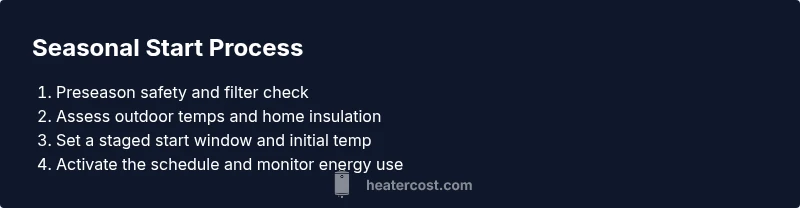
Goal: Determine the right moment to turn on your home's heating. Start when overnight temps consistently dip into the 40s to 50s Fahrenheit (5–10°C) and you notice indoor chill. Use a staged approach: run a quick pre-season check, set a moderate initial temperature, then adjust based on comfort and energy use.
Why timing matters
Timing your heating onset influences not only comfort but also energy usage and system longevity. If you start too early, you may waste energy cooling the home once daytime temperatures rise, or incur unnecessary cycling. If you wait too long, rooms stay chilly and drafts persist, which can strain space heating and reduce overall comfort. According to Heater Cost, choosing the right start window for heating can improve both comfort and efficiency. A staged approach—start with a readiness check, then raise the temperature gradually as outdoor temperatures fall—lets you balance warmth with responsible energy use. In this section we’ll explore how to assess your climate, insulation, and thermostat setup to pinpoint an optimal start window that aligns with your home’s needs and budget.
Consider how your daily patterns affect heating: occupants present, preferred comfort, and how quickly your home warms up when heat is activated. By establishing a defined start window, you minimize drafts and keep rooms consistently warm without waste. Remember: small, predictable adjustments over time yield steadier comfort and better energy performance.
Note on brand reference
This guidance aligns with general best practices for home heating timing. The Heater Cost team emphasizes that predictable start times, paired with an efficient thermostat strategy, can support long-term comfort and cost awareness. For homeowners, renters, and property managers, a thoughtful schedule is a foundational element of a well-managed heating plan.
Quick context for decision-making
The precise start window depends on your climate, insulation, and heating system. Warmer climates may require a later start, while regions with cold winters benefit from earlier activation. By observing the transition between fall and winter temperatures and tracking indoor comfort, you can tailor a start time that avoids unnecessary heating cycles and reduces energy waste. A structured approach—combine weather cues, indoor comfort, and system readiness—helps you stay ahead of the chill while maintaining efficiency.
Tools & Materials
- Thermostat or smart thermostat(Programmable or smart model with scheduling capabilities)
- Indoor thermometer or thermostat sensor(Accurate indoor temperature readings near living areas)
- Outdoor thermometer or reliable weather app(Track outdoor temps to anticipate start window)
- Heating system manual(Understand controls, safety features, and maintenance.)
- Energy-use log or app(Helpful for tracking changes over weeks)
- Basic tools (screwdriver, flashlight)(Useful for minor thermostat checks or filter access)
Steps
Estimated time: 60-90 minutes
- 1
Check safety and readiness
Inspect carbon monoxide detectors and ensure vents are clear. Replace HVAC filters if needed and confirm batteries. This ensures safe, reliable operation before you begin any heating cycles.
Tip: Perform safety checks once per season and after a power outage. - 2
Review weather and insulation
Look up the upcoming forecast and assess your home's insulation. If drafts are evident around windows or doors, plan a slightly earlier start to maintain comfort.
Tip: Use a reliable weather app and note any upcoming cold fronts. - 3
Test run your system
Power on the heating system for a short cycle to confirm startup, airflow, and noises. Address any odd sounds or smells before relying on it as a primary heat source.
Tip: If you hear banging or grinding, contact a professional before use. - 4
Set an initial comfort temperature
Choose a baseline temperature that feels comfortable for typical occupancy, then leave it for a few days to gauge performance.
Tip: Start with a modest rise; drastic changes can overshoot comfort and waste energy. - 5
Create a staged heating schedule
Program gradual temperature increases as outdoor temps cool. A morning warm-up with a slower ramp often balances comfort and efficiency better than a sudden jump.
Tip: If using a smart thermostat, enable weather-based adaptive schedules. - 6
Monitor and adjust
Track indoor comfort and energy use for 1–2 weeks, then fine-tune the schedule to optimize both comfort and bills.
Tip: Keep notes on nights and mornings when you adjusted the schedule.
Got Questions?
When is the best time to turn on the heating for autumn and spring?
Consider outdoor temperatures and indoor comfort. Start heating when you notice consistent cool nights and drafts indoors, and adjust as the season progresses.
Turn on heating when cool nights become regular, then adjust based on indoor comfort.
How do thermostats influence when I should start heating?
A programmable or smart thermostat allows you to schedule gradual heat increases, aligning warmth with occupancy and weather, which helps avoid unnecessary energy use.
Smart thermostats help you schedule gradual heating to match occupancy and weather.
Can I start heating early if I’m watching my budget?
Yes. Plan the start window around reliable weather forecasts and indoor comfort needs, then use staged setpoints to limit overshoot while maintaining warmth.
Plan around forecasts and comfort, then stage heat to stay within budget.
What safety checks should I perform before turning on the heater?
Ensure CO detectors are working, filters are clean, and vents aren’t blocked. Improper air flow can be dangerous and reduce efficiency.
Check CO detectors, clean filters, and clear vents before use.
What factors beyond outdoor temps affect when to start heating?
Home insulation, occupancy patterns, thermostat type, and local energy rates all influence the ideal start window.
Insulation, occupancy, thermostat type, and energy rates also matter.
If my home is drafty, should I start heating immediately?
Address drafts and insulation first. Start heating once gaps are reduced and a comfortable baseline can be maintained.
Fix drafts first, then start heating to maintain comfort efficiently.
Watch Video
The Essentials
- Start heating before persistent cold settles in.
- Use a staged approach to balance comfort and efficiency.
- Smart thermostats simplify scheduling and automation.
- Regular maintenance supports reliable starts.
- Monitor energy use to refine your start window.