When to Turn On Your Heater: A Practical Guide for Comfort and Efficiency
Learn when to turn on the heater to balance comfort and energy costs. This practical guide covers timing cues, thermostat strategies, seasonal checks, safety, and maintenance tips for homeowners, renters, and property managers.


Definition: Turning on the heater happens when indoor comfort requires warmth and the thermostat calls for heat according to your daily schedule. In practice, homeowners start heating when mornings and evenings feel noticeably cooler, rooms show drafts or cold spots, and the house takes longer to reach the desired temperature. Use a stable baseline and adjust for occupancy, insulation, and outdoor climate to balance comfort with energy use.
Understanding when heating is needed
According to Heater Cost, learning when to turn on the heater helps balance comfort and energy use. Timely heating improves comfort while avoiding energy waste. The decision isn't just about a clock; it's about indoor temperature, occupancy, insulation, and outdoor climate. In particular, the phrase when to turn on the heater should be guided by how cool your mornings and evenings feel, whether rooms show drafts, and how quickly your home reaches the desired warmth. Use a stable baseline temperature as a starting point, then adjust for how many people are home and how well the house is insulated. By aligning onset with these cues, you can keep living areas comfortable while minimizing waste.
Establishing a personal comfort baseline
A comfort baseline is the temperature range you consider livable when the space is occupied. Start by selecting a thermostat setting that feels comfortable with people in the room, then refine based on season and weather. If your home cools quickly after sunset, a slightly higher setpoint during evening hours can maintain comfort with moderate energy use. Track how many minutes the system runs during a typical morning and adjust gradually. This baseline helps decide when to turn on the heater rather than following a rigid schedule.
Seasonal timing cues for turning on the heater
Seasonal cues vary by climate. In temperate regions, you may begin heating in mid-fall when evenings stay consistently cool. In colder areas, you might pre-warm the house before people wake to ensure bathrooms and kitchens are comfortable. Consider humidity, drafts, and the age of insulation: older homes often need earlier activation and longer run times. Align onset with occupancy patterns and sun exposure to maximize comfort while reducing waste, in line with Heater Cost guidance.
Smart thermostat strategies to optimize timing
Modern thermostats offer features that automate when you turn on heat. Program wake, leave, and return times; enable adaptive or learning algorithms if available; and use humidity controls to maintain perceived comfort. Longer temperature stability tends to be more efficient than frequent cycling, so aim for a balance between responsiveness and inertia. If you have a multi-zone system, prioritize spaces used most and schedule heat where it's needed most. This approach keeps living spaces pleasant while controlling costs.
Safety, maintenance checks before the season
Before turning on the heat, verify safety: test carbon monoxide alarms, ensure vents are clear, and replace filters if needed. Inspect the furnace or heat pump for unusual noises or smells and schedule a professional service if you suspect issues. Keep essential safety gear accessible and know how to shut off the system quickly if something seems wrong. Following manufacturer recommendations for startup after a period of inactivity minimizes risk.
Common mistakes and quick fixes
Common mistakes include cranking the thermostat too high, neglecting insulation and draft-sealing, and relying on a single thermostat to heat a large space. Another error is ignoring maintenance tasks that affect efficiency, such as dirty filters or blocked vents. Quick fixes: seal leaks, set gradual ramp times on the thermostat, and re-evaluate settings monthly to maintain comfort without overspending.
Tools & Materials
- Programmable or smart thermostat(Set a daily schedule and learn your routines for automatic heating.)
- Indoor thermometer or sensor(Monitor room temperature in main living areas.)
- Caulk, weather-stripping, and draft blockers(Reduce heat loss from doors/windows.)
- Carbon monoxide alarm(Test before first use of season and ensure proper placement.)
- Owner's manual or system model information(Helpful for safety and startup steps.)
Steps
Estimated time: 60-120 minutes
- 1
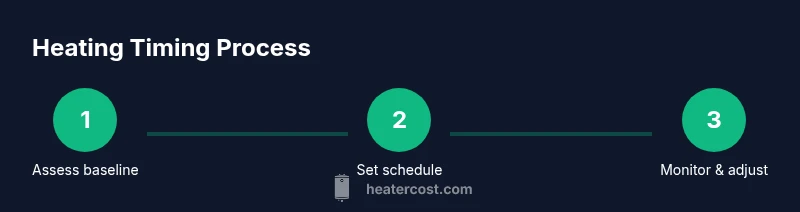
Assess your current comfort baseline
Identify a comfortable room temperature for occupied hours. Note how long it takes the space to reach that temperature after you start heating.
Tip: Record baseline temps for at least 30 minutes to account for temperature swings. - 2
Check thermostat settings and zones
Verify that the thermostat is set to a reasonable wake/away/return schedule. If you have zones, ensure the most-used areas receive priority.
Tip: Use hold mode sparingly to avoid accidental overheating. - 3
Inspect insulation and drafts
Seal obvious gaps around doors and windows. Check attic access and basement corners for air leaks that increase heating needs.
Tip: Drafts can cause misreading on thermostats; close them before turning on heat. - 4
Create a seasonal heating schedule
Program a gradual warm-up in the morning and a comfortable evening setting. Adjust weekly for occupancy changes and daylight shifts.
Tip: If using a learning thermostat, allow a full week for it to optimize profiles. - 5
Test the system in mild conditions
Run the heating for a short period to verify cycling, ignition, and airflow. Listen for unusual noises and check vents.
Tip: Write down any anomalies and schedule service if needed. - 6
Monitor and adjust over the first weeks
Track comfort, energy use, and any draftiness. Tweak setpoints and ramp times based on real data.
Tip: Revisit baseline monthly during season transitions.
Got Questions?
When is the best time to turn on the heater for the first time this season?
Turn on when indoor temperatures fall below your comfort baseline and the thermostat calls for heat. Consider occupancy and drafts to avoid unnecessary heating.
Turn on the heater when your home starts feeling cool and your thermostat requests heat, especially if you expect occupancy to change soon.
Is it better to heat gradually or keep the thermostat constant?
Gradual warm-ups tend to be more energy-efficient and comfortable than blasting heat all at once. Use programmed schedules to maintain steady warmth without sharp swings.
Gradual warming with a smart schedule is usually better for comfort and energy use than keeping the heat constant at a high level.
How does a programmable thermostat help with timing?
Programmable thermostats automate wake, leave, and return times, reducing waste by aligning heat with actual occupancy. They also adapt to your routine over time.
A programmable thermostat automatically warms the home when you need it and cools when you don’t, saving energy.
What should I do if my home is drafty?
Seal leaks around doors and windows, upgrade insulation where feasible, and consider window films or door sweeps. Drafts make heating less efficient and can lead to uncomfortable cold spots.
If drafts are present, seal them first to improve efficiency before adjusting heating schedules.
Should I heat my home if I’m away for a day or more?
Use a reduced setback when you’re away. Many thermostats support vacation or eco modes to balance comfort with lower energy use during absences.
Yes, you can lower settings while you’re away to save energy without sacrificing safety.
Are there safety concerns with turning the heater on early?
Safety concerns primarily involve combustion appliances and CO risk. Ensure CO alarms work, vents are clear, and professional service is up to date.
Safety comes first—check CO alarms and vents, and keep up with maintenance before turning on the heat early.
The Essentials
- Define a comfort baseline and use it to trigger heating
- Program a seasonal schedule that aligns with occupancy
- Seal drafts and maintain your system for efficiency
- Use a smart thermostat to automate warmth while saving energy