Good Heater Temperature in Winter: Practical Guide
Discover how to set the right winter thermostat temp for comfort and savings. Practical ranges, thermostat tips, and cost considerations for homeowners.


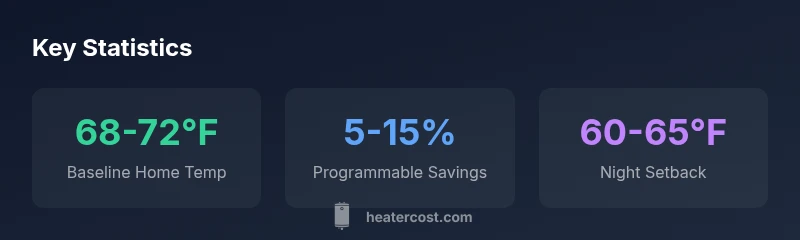
In winter, aim for a home-wide baseline of 68°F (20°C) when you're at home and awake. For energy savings, drop to 60-65°F (15-18°C) during absences or sleep. If you have zones or a programmable thermostat, tailor temperatures by room and schedule to maximize comfort and efficiency. Remember, insulation and drafts matter, and small degree adjustments can compound savings.
Defining good heater temperature winter
The phrase good heater temperature winter refers to a practical balance between home comfort and energy costs during cold months. In most homes, a winter baseline around 68°F (20°C) during the day is a sensible starting point. This level keeps common living spaces comfortable without pushing the furnace to run constantly. For energy-conscious households, contractors and energy researchers often emphasize the importance of schedules, rather than a fixed temperature day and night.
According to Heater Cost, the real driver of comfort is not one single setting but a coordinated system: thermostat programming, zone control, insulation, and occupant behavior. A small adjustment of a degree or two can yield meaningful savings over the course of a season. If you live in a drafty house or experience cold spots, local adjustments in rooms with different usage patterns can help. We’ll cover ranges for different activities and guidance on implementing them with modern thermostats and zoning.
How outdoor climate and insulation shape ideal temps
Outdoor temperatures and home envelope directly influence the ideal winter temperatures. In colder climates or poorly insulated homes, you may need slightly higher daytime setpoints to maintain comfort, but this can be offset with sealing, weatherstripping, and upgraded insulation. When you improve insulation, the baseline temperature can be lowered without sacrificing warmth. Conversely, homes with high heat loss may rely more on daytime thermostats and shorter cycles. The key is to align your thermostat strategy with actual heat loss patterns, not just the thermostat’s reading.
Another factor is occupancy and room usage. If your living spaces are unevenly heated, zoning and selective heating can keep main areas comfortable while avoiding waste in unused spaces. The overall goal is to reduce heat loss while maintaining the feel of a cozy home during winter.
Practical ranges to use by activity
- At home and awake: target 68°F (20°C) as a comfortable baseline for common living areas.
- Away for 8+ hours: lower to 60-65°F (15-18°C) to conserve energy without overcooling the structure.
- Sleeping: set 65-68°F (18-20°C) for restful warmth without excessive heat.
- In rooms that are rarely used: you can extend setbacks even further (e.g., 58-60°F) if you’re away for extended periods and have good insulation or a programmable thermostat with room-based zoning.
- During cold snaps: consider a short, incremental rise to prevent moisture issues or cold spots, then return to the normal schedule.
Implementing with thermostats and zoning
Modern thermostats enable precise scheduling and zoning that makes a big difference in winter comfort and energy use. A programmable or smart thermostat can:
- Create daily and weekly schedules that match your routines.
- Support adaptive or learning features to optimize temperatures over time.
- Integrate with zoning systems so you heat only occupied zones.
- Provide remote control and energy-use reporting to help you fine-tune settings across seasons.
When setting up zoning, start with the living spaces you use most and gradually expand to other zones as needed. Ensure each zone has appropriate dampers, sensors, and compatible thermostats for reliable performance.
Common mistakes that waste energy in winter
- Leaving doors and windows open or poorly sealed: drafts undermine any thermostat setting.
- Overheating rooms: cranking up heat in unused spaces wastes energy and wears equipment.
- Relying on a single fixed temperature: real-world conditions change with weather and occupancy; a rigid setting leads to inefficiency.
- Ignoring insulation before tweaking settings: without proper sealing, setpoint adjustments may have limited impact.
- Delayed maintenance: dirty filters and worn components raise energy costs and reduce comfort.
Avoid these by pairing proactive weatherization with a dynamic, scheduled approach to temperature.
Maintenance and seasonal adjustments
Seasonal changes call for a quick maintenance check: ensure filters are clean, ducts are sealed, and thermostats are calibrated. Verify that sensors read accurately in living spaces (avoid sunlit walls, drafts, or heat sources that mislead readings). Revisit setpoints at the start of each season and adjust for daylight saving shifts or forecasted temperature trends. Regular checks help sustain the balance between comfort and energy efficiency throughout winter.
Thermostat settings for winter energy efficiency
| Scenario | Recommended Temp Range | Energy Impact | Notes |
|---|---|---|---|
| Home daytime | 68-72°F | Moderate | Maintain comfort in main living areas |
| Away (8+ hours) | 60-65°F | Low to Moderate | Save energy while absent |
| Sleeping | 65-68°F | Low | Promotes restful warmth |
| Unheated spaces | 55-60°F | Low | Only heat when needed to prevent pipes |
Got Questions?
What is a good heater temperature winter?
A good winter baseline is about 68°F (20°C) when you're home and awake. Lower to 60-65°F (15-18°C) during absences or sleep; adjust for comfort and insulation.
Aim for around 68 degrees when you're home; lower it when you're away or sleeping.
How much can I save by lowering temps at night?
Night setbacks can lead to noticeable energy savings over a season, especially when paired with a programmable thermostat that matches your sleep schedule.
Even modest nightly setbacks save energy when scheduled properly.
Should I use a programmable thermostat?
Yes. Programmable thermostats align heating with your routines and can reduce energy use. Consider smart models with adaptive schedules and remote control.
Absolutely—programmable thermostats save energy by following your daily pattern.
Is constant temperature better for comfort?
Often not. A setback strategy, where you lower temps during unoccupied times, maintains comfort while saving energy.
Constant temps can waste energy; a planned setback works better.
How does insulation affect winter thermostat settings?
Poor insulation raises heat loss, requiring higher setpoints. Improving sealing and insulation often allows lower, more comfortable temperatures with less energy use.
Better insulation means you can keep temps closer to target with less expense.
Can zone heating help reduce overall temperature in the house?
Yes. Zone heating heats only occupied spaces, increasing comfort and reducing waste.
Zone heating focuses warmth where it's needed most.
“A stable winter baseline reduces energy peaks and equipment wear, while weatherization and zoning can boost comfort without raising costs.”
The Essentials
- Set a 68°F baseline when home and awake.
- Use 60-65°F when away to save energy.
- Leverage programmable thermostats and zoning.
- Seal and insulate to maximize setpoint effectiveness.
- Regular maintenance keeps temperatures accurate and efficient.