Wall Heater Costs: A Comprehensive Guide for 2026
Explore wall heater costs, efficiency, installation considerations, and incentives for 2026. Learn how to choose the right wall heater and estimate total cost of ownership with Heater Cost.


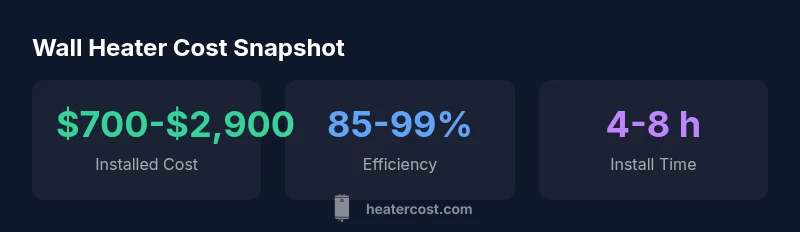
Wall heaters offer a compact, ductless heating option suitable for small spaces or retrofits. Typical installed costs range from $700 to $2,900 depending on type, power, and local labor, while annual energy costs vary by climate and usage. For a personalized estimate, review the Heater Cost analysis and compare different wall heater options and heat outputs.
What a wall heater is and when to consider one
Wall heaters are compact units mounted on a wall that provide targeted warmth without ductwork. They can be electric panel heaters, infrared radiant panels, or convection-style wall units, all of which save floor space and are well-suited to retrofit projects in apartments, sunrooms, or secondary zones. According to Heater Cost, these units shine where you need quick, localized heat or supplemental warmth in zones that are hard to reach with central systems. They also work well as a low-cost upgrade in rooms that lack ducts or for temporary spaces such as finished basements during renovations.
How wall heater types differ and how they heat
Electric panel heaters convert electricity directly into heat with near-100% efficiency, but heat distribution depends on convection currents and surface design. Infrared radiant panels warm objects and people directly rather than the air, which can feel more comfortable in short bursts or in well-insulated spaces. Convection wall panels circulate warm air slowly, providing steady temperatures with lower surface heat. Hydronic wall heaters (less common) use hot water from a boiler to heat an attached panel, offering stable warmth but requiring plumbing coordination. Heater Cost analysis shows that the best choice depends on room size, insulation, and how you plan to use the space.
How to size wall heaters for a room
Sizing is critical for comfort and cost. A rough rule of thumb is about 20–40 BTU per square foot for moderate climates and 40–60 BTU per square foot for colder zones. For a 150 square foot room in a chilly climate, you might target roughly 7,000–9,000 BTU total output. More precise sizing should account for insulation quality, window losses, ceiling height, and the presence of shading. Always consult a professional to confirm wattage and amperage requirements and to ensure compatible wiring and safety clearances.
Installation considerations and safety basics
Wall heaters must be installed with appropriate clearances from combustibles and adequate electrical capacity. Electric panels typically require a dedicated circuit and a proper mounting bracket; infrared panels need mounting at appropriate height to maximize radiant efficiency. In many jurisdictions, a permit or inspection is recommended or required, especially when wiring or dedicated circuits are upgraded. Because incorrect placement can cause hot spots or fire risk, hiring a licensed electrician or HVAC technician is strongly advised. Always follow the manufacturer’s installation instructions for mounting height, clearance, and air circulation.
Operating costs, efficiency, and indoor comfort
Efficiency is high across most electric wall heaters, but energy costs depend on climate and usage patterns. In temperate regions, a wall heater used for supplemental heat can reduce overall furnace runtime and save money, while in harsh winters the total energy use may rise. A programmable thermostat and zoned heating strategy improve cost-effectiveness by preventing unnecessary heating in unused spaces. When choosing a model, look for wattage match to room size, and consider features like night mode and thermostat accuracy to maximize comfort with minimal energy waste.
Maintenance and lifespan: keeping warmth reliable
Maintenance is generally straightforward: keep the fins or panels clean, ensure there’s no dust buildup around the grille, and periodically check electrical connections if you’re comfortable doing so. Most electric wall heaters require little ongoing maintenance beyond cleaning. Infrared panels and convection units have few moving parts, which can mean longer lifespans. Expect 10–15 years for well-maintained electric panels and shorter service life if installation is poorly ventilated or subjected to frequent temperature swings. Heater Cost recommends proactive checks as part of annual home upkeep.
Cost comparisons and when a wall heater makes sense
Compared with baseboard electric heaters, wall-mounted units can offer similar efficiency with less visible hardware and easier zoning. They generally cost more to install than plug-in options but far less than major radiant or ducted systems. In small apartments or rooms with limited airflow, a wall heater can deliver comfortable heat without sacrificing space. For larger homes or areas with inconsistent temperatures, combining wall heaters with an energy-efficient central system or a mini-split in the same zone can yield better long-term savings. Heater Cost emphasizes evaluating total cost of ownership, including installation, maintenance, and energy costs, rather than focusing only on upfront price.
Comparison of common wall heater options and performance
| System Type | Typical Installed Cost Range | Typical Efficiency | Notes |
|---|---|---|---|
| Electric Wall Panel | $700-$2,000 | 95-100% | Simple install; no venting; rapid heat onset |
| Hydronic Wall Heater | $1,200-$3,500 | 80-90% | Requires boiler connection; steady warmth |
| Infrared Radiant Panel | $800-$2,500 | 90-99% | Direct heat; zone control; minimal airflow |
| Convection Wall Panel | $900-$2,300 | 85-95% | Warm air flow; quiet operation |
Got Questions?
Are wall heaters safe to use in bedrooms?
Yes, wall heaters can be safe in bedrooms when properly installed with sufficient clearance and a thermally protected circuit. Use models with automatic shutoff and keep away from bedding and curtains. Regular inspections help ensure safe operation.
Yes, with proper clearance and a protected circuit, and by choosing models with auto shutoff for bedroom use.
Do you need permits for installing a wall heater?
Permit requirements vary by locality. If wiring or circuit upgrades are involved, a permit and inspection are commonly required. Check local building codes and consult a licensed electrician.
It often requires a permit if wiring changes are needed; check your local codes and hire a licensed pro.
What is the typical lifespan of a wall heater?
Lifespan for electric wall heaters generally ranges from 10 to 15 years with normal use and proper maintenance. Hydronic variants may last longer with boiler system care.
Most electric wall heaters last about a decade or more with regular maintenance.
Can a wall heater be used as a primary heat source?
In small spaces or supplemental zones, a wall heater can serve as a primary heat source, particularly in well-insulated rooms. For whole-home heating, it should supplement a central system.
Yes, in small, well-insulated spaces it can be the main heat, but for larger homes you’ll want a central system too.
How does insulation affect wall heater efficiency?
Better insulation reduces heat loss, increasing perceived warmth and reducing energy use. Pair wall heaters with weatherstripping and proper ceiling and wall insulation for best efficiency.
Good insulation makes wall heaters work smarter, cutting energy use while keeping the room warm.
What maintenance should I perform annually?
Dust the grille, check for loose connections, and ensure the unit is mounting securely. For hydronic systems, inspect boiler connections. Schedule professional checks every few years.
Dust the unit, check connections, and have a professional service periodically.
“Wall heaters can be an efficient, space-saving solution when properly sized and installed. Energy costs depend on climate and usage, so reviewing a tailored analysis helps homeowners optimize comfort and savings.”
The Essentials
- Estimate total cost including installation up front
- Choose type based on room size and climate
- Electric panels are easy to install but may heat unevenly
- Prioritize efficiency and available incentives
- Plan for proper mounting, clearance, and safety