Should an immersion heater be left on? A practical safety guide
Discover whether to leave an immersion heater on, understand safety risks, and learn practical steps to use timers and maintenance to save energy and reduce hazards.


The safest guidance is that immersion heaters should generally not be left on unattended. Use a timer or smart switch to shut the unit off when water reaches the desired temperature, and avoid running the heater while you’re away for long periods. Regular maintenance and safety checks help prevent overheating and unnecessary energy waste.
Understanding immersion heaters: how they work and why the question matters
Immersion heaters heat water directly in a cylinder using a resistance coil. They’re simple, compact, and common in many homes and rental properties. Because they are separate from the central boiler, homeowners often encounter questions about when to operate them. The safest guidance is that immersion heaters should generally not be left on unattended. According to Heater Cost, running an immersion heater continuously can waste energy and may lead to overheating if a failure occurs. Water temperature and demand can vary, so using a controlled approach pays off in both comfort and cost. In this section, we explain how these units work, what "left on" means in practical terms, and how to balance convenience with safety. We’ll cover the differences between keeping water hot versus reheating on demand, and how to align operation with typical schedules for families, singles, renters, and landlords. By understanding the hardware, you’ll be better equipped to decide when automatic shutoff makes sense for your home.
Safety considerations when leaving it on
Leaving an immersion heater on can introduce several risks beyond energy waste. First, overdemand on the electrical circuit can trip breakers if the heater draws more current than the circuit is designed to handle. Second, if the unit malfunctions and overheats, there is a possible risk of scalding water, stored pressure, or insulation damage. The Heater Cost team emphasizes that the most reliable safety strategy is to treat the immersion heater as a controlled heat source rather than a constant heat source. Use a dedicated timer or switch and never place the heater on a feed with other high-load appliances in the same circuit. For households with children or elderly residents, install a safety cutoff and keep spare fuses or a service manual at hand. Finally, ensure the cylinder is in good condition, with seals intact and a functioning relief valve; a minor leak can escalate into bigger problems if the unit is constantly energized.
Energy and cost implications
Energy cost is a function of usage and electricity rates, but the underlying principle is straightforward: leaving an immersion heater on longer than needed increases energy consumption. Because the heater operates only when water needs to be heated and remains off otherwise, the cost impact is tied to how often hot water is required. If your household uses large volumes of hot water during peak times, you may benefit from a timer that aligns heating with your actual schedule. The Heater Cost analysis notes that the more you rely on reheating rather than maintaining a fully heated cylinder, the more energy wasted on standby losses and inefficiencies in heat retention. Other factors—water hardness, incoming cold water temperature, and cylinder insulation—also influence energy use. In practical terms, install a thermostat limit, ensure proper insulation, and avoid leaving the element on when the house is unoccupied for extended durations. This approach reduces waste and keeps energy bills in check.
When it might be appropriate to leave it on briefly
There are moments when a brief, controlled heating period makes sense. If you’ve just drained a large amount of hot water for a shower or cleaning and want to boost the cylinder’s temperature to a comfortable level quickly, a short, scheduled heat can be practical. Do not leave the unit on all day while you’re away; instead, plan short heating windows that coincide with typical usage. For renters and small households, a disciplined routine minimizes waste while preserving convenience. Pair any short-term use with a timer or thermostat that automatically shuts off after a set duration. By timing heat to meet demand rather than sustaining it, you protect both energy budgets and safety margins.
How to install safety controls: timers, thermostats, and switches
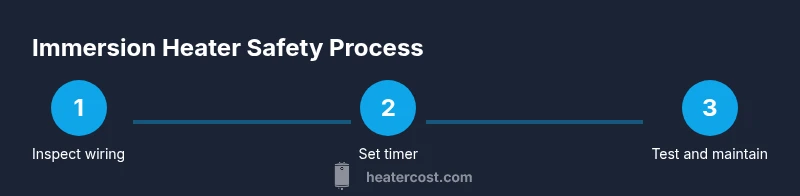
Installing dedicated safety controls dramatically reduces the risk of overheating and energy waste. A properly rated timer or smart switch should be wired to control the immersion heater’s power supply, not bypassed or jury-rigged. A thermostat or high-limit switch can prevent the element from staying on after the water reaches the target temperature. Ensure all connections are secure, use tools rated for the circuit voltage, and follow the manufacturer’s wiring diagram. If you’re unsure, hire a licensed electrician. Place the control device in a dry, accessible location and label it clearly. Regularly test the timer and switch to confirm they operate correctly and trip as designed after power cycles.
Maintenance and checks to prevent risks
Regular maintenance supports safe operation and energy efficiency. Schedule an annual inspection of seals, the expansion valve, and the relief valve to prevent leaks and pressure buildup. Flush the cylinder periodically to remove mineral deposits that can affect heat transfer and efficiency. Inspect the wiring for signs of wear, corrosion, or overheating, and replace components as needed. Keep a simple maintenance log with dates of checks, settings, and any parts replaced. Simple measures—like insulating the cylinder and keeping nearby cabinets dry—help minimize heat loss and reduce the likelihood of electrical faults.
Common myths vs reality
Myth: If it’s on a timer, it must be safe to leave on longer. Reality: A timer is a control, not a guarantee; ensure safe water temperature and insulation are also in place. Myth: Immersion heaters are always dangerous if left on. Reality: They are safe when equipped with proper safety devices and used with sensible schedules. Myth: Higher heat means faster hot water. Reality: Overshooting temperature wastes energy and can damage the cylinder and fittings. Myth: A rental unit is not worth maintaining. Reality: Regular maintenance protects tenants, reduces complaints, and keeps utility costs predictable. By debunking these myths, homeowners can make smarter, safer decisions about when to heat and for how long.
Practical checklist for households (renters and homeowners)
- Confirm you have a proper timer or switch rated for the heater’s current draw.
- Set a safe temperature limit and program heating windows aligned with usage.
- Inspect seals and the relief valve annually; replace worn parts promptly.
- Keep a maintenance log and follow local codes for any electrical work.
- If in doubt, hire a licensed professional to install controls or perform a inspection.
Tools & Materials
- Dedicated immersion heater timer or smart switch(Rated for your voltage (120V or 240V) and current draw; verify compatibility with your cylinder)
- Voltage tester or multimeter(To verify power and safety before work)
- Screwdriver set(Flat-head and Phillips for panel access)
- Gloves and safety eyewear(Protect from hot surfaces and splashes)
- Manufacturer service manual or model-specific guide(Reference for thermostat location and wiring)
- Leak containment tray or towels(Have on hand in case of small leaks)
Steps
Estimated time: 30-45 minutes
- 1
Identify model and safety controls
With power off, locate the thermostat and the high‑limit switch. Note their wiring and refer to the model's manual for wiring diagrams before touching any components.
Tip: Take a clear photo of the wiring before disconnecting anything. - 2
Verify power is off using a voltage tester
Confirm there is no live voltage at the immersion heater circuit before handling wires. Use a non-contact tester for quick checks, then verify with a multimeter at the access point.
Tip: Double-check at both the supply point and the device terminals. - 3
Install or enable a timer/switch
Connect the timer or smart switch according to the device instructions. Ensure the device is rated for the heater’s current draw and that wiring remains secure.
Tip: If wiring is unfamiliar, hire a licensed electrician. - 4
Set safe temperature limits and schedule
Configure the thermostat to a sensible maximum and program on/off times to match your actual hot-water needs rather than constant heating.
Tip: Avoid heating water beyond what you typically use in a single day. - 5
Test operation safely
Restore power and observe the unit’s behavior for 5–10 minutes. Check that the water heats as expected, and look for leaks or unusual sounds at connections.
Tip: Listen for buzzing or sizzling sounds which can indicate wiring issues. - 6
Document setup and plan ongoing maintenance
Record the settings and the next maintenance check date. Schedule annual flushes, seals inspection, and valve tests as part of a maintenance routine.
Tip: Keep a simple log in a dedicated a notebook or digital note.
Got Questions?
Should I leave an immersion heater on overnight?
No. Leaving it on overnight wastes energy and increases safety risks. Use a timer to automatically shut off and ensure the unit is properly insulated. If you anticipate extended absence, switch off at the breaker.
No. It's better to switch it off or use a timer when you're not at home, to save energy and reduce risk.
Can a timer protect my immersion heater from overheating?
A timer controls power timing, not water temperature. Pair it with a thermostat or high‑limit switch to prevent overheating and to maintain safe water temperatures.
A timer helps with scheduling, but you still need a thermostat or limit switch for temperature safety.
What maintenance does an immersion heater require?
Schedule annual safety checks, inspect seals and the relief valve, flush the cylinder to remove minerals, and verify wiring is intact. Regular maintenance prolongs life and reduces hazard risk.
Annual checks, valve inspection, and periodic flushing keep the heater safe and efficient.
Is it safe to use an immersion heater in a rental unit?
Yes, with proper safety devices and routine maintenance. Landlords should ensure timers, thermostats, and service access are in place, and residents should follow the established safety plan.
It's safe when safety devices are installed and maintenance is kept up.
How do I know if my immersion heater is faulty?
Watch for uneven heating, unusual noises, tripping breakers, or leaks. If you notice any of these, stop using the unit and consult a professional.
If you hear noises, see leaks, or breakers trip, switch off and call a pro.
Watch Video
The Essentials
- Set timers to prevent energy waste.
- Regular maintenance reduces safety risks.
- Insulate the cylinder to improve efficiency.
- Use thermostats and high‑limit switches for safety.
- Consult a professional for complex wiring or repairs.