Are Heaters Safe to Leave On Overnight? A Practical Guide
Learn the safety considerations of leaving heaters on overnight, including risks, checks, and safer alternatives. This guide from Heater Cost covers practical steps, cost considerations, and how to protect your home while staying warm.


Are heaters safe to leave on overnight? In general, leaving space heaters unattended overnight is not recommended due to fire, carbon monoxide, and electrical hazards. Safer options include using built-in timers, enabling auto shutoff, and relying on a safer heating strategy. This guide explains how to assess risk, apply safer settings, and protect your home.
Understanding the Risks of Overnight Heater Use
When homeowners ask, "are heaters safe to leave on overnight?" the simplest answer is: it depends on the heater type, the environment, and how it is used. Space heaters are designed for short-term, targeted warmth, not continuous operation. The primary hazards are fire ignition from nearby combustibles (curtains, clothing, bedding, furniture), electrical faults in cords or outlets, and, for fuel-burning units, the emission of carbon monoxide in enclosed spaces. Even electric heaters can overheat or tip over, posing a risk if safety devices fail or if misplacement occurs. Always ensure your living space has working smoke alarms and, if you use a fuel-based heater, a carbon monoxide detector. Your goal should be to reduce exposure to heat sources near flammables and to limit unattended run times.
For many households, the practical question is how to stay warm overnight without increasing risk. The key is to differentiate between heaters that offer built-in safety features and those that require closer supervision. Look for units with tip-over shutoff, overheat protection, and a verified electrical rating compatible with your outlet. The cost and logistics of keeping a space warm overnight should be weighed against the potential damage and the inconvenience of cooling gaps during the night.
(References to safety guidelines and best practices come from authoritative sources to help homeowners make informed decisions.)
Safer Alternatives for Overnight Comfort
If you’re trying to stay warm overnight while minimizing risk, there are safer options beyond leaving a heater on all night. Start with upgrading home insulation, weather-stripping doors and windows, and ensuring your thermostat is capable of maintaining a comfortable baseline without hotspots. Consider programmable space heaters with automatic shutoff after a set period or those with thermostat control and oxygen depletion sensors. For extremely cold nights, a combination of properly sized heaters, zoned heating, and insulation improvements can provide comfort without the hazards of continuous operation.
Another safety-forward approach is to rely on non-heating strategies for overnight warmth, such as flannel sheets, extra blankets, and thermal clothing. If you must use a heater during the night, position it on a nonflammable surface, away from bedding and curtains, and use a timer to limit active hours. Remember that closing off leaks around doors or sealing drafts can substantially reduce heat loss and reduce the need for extended heater use.
How to Choose and Use Heaters Safely
The safest path for addressing overnight warmth is to use devices that incorporate robust safety features and to follow manufacturer guidelines carefully. Electric heaters with UL/ETL certification, tip-over protection, and auto shutoff at high temperatures are preferable. Oil-filled radiators and ceramic heaters tend to distribute heat more evenly and may be safer for longer runs when used with caution. Always check the unit’s energy rating and ensure cords are heat-resistant and undamaged. If a heater is warm to the touch beyond its surface, smells odd, or produces unusual smoke, turn it off immediately and unplug it. Collectively, these measures reduce the likelihood of ignition or toxic exposure.
In addition to product safety, position the heater to maintain a clear perimeter—at least three feet from any combustibles—and avoid using extension cords or power strips. These practices align with general fire-safety recommendations and help minimize the odds of heat-induced fires or electrical faults during the night.
Practical Steps to Make Overnight Use Safer
To make overnight heater use safer, start by performing a quick safety audit of the space and the device. Ensure a functioning smoke detector in the room and a functional carbon monoxide detector if you have a fuel-burning heater. Place the heater on a solid, nonflammable surface away from drapes, bedding, or clothing. Use the built-in thermostat and timer to limit runtime, and never run a heater while you’re asleep unless it’s explicitly designed for overnight use with full safety protections. Regularly inspect cords for wear or heat damage and replace damaged units immediately. If you feel uncertain about any step, consult a qualified technician to assess the setup.
Beyond devices, consider upgrading insulation and sealing drafts to reduce heat loss. This diminishes the need for overnight heating and lowers energy costs over time.
Maintenance and Safety Checks Before Nightfall
Routine maintenance is essential for keeping heaters safe over the long term. Inspect the heater’s cord, plug, and body for cracks or scorch marks. Ensure the outlet is not overloaded by plugging only one device into each receptacle, and avoid running cords under rugs where heat cannot dissipate. Clean dust from grates and vents to improve airflow and prevent overheating. Install or verify the operation of smoke detectors and carbon monoxide detectors in sleeping areas. If you rely on a gas or kerosene heater, ensure proper ventilation and have professional checks conducted periodically. By performing these checks, you can reduce the chance of dangerous malfunctions overnight.
If a heater repeatedly overheats or emits unusual noises, replace it and seek professional evaluation rather than attempting to fix it yourself. Safety should never be compromised for comfort.
Authoritative Sources and User Guidelines
For reliable guidance on space heater safety, refer to trusted sources: the U.S. Consumer Product Safety Commission (CPSC) and the National Fire Protection Association (NFPA) offer clear recommendations on safe operation, installation, and maintenance of space heaters. Energy efficiency and safe usage guidelines from reputable publications emphasize the importance of proper placement, periodic checks, and using devices with modern safety features. This section aggregates practical steps grounded in those guidelines to help homeowners address the core question: are heaters safe to leave on overnight? By merging safety features with sound home practices, you can manage warmth with lower risk.
Authoritative Sources and Practical Guidance
The guidance here aligns with established safety standards from reputable sources. Use the links below for detailed, official recommendations on space heater safety, CO detection, and fire prevention:
- https://www.cpsc.gov/safety-products/heaters
- https://www.nfpa.org/Public-Education/Safety-tip-sheets/Space-Heaters
- https://www.energy.gov/energysaver/heated-space
By referring to these sources, homeowners can verify safety claims and understand how to reduce risk when heating spaces at night.
Tools & Materials
- Smoke detector (working)(Ensure batteries are fresh and test monthly)
- Carbon monoxide detector(Place near sleeping areas if using fuel-burning heaters)
- Fire extinguisher (ABC)(Keep accessible, know how to use)
- Outlet tester(Check on every outlet used by a heater)
- Heat-resistant mat or stand(Keep under heater to protect surfaces)
- Non-slip, clear-area clearance(Maintain at least 3 feet of clearance from combustibles)
Steps
Estimated time: 25-40 minutes
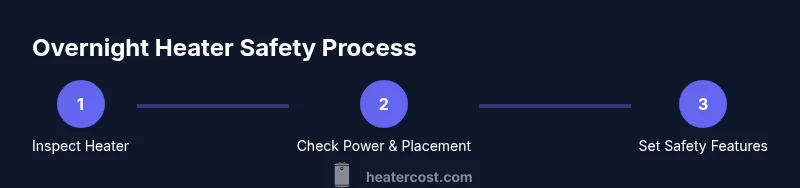
- 1
Inspect the heater for damage
Examine the cord, plug, and housing for cracks, exposed wires, or scorch marks. Do not use a heater with any visible damage. Damaged components increase the risk of fire and electrical shock.
Tip: If you find damage, replace the unit or have it repaired by a qualified technician before any overnight use. - 2
Check power sources and outlets
Plug the heater directly into a wall outlet; avoid extension cords or power strips. Test the outlet with a tester to ensure it's not loose or overheating. Check that the circuit isn’t overloaded.
Tip: If the outlet feels warm, switch to a different outlet or consult an electrician. - 3
Create a safe placement zone
Place the heater on a stable, nonflammable surface away from curtains, furniture, and bedding. Maintain at least a 3-foot clearance around the heater. Ensure there is nothing stacked on top of or around the unit.
Tip: Use a heat-resistant mat or stand to limit surface heat transfer to floors and carpets. - 4
Set temperature, timer, and safety features
Use the thermostat and timer to limit runtime and avoid overheating. If the unit has tip-over shutoff and overheat protection, enable these features. Do not override safety features.
Tip: Set a realistic overnight thermostat target (not too high) and rely on building insulation to maintain warmth. - 5
Install detectors and verify alarms
Confirm that smoke detectors and CO detectors are installed and functioning in sleeping areas. Replace batteries promptly. These detectors provide critical warning if something goes wrong during the night.
Tip: Test detectors monthly and replace units as recommended by the manufacturer. - 6
Monitor and have a contingency plan
If you must leave a heater on overnight, arrange for a home-safety check or have a trusted person check in periodically. Keep emergency contact numbers readily available.
Tip: If you notice any smell of gas, unusual smoke, or excessive heat, turn off the heater immediately and evacuate if needed.
Got Questions?
Are space heaters safe to leave unattended overnight?
Most space heaters should not be left unattended overnight. If you must use one, only do so with safety features such as tip-over and overheat protection, and in a well-ventilated area with detectors in place.
Generally, you should not leave a space heater unattended overnight. Use safety features, keep the area clear, and have detectors in place as a precaution.
What features make a heater safer for overnight use?
Look for auto shutoff, tip-over protection, overheat protection, a stable base, and a certified safety rating. Also ensure it’s appropriately sized for the room.
Safer heaters have auto shutoff, tip-over protection, and a good safety rating, plus proper room sizing.
Can I use a heater with a thermostat for overnight warmth?
Yes, a heater with a built-in thermostat can help maintain a steady temperature and prevent overheating, especially when paired with a timer and detectors.
Yes. A thermostat helps manage temperature and reduces risk if used with a timer and detectors.
What should I do if I smell gas or hear strange noises?
Turn off the heater immediately, evacuate if necessary, and call emergency services. If you smell gas, do not operate electrical switches until you are clear of the area.
Turn it off and leave if you smell gas or hear unusual noises; seek help right away.
Are there safer overnight alternatives to space heaters?
Yes. Improve insulation, use programmable thermostats, and rely on safer heating strategies such as multi-zone heating or increased layering rather than extended heater use.
There are safer options like upgrades to insulation and programmable thermostats instead of overnight heater use.
How often should I replace a space heater?
Replace any heater that shows signs of damage, has frayed cords, or frequently overheats. Regular maintenance and following manufacturer recommendations extend safe operation.
Replace damaged units and follow the manufacturer’s maintenance schedule.
Watch Video
The Essentials
- Unattended overnight heating carries real safety risks.
- Use heaters with built-in safety features and proper detectors.
- Improve insulation to reduce the need for overnight heating.
- Follow maintenance schedules and replace damaged units promptly.
- Always have a plan for emergencies and know when to turn off heat.