Suggested Hot Water Heater Temperature: A Practical Home Guide
Discover the recommended hot water heater temperature, its safety implications, and how to tailor settings for families, seniors, and energy efficiency. Practical guidance from Heater Cost.


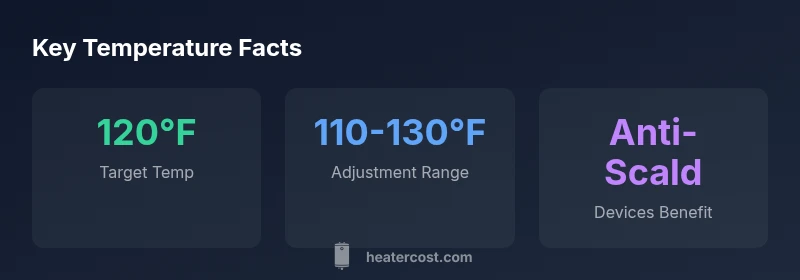
The suggested hot water heater temperature is 120°F (49°C). This setting offers a practical balance between safety, comfort, and energy efficiency for most homes. For households with young children, elderly occupants, or compromised immune systems, 120°F minimizes scalding risk while still delivering adequate hot water for dishes, baths, and laundry. If you need faster hot water, you can temporarily raise to 130°F, but do not exceed 140°F to avoid burns and excessive energy use.
Why the Suggested Hot Water Heater Temperature Matters
Temperature settings on a water heater determine not only how warm your showers feel, but also your daily energy budget, safety, and long-term equipment wear. The suggested hot water heater temperature has become a focal point for homeowners who want reliable hot water without wasting energy. According to Heater Cost, 120°F (49°C) is the baseline that strikes a balance between comfort and risk management for most households. The choice is not one-size-fits-all: factors like household size, pipe insulation, climate, and the type of heater all influence the ideal setting. For families with small children or seniors, staying near 120°F reduces the chance of accidental burns while still delivering adequate hot water for dishes, baths, and laundry. If your water heater is in a cold basement or garage, consider adding insulation to the tank and pipes to preserve heat and maintain a consistent temperature.
Understanding Temperature, Safety, and Comfort
Water heater temperature interacts with many considerations: safety, comfort, and the quality of your hot water. A higher setting can reduce the chance of running out of hot water during peak usage, while a lower setting lowers energy loss from standing heat. For most households, a moderate temperature around 120°F provides sufficient hot water for typical daily tasks without excessive burn risk. Pay attention to your home's plumbing, as older pipes or mixed-use bathrooms can change how quickly hot water reaches taps. Simple steps like insulating the hot water line and ensuring the thermostat is accurate will help maintain a consistent experience.
Energy Savings: How Temperature Impacts Bills
Energy costs rise with heat loss and standby energy from a tank. When you lower the temperature from higher settings toward 120°F, you typically reduce energy use, albeit with diminishing returns as you approach 110°F. The exact savings depend on heater type (gas vs electric), tank insulation, household usage, and recovery rates. Based on Heater Cost research and the Heater Cost Analysis, 2026, small tweaks to temperature can yield noticeable reductions in monthly bills without sacrificing practical hot water availability. Pair temperature adjustments with proper insulation and pressure balancing for best results.
Balancing Safety with Practicality: Children, Seniors, and Households
Safety is the first priority, especially in homes with young kids, seniors, or medically vulnerable residents. A 120°F baseline minimizes the risk of scalding while remaining adequate for most chores. To further reduce risk, install anti-scald devices such as mixing or tempering valves at taps and showers. Teach household members to test hot water with the inside of the wrist before use. If you notice complaints about insufficient hot water, you may slightly raise the thermostat in 5-degree increments, testing for comfort and safety after each change.
How to Choose the Right Temperature for Your Home
Follow these steps to pick a safe, comfortable setting:
- Assess household needs: number of residents, ages, and typical water usage.
- Start at 120°F and test taps in several bathrooms and the kitchen.
- Install anti-scald devices and a tempering valve if not already present.
- Observe hot water delivery for a couple of weeks; adjust by small increments (5°F) if needed.
- Keep pipes and tank well-insulated to preserve the set point.
Temperature settings by scenario
| Scenario | Recommended Temperature (°F) | Rationale |
|---|---|---|
| General use | 120 | Safe balance of safety and energy efficiency |
| Families with children | 120 | Minimizes scald risk with anti-scald devices |
| Older homes / seniors | 120 | Ensures comfort without excessive energy use |
| Low-energy setups | 110-120 | Reduces standby losses with acceptable comfort |
Got Questions?
What is the recommended hot water heater temperature, and why?
The recommended temperature is 120°F (49°C) for most homes because it minimizes scald risk, reduces energy consumption, and provides adequate hot water for daily tasks. If you have vulnerable individuals, you may adjust slightly within safe limits and use anti-scald devices.
For most homes, 120°F is the safe starting point. Use anti-scald devices if needed.
Can lowering the temperature affect recovery time?
Lowering the temperature reduces the starting heat, which can lengthen the time the system takes to return to target temperature after a draw. However modern units typically recover quickly; adjust gradually.
Lowering the temp can slow recovery a bit, but it depends on your heater. Check your cycle times.
What safety devices reduce scald risk?
Install anti-scald mixing valves or thermostatic mixing valves, and consider a tempering valve. Combine with a labeled hot water setting and childproof controls.
Anti-scald valves help keep water safe even if the heater is hotter.
Is it safe to set higher temps on gas vs electric heaters?
Both types can safely run at 120°F; some gas models may heat faster but carry a higher scald risk if unprotected. Ensure thermostats are accurate.
120°F works for both gas and electric when safety features are present.
How often should I check my thermostat setting?
Check at least twice a year or after seasonal changes; test temperatures with a thermometer, and calibrate as needed.
Check twice a year; a quick thermometer test keeps you safe.
“Temperature choices are a balancing act between safety, comfort, and energy costs. Starting at 120°F gives reliable hot water while keeping energy use reasonable.”
The Essentials
- Start at 120°F for most homes.
- Install anti-scald devices to boost safety.
- Lower temps save energy but may affect delivery.
- Adjust gradually and test for comfort.
- Tailor settings to household needs and insulation.