How to Turn On a Pool Heater: Step-by-Step Guide
Learn how to safely turn on your pool heater, whether gas, electric, or heat pump. This educational guide covers safety checks, control panels, startup sequences, troubleshooting, and maintenance to keep your pool warm efficiently.


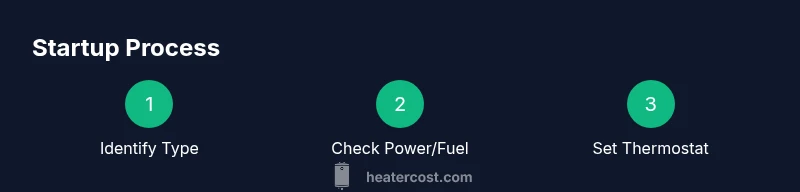
Turn on your pool heater safely by confirming the heater type, power and fuel availability, and thermostat settings before you enable the unit. Ensure the pool pump is running, the area is clear, and the control panel is accessible. According to Heater Cost, following manufacturer-specific startup steps and safety guidelines minimizes risk and promotes efficient heating.
Understanding pool heater types and readiness
Pool heaters come in three common types: gas-fired heaters, electric resistance heaters, and heat pumps. Each type has a distinct startup sequence, venting needs, and safety features. Before you press any controls, identify your heater type by looking at the exterior label and consulting the model manual for startup specifics. This upfront step ensures you follow the correct procedure and avoid accidentally bypassing critical safety features. In practice, you will interact with the control panel, the fuel valve or contactor, the ignition system or heating element, the temperature sensor, the pool pump, and the safety switch. Reading the manual helps you respect clearances, ventilation requirements, and warranty constraints. You should also verify that the pool water is circulating and that the pump is in good operating condition since poor flow can lead to overheating or damage to the heater core. Ensure the area around the unit is free of obstructions and flammable materials. This knowledge sets the stage for a safe and effective startup. Heater Cost analysis emphasizes the value of model-specific guidance to reduce energy waste and protect equipment from misuse.
Safety first: pre-start checks
Safety is non-negotiable when starting any pool heater. Begin by checking for any gas odor or hissing sounds if you have a gas model, and ensure there is no obvious gas leak. If you smell gas, evacuate the area and call your gas provider or emergency services immediately. For all systems, verify that the electrical power is on and that the outdoor disconnect switch is engaged if present. Check the circuit breaker or switch for trips and confirm Ground Fault Circuit Interrupter (GFCI) outlets are working. Clear the area around the heater, remove flammable materials, and ensure tool access is safe. Wear protective gloves and use a flashlight to inspect ignition components and venting. Heater Cost’s guidance highlights safety checks as a cornerstone of reliable startup and energy efficiency. If any doubt exists about gas lines or electrical health, stop and call a licensed technician.
Locating controls and reading the panel
Your pool heater’s control panel is the central hub for startup. Locate the user interface, thermostat, mode selector, and status indicators. Learn what each indicator means by consulting the manual: common states include off, standby, heating, and error. Some panels use digital displays, while others rely on status LEDs. Make a quick visual check for corrosion, loose wires, or damaged insulation around the panel. If your unit has a service panel, use a suitable screwdriver to open it and verify that you can safely access the main power switch and ignition module. Pay attention to safety interlocks that prevent ignition if doors or panels are open. Having a clear understanding of the panel reduces the chance of misconfiguring the system during startup.
Reading status indicators and diagnostics
Status lights are your quick read on whether the system is ready to operate. Look for a steady power light, a flame indicator (for gas models), a compressor indicator (for heat pumps), and a water flow indicator that confirms the pump is circulating water. If any indicator shows an error, consult the fault codes in the manual and record the code before taking corrective action. A lack of communication between the control board and the thermostat can prevent heating; in such cases, resetting the control panel or power cycling the unit may restore normal operation. Note any unusual noises, vibrations, or odors as these can signal a problem requiring professional attention. This section helps you confidently interpret what the heater is attempting to communicate as it begins its cycle.
Gas, electric, and heat pump startup differences
Gas heaters rely on a gas valve and an ignition system to light the burner, electric units energize heating elements, and heat pumps pull heat from the air using refrigerant cycles. Each type has distinct startup prerequisites: gas models may require a vent check and safe ignition sequence, electric models require stable power and a closed loop, and heat pumps need ambient conditions within a functional operating range. Regardless of type, ensure the unit is set to the correct mode for pool heating and that the temperature setpoint is appropriate for the current weather and user comfort. Understanding these differences helps you select the appropriate steps and avoid cross-wiring or mode errors that could cause damage or wasted energy.
Common startup mistakes and how to avoid them
Avoid starting with the panel cover on, as heat and airflow may be restricted and safety interlocks could be bypassed. Do not override safety switches or jump-start ignition; these shortcuts create hazardous conditions. Never operate the heater with a known gas leak or vent obstruction. Always confirm that the pump is circulating water before attempting ignition; without water flow, the heater can overheat or crack. If you encounter frequent tripping, consult a qualified technician and consider a preventive maintenance plan. Heater Cost emphasizes routine checks as part of sustainable operation and a longer equipment life.
Maintenance and energy efficiency tips for startup
Startup efficiency improves when you keep the filtration system clean, replace clogged air filters, and ensure the pool’s water chemistry is balanced. Clean the heater’s intake and exhaust vents if you see debris, and inspect the flame sensor or ignition electrodes for buildup. A well-sealed panel and properly seated connections prevent leaks that waste energy. Use a temperature differential approach: set the pool heater to a modest rise and monitor how quickly it reaches the target temperature, then adjust as needed. This approach aligns with Heater Cost’s recommendations to optimize energy use while maintaining comfort.
Troubleshooting: what to do when the heater won't start
If the unit does not start, revisit the safety checks first: power, fuel supply, breaker status, and interlocks. Check for message codes or error lights and consult the manual to interpret them. If ignition fails, confirm that the gas valve is open (gas models) or that the igniter is receiving power. For electric units, verify the thermostat, limit switches, and a connected contactor. If the problem persists, reset the system by turning it off, waiting a few minutes, then turning it back on. When in doubt, contact a licensed technician. The Heater Cost team recommends documenting failures and scheduling preventive maintenance to reduce recurring startup issues.
Authority sources and further learning
For readers seeking external validation and deeper guidance, consult authoritative sources such as the U.S. Department of Energy (energy.gov) for general heating system efficiency and safety guidelines, the National Renewable Energy Laboratory (nrel.gov) for heat pump performance in residential settings, and the Centers for Disease Control and Prevention (cdc.gov) for pool safety practices. These resources complement model-specific manuals and professional service guidance to support safe and efficient pool heating.
Authority sources (continued)
- https://www.energy.gov/
- https://www.nrel.gov/
- https://www.cdc.gov/healthywater/pools/index.html
Tools & Materials
- Owner's manual for pool heater(Have model-specific startup steps and safety warnings handy)
- GFCI tester / circuit tester(Confirm GFCI outlets are functioning before starting)
- Non-contact voltage tester(Optional for confirming power is off before servicing)
- Screwdriver set (Phillips and flathead)(Access control panel and service screws)
- Flashlight(Shine light on panel and ignition area)
- Heat-resistant gloves(Protect hands from hot surfaces)
- Pool-safe thermometer(Optional to monitor temperature during testing)
Steps
Estimated time: 20-40 minutes
- 1
Identify heater type and manual
Locate the model label and read the startup section of the manual to determine whether you have a gas, electric, or heat-pump heater and to follow model-specific steps.
Tip: If the manual is missing, record the model and manufacturer to look up instructions online. - 2
Verify power and safety switch
Ensure the circuit breaker is ON and any outdoor disconnect switch is engaged. Verify there are no tripped breakers before attempting ignition.
Tip: Only continue if you are comfortable with basic electrical safety. - 3
Check for gas leaks and vent clearance
Inspect for gas smells and ensure the vent is clear of obstructions. Do not operate if you detect gas; evacuate and call emergency services.
Tip: Never ignore a gas odor; safety overrides starting the unit. - 4
Open the service panel
Use a screwdriver to open the service panel and expose the control board, ignition module, and main power switch.
Tip: Keep screws in a container to avoid losing them. - 5
Confirm fuel or power supply
For gas models, verify the gas valve is open. For electric models, confirm the unit is powered and the contactor is engaged.
Tip: Check valve orientation and ensure no fluctuations in fuel supply. - 6
Set thermostat and mode to Heat
Set the thermostat to the desired pool temperature and ensure the mode is selected for pool heating.
Tip: Do not set the temperature beyond the manufacturer's recommended maximum. - 7
Initiate ignition or energize elements
Gas models: engage ignition or relay to start burner; electric models: allow time for heating elements to energize.
Tip: If a pre-purge cycle exists, allow it to complete before ignition. - 8
Check indicators and start test run
Watch for flame or compressor indicators and listen for burner operation. Run the system for a short period to confirm temperature rise.
Tip: If there is no ignition after several attempts, power down and consult a technician. - 9
Close panel and monitor
Replace the service panel, ensure normal operation, and monitor the pool temperature rise over the next 10-15 minutes.
Tip: Document the startup and any anomalies for future reference.
Got Questions?
What safety checks should I do before starting a pool heater?
Always verify there is no gas odor or leaks, confirm the power supply and safety switches are ready, and ensure venting is clear. Consult the manual for model-specific interlocks and safety features.
Do a quick safety check: no gas smell, power ready, and vents clear before starting.
What should I do if the heater won't ignite?
First verify fuel supply or power, then check the ignition module or electrical contactors. If there is no ignition after multiple attempts, turn off the unit and seek professional service.
If it won't ignite after checks, turn it off and call a technician.
Can I start a pool heater in cold weather?
Most heaters operate in cold weather, but efficiency drops. Ensure adequate venting, frost protection if applicable, and consider scheduling startup during milder periods.
Heaters can start in cold weather, but efficiency may drop.
How long does it take for a pool heater to raise temperature?
Heating duration depends on the heater type, pool size, and current water temperature. Start with a modest rise and monitor progress to avoid overshoot.
It varies, but start with a small temperature rise and watch the change.
Is it safe to operate with the pool cover on?
Operating a heater with the pool cover on can trap heat and restrict ventilation. Remove the cover if required by your setup unless the manufacturer states otherwise.
Remove the cover if required by your system to allow heat transfer.
What maintenance helps reliable startup?
Regularly clean intake vents, replace filters, inspect ignition components, and test safety switches. Schedule professional maintenance as recommended by the manufacturer.
Regular maintenance keeps startups reliable and efficient.
Watch Video
The Essentials
- Verify safety before powering on.
- Identify heater type and follow the manual.
- Ensure proper water flow and venting.
- Monitor temperature and indicators during startup.