How to Start a Propane Heater Safely: A Homeowner's Guide
Learn how to safely start a propane heater, whether it uses a standing pilot or electronic ignition. This step-by-step guide covers safety checks, ignition options, troubleshooting, and maintenance for homeowners.


According to Heater Cost, you can safely start a propane heater by validating ventilation, checking for leaks, and following the appropriate ignition method (standing pilot or electronic). This quick-start guide outlines the exact startup sequence, safety checks, and troubleshooting steps you’ll need to get warm quickly and safely. Prepare by turning off the gas, verifying the regulator, and having a CO detector on hand. By following these steps, you’ll minimize risk and maximize reliable heat when you need it most.
Understanding Propane Heater Types and Readiness
Propane heaters come in several configurations, from portable space heaters to built-in units designed for living spaces. Some rely on a standing pilot light, while others use intermittent electronic ignition that fires when the thermostat calls for heat. Before you attempt to start, identify the model type and reference the user manual for any model-specific quirks. Heater Cost analysis shows that reliability is often linked to regular maintenance, proper ventilation, and a healthy regulator. If you’re unsure, assume you’re dealing with a standing-pilot unit and plan for a mild ignition process that keeps fuel usage predictable while ensuring safety. Having a clear understanding of your unit’s ignition method helps you choose the correct startup sequence and reduces the chance of gas buildup.
While older units frequently use a standing pilot, newer models rely on electronic ignition for faster startup and improved safety. A standing pilot can remain lit and consume fuel when the heater is off, whereas electronic ignition conserves fuel but requires a functioning spark or piezo system. Regardless of the method, the first step is ensuring the area is well ventilated and free of combustible materials. Position the heater on a stable, heat-resistant surface with a clear 3-foot radius for all directions. If you live in a home with occupants sensitive to fumes, verify that the space has adequate air exchange. These basics lay the groundwork for a safe and efficient startup.
Tools & Materials
- Propane cylinder with regulator(Ensure the cylinder is within date, connected to the correct regulator, and not leaking.)
- Shut-off valve key or wrench(Needed to isolate the gas supply if a leak or problem is detected.)
- Non-contact CO detector battery(Place near the heater and test monthly.)
- Soap solution or commercially available leak tester(Use to test connections for gas leaks (bubbles indicate a leak).)
- Flashlight(Keep a powered light source handy in case of dim lighting or gas smells.)
- Gloves and eye protection(Protect hands and eyes during inspection and testing.)
- Ventilation aids (window or exhaust fan)(Helpful for confined spaces but not required if the area is already well-ventilated.)
- Fire extinguisher (Class B:C)(Keep within easy reach in any area housing a propane heater.)
Steps
Estimated time: 15-35 minutes
- 1
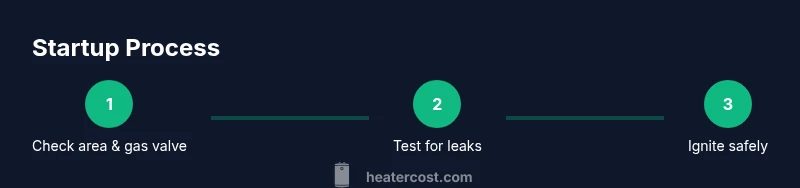
Power off and prep the area
Before touching the heater, turn off the main gas supply and ensure the area is clear of papers, fabrics, and other combustibles. This reduces the risk of accidental ignition and gives you a safe workspace. If you smell gas, leave the area immediately and call your local emergency services.
Tip: Double-check that the thermostat is set to a comfortable temperature and that the heater's switch is in the OFF position before you begin. - 2
Inspect the fuel supply and regulator
Check the propane cylinder connections for corrosion, wear, or signs of leakage. Inspect the regulator and hose for cracks or kinks. Replace damaged components before attempting to light the heater. A secure, clean connection reduces the likelihood of leaks during startup.
Tip: Always hand-tighten fittings and avoid tools that may overtighten and damage threads. - 3
Test for leaks with soap solution
Apply the soap solution to all connections while the gas valve is closed. Open the valve slowly and watch for bubbles which indicate a leak. If bubbles appear, close the valve, tighten the connection, and re-test. Do not light the heater until there are no leaks.
Tip: If you’re unsure about a connection, stop and consult a professional; better safe than sorry with gas leaks. - 4
Ventilate the space and verify CO safety
Open a nearby window or door to ensure fresh air exchange while the heater is operating. Place a CO detector in the room according to the manufacturer’s guidelines. If the detector sounds an alarm, evacuate immediately and contact emergency services.
Tip: Keep the detector’s battery fresh and test monthly for reliability. - 5
Ignition method selection
If your unit uses a standing pilot, locate the pilot assembly and prepare to light it using the ignition method described by the manual. If your unit uses electronic ignition, ensure the electrical supply is connected and the switch is ready to function when called for heat. Do not force ignition if the unit shows signs of a gas odor or malfunction.
Tip: Review the manual for the exact sequence; incorrect ignition can damage the valve or manifold. - 6
Light the heater (pilot or electronic ignition)
For standing pilots, ignite the pilot following the manufacturer’s procedure and confirm a stable flame before lighting the main burner. For electronic ignition, press the ignition control, then hold the flame button until the burner lights and the thermocouple stabilizes. Listen for a steady burner roar and watch for consistent flame behavior.
Tip: If the flame wavers or goes out, shut off the gas, wait a few minutes, and repeat the process or call a professional. - 7
Set your desired heat level
Once the burner is reliably lit, adjust the thermostat or heat setting to the desired level. Avoid max settings for extended periods on new installations; gradual ramp-up helps prevent overheating and reduces fuel waste.
Tip: Start at a moderate setting and observe how the space responds before making larger changes. - 8
Final safety check and close
Ensure the area remains ventilated and free of obstructions. Close any windows you opened after confirming proper operation. Re-check for any unusual smells or noises and have a fire extinguisher accessible nearby.
Tip: Document the startup for future reference and schedule a periodic maintenance check.
Got Questions?
Can I start a propane heater indoors?
Only if the space is well-ventilated and you have a working CO detector. Propane combustion produces carbon monoxide, so always prioritize airflow and monitoring.
Yes, but you must ensure good ventilation and a functional CO detector before starting.
What should I do if the heater won’t ignite?
If ignition fails, check the gas supply, connections for leaks, and ensure the safety valves are open. Do not force ignition; refer to the manual or contact a technician.
If it won’t ignite, verify the gas supply and connections, then consult the manual or a pro.
How can I tell if there’s a gas leak?
Use a soap-and-water solution on connections; bubbles indicate a leak. If you detect a leak, shut off the gas, evacuate, and contact emergency services.
Bubble test shows leaks; shut off gas and seek help if you see bubbles.
Is it necessary to relight the standing pilot regularly?
Standing pilots may stay lit but require routine safety checks. If the pilot goes out, follow the manufacturer’s relighting procedure and ensure the area is well-ventilated.
Pilots can go out occasionally; relight per the manual and ensure ventilation.
What maintenance reduces startup problems?
Regular inspections of hoses, regulators, and connections, plus annual professional service, reduce startup issues and improve efficiency.
Regular checks and annual service help prevent startup issues.
When should I call a professional?
If you smell gas, hear hissing sounds, or cannot safely light the heater after following the manual, contact a licensed technician immediately.
Call a professional if you smell gas or can’t light safely after following the guide.
Watch Video
The Essentials
- Verify ventilation before starting the heater.
- Test for leaks with soapy solution first, then light only if safe.
- Know your ignition type: standing pilot or electronic ignition.
- Maintain CO detectors and schedule routine checks.
- If anything smells wrong, shut down and seek professional help.