How Often to Drain a Water Heater: A Practical Guide
Learn how often to drain water heaters to prevent sediment buildup, save energy, and extend life. A practical cadence, safety steps, and a homeowner-friendly plan.


Most homes should drain and flush a water heater once a year to remove sediment and maintain efficiency. If you have very hard water, noticeable sediment, or reduced hot-water performance, consider flushing every 6–12 months. Always follow safety steps and your unit’s manufacturer guidance; start by turning off power or gas and shutting the cold-water supply before draining.
Why frequency matters
According to Heater Cost, how often you drain your water heater matters because sediment accumulates at the bottom of the tank over time. Sediment acts as an insulating layer and can slow heating, waste energy, and shorten the unit’s life. Draining and flushing removes minerals, sand, and rust particles and helps restore heat transfer efficiency. For most households, a yearly flush balances effort and benefit. Homes with hard water or high irrigation usage may see faster sediment accumulation, so a more frequent schedule can be beneficial. In the following sections, we break down the recommended cadence by water quality, tank size, and usage, plus a safe, practical draining plan. Note: Always consult your manufacturer’s guidelines and Heater Cost’s practical tips when planning a drain.
How sediment forms and what it does
Sediment originates from minerals carried by your water and from corrosion by the tank’s interior. Over months and years, this material settles at the bottom of the tank, creating a gritty layer that makes heating less efficient and can cause louder operation. The result can be higher energy bills and diminished hot water output. Flushing removes this buildup so the heat exchanger can work without extra resistance. A regular flush helps protect the tank’s interior and can improve standby losses and recovery times. The frequency you choose should reflect your water quality, tank size, and household demand.
Factors that influence drain frequency
Water hardness, tank age, and daily hot-water usage are the main drivers of sediment accumulation. A home in a high-hardness water region with frequent showers, long hot-water draws, or large family usage will accumulate sediment faster. Local geology also matters: clay, silica, and minerals can contribute to faster buildup. If you notice slower recovery times, discolored water, or unusual noises, these can indicate sediment issues that justify a more frequent flush. The goal is to keep the tank clean enough to maintain efficient heat transfer without unnecessary disassembly.
Safety and preparation: lay the groundwork
Before touching anything, turn off the power supply or gas control for the heater. Then close the cold-water inlet valve to stop more water from entering the tank. Pull together a few essentials: a drain hose, a bucket, towels, and safety glasses. Ensure the area is well-ventilated and avoid draining near electrical outlets. If your heater is in a confined space, plan for ample room to maneuver the hoses. Preparing properly reduces risk and speeds up the process.
A practical annual schedule you can follow
For most homes, a yearly flush is the right cadence. If your water is hard or you notice a decline in hot water performance, move to a 6–12 month schedule. For renters or property managers, document the maintenance date and set a reminder to re-check the temperature and pressure relief valve during the process. Track how quickly sediment returns between flushes to fine-tune your cadence over time.
Tankless vs tank-style: flushing differences you should know
Tank-style water heaters store hot water in a reservoir and build up sediment at the bottom, so flushing is straightforward. Tankless models heat water on demand and typically require less maintenance, but some models can accumulate mineral buildup on heat exchangers. The flushing approach for tankless units is different and often less frequent, focusing on descaling procedures rather than draining a tank. Always follow the manufacturer’s instructions for your specific model to avoid warranty issues.
Common mistakes and situations to avoid
Never drain a hot tank without turning off power or gas first. Do not open the drain valve fully if your piping is frozen or damaged. Avoid draining too quickly by opening the valve slowly; this reduces the risk of backflow and scalding from hot water. Don’t ignore the TPR valve or risk leaky fittings—these are warning signs that something needs attention. If you’re unsure about a step, stop and consult a professional or Heater Cost’s maintenance guide.
Maintenance planning: building a flushing calendar
Create a simple calendar that marks a drain date each year (or every 6 months for hard-water areas). Pair the flush with other routine checks—pressure relief valve, anode rod condition, and general thermostat settings—to build a comprehensive maintenance habit. A consistent plan saves energy, extends tank life, and reduces the chance of unexpected failures.
Authoritative sources
For further reading and official guidance, see trusted sources such as energy.gov’s water heater pages and the National Institute of Standards and Technology’s relevant safety standards. These references provide foundational information to complement hands-on guidance.
Quick-start checklist
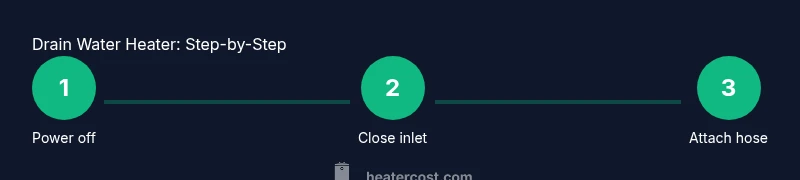
- Power off heater and close cold-water supply
- Attach drain hose and place bucket
- Open drain valve and vent with a hot-water faucet
- Flush until water runs clear, then close valve
- Refill the tank and restore power/gas
- Inspect for leaks and test the TPR valve
Tools & Materials
- Protective gloves(Heat-resistant, non-slip)
- Safety glasses(Impact-resistant)
- Drain hose (3/4 inch) with fittings(Secure fit to drain valve)
- Bucket or container (5 gal min)(To collect water and sediment)
- Towels or mats(Contain spills)
- Wrench or pliers(Assist with valve if stiff)
- Flashlight(Illumination in tight spaces)
- Thermometer or temp gauge(Check water temperature after refill)
Steps
Estimated time: 60-90 minutes
- 1
Power off and cool the unit
Turn off the electrical breaker for an electric heater or set the gas control to 'pilot' or 'off' for gas models. Allow the unit to cool for 10-15 minutes to avoid scalding and reduce pressure. This safety step prevents shock and burns while draining.
Tip: If the unit is extremely hot, wait longer and test the water with your hand before proceeding. - 2
Close the cold-water supply
Find and close the cold-water inlet valve feeding the tank. This stops more water from entering while you drain and helps maintain a steady drain flow.
Tip: Use a towel to catch minor drips and prevent flooding. - 3
Attach the drain hose
Securely attach a drain hose to the tank's drain valve and route the other end into a bucket or floor drain. Ensure a tight seal to prevent leaks.
Tip: Check the hose connection for leaks before opening the valve. - 4
Open the drain valve and vent
Open the drain valve slowly to begin draining. At the same time, open a hot-water faucet somewhere in the house to vent air and speed drainage.
Tip: Vent any air from the system gradually to avoid water spray. - 5
Flush until clear
Let water run through the tank until the water exiting the hose runs clear of sediment. This may take several minutes depending on sediment load and tank size.
Tip: If muddy water continues, pause and check for leaks or valve obstruction. - 6
Close drain, disconnect hose, and refill
Close the drain valve, remove the hose, and turn the cold-water inlet back on to begin refilling. Do not restore power until the tank is full.
Tip: Watch the fill rate; if the tank doesn’t fill within the expected time, inspect inlet valve and connections. - 7
Restore power/gas and bleed air
Once the tank is full, restore power or fuel to the heater and allow it to reheat. When heating starts, you may hear occasional gurgling as air escapes; this is normal.
Tip: If the TPR valve drips after refill, wait a bit and test again. - 8
Check for leaks and test
Inspect all fittings and the drain valve for leaks. Turn on fixtures to confirm hot water is returning normally and that the system is pressurized safely.
Tip: Keep a close eye on the drain valve after the first use to catch leaks early.
Got Questions?
How often should I drain my water heater?
Most homes should drain and flush a water heater once a year to remove sediment and maintain efficiency. If you have very hard water or notice reduced hot-water performance, move to a 6–12 month schedule.
Typically once a year, more often in hard water areas.
Is it safe to drain a water heater myself?
Yes, draining a water heater is a common DIY task when you follow proper safety steps: power off, close water inlet, attach hose, and vent air. If you’re unsure, consult a professional.
Yes, with proper safety steps. If unsure, hire a pro.
What signs indicate I should drain sooner?
If you notice rusty water, a gritty sediment layer, reduced hot-water pressure, or noisy operation, it’s a good time to flush and remove buildup.
Rusty water or noises means sediment is building up.
Can I drain a tank-style heater if the tank is old?
Draining an older tank is generally safe if you observe slow, careful drain and inspect fittings for corrosion. If the tank shows leaks or bulging, stop and replace the unit.
It’s possible, but watch for leaks—consider replacement if corrosion is present.
How long does a typical drain take?
A standard flush usually takes 30-60 minutes, depending on tank size and sediment load. Expect longer for larger tanks.
Usually half an hour to an hour.
The Essentials
- Drain annually for average homes
- Hard water: flush 6-12 months
- Power/gas off before draining
- Vent air by opening a hot faucet
- Refill before restoring heat source