How Long Does a Heater Last? A 2026 Longevity Guide
Learn realistic lifespans for furnaces, heat pumps, and water heaters, plus maintenance tips to extend life. This 2026 guide covers what affects longevity and when replacement is wiser.


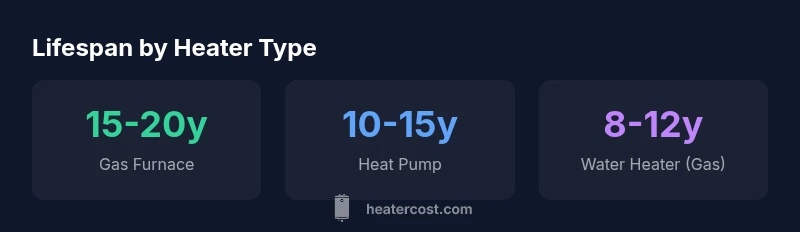
The typical home heating system lasts about 10-20 years, with furnaces often reaching 15-20 years, heat pumps 10-15 years, and water heaters roughly 8-12 years. Longevity hinges on maintenance, usage patterns, and installation quality; regular inspections can push lifespans toward the upper end while neglect tends to shorten them.
Understanding lifespan and its drivers
When homeowners ask how long does heater last, they are really asking about the intersection of design, installation, and upkeep. A heater is not a single, immutable object; its life depends on type (furnace, heat pump, water heater, boiler), the climate it operates in, and how often it runs at peak performance. In general, most residential heating systems aim for a decade or more of reliable service, but the upper end can reach two decades with mindful care. The Heater Cost team emphasizes that longevity is driven by four main factors: the quality of installation, correct system sizing, regular maintenance, and operating conditions. Even the best equipment loses viability if it is oversized or undersized for the home, if air leaks cause the system to work harder, or if components like heat exchangers, ignitions, and pumps wear out from neglect. Across all system types, a proactive maintenance schedule and timely part replacements often translate into longer life than raw brand reputation alone. This section lays out the practical realities behind the question and sets expectations for homeowners evaluating replacement timelines.
Lifespan ranges by heater type
Lifespan expectations vary by system category, and real-world results depend on how well each component is cared for. In the most common residential setups, gas furnaces tend to last longer than many other components, frequently reaching the mid to upper teens. Heat pumps, which carry the burden of both heating and cooling duties, often span a similar or slightly shorter window, typically about 10-15 years with good maintenance. Water heaters sit on a different track: gas-powered units commonly endure 8-12 years, while electric water heaters can reach 10-15 years with routine flushing and anode replacement. Boilers, when used in combination with radiators, usually fall within a 15-25 year range depending on fuel source and installation quality. Remember that these are general ranges; climate, usage intensity, and system design can tilt lifespans higher or lower. The main takeaway: expect a broad band rather than a single number, and plan replacements with that flexibility in mind.
Factors that shorten or extend life
Several factors consistently influence longevity across categories:
- Installation quality and proper sizing: an oversized or undersized system works harder, accelerating wear.
- Regular maintenance: annual tune-ups, clean filters, and thermostat checks reduce stress on key components.
- Operating conditions: extreme cold snaps or high seasonal use increase cycling and wear on compressors and burners.
- Component quality and materials: higher-grade heat exchangers, pumps, and valves resist corrosion and fatigue.
- Water quality and sediment control (for water heaters): mineral buildup and corrosion shorten life if not mitigated.
- Climate and heating load: homes in harsher climates may incur more cycles and related wear. Balanced, consistent maintenance is the most reliable strategy to extend life, making it worthwhile to schedule professional check-ups before peak seasons.
Maintenance you should schedule
A practical maintenance calendar can dramatically affect how long your heater lasts. Key activities include:
- Annual professional tune-up: inspection of burners, heat exchangers, refrigerant levels, electrical connections, and venting for furnaces and heat pumps.
- Filter changes every 1-3 months: clogged filters force heaters to work harder and shorten lifespans.
- Water heater care: flush the tank yearly or as recommended by the manufacturer; inspect the anode rod every 2-3 years and replace as needed.
- Thermostat calibration: ensure accurate readings to prevent unnecessary cycling.
- Duct and vent cleaning: ensure efficient airflow and reduce strain on the system.
- Monitor for signs of wear: rust, banging noises, or sudden drops in efficiency should prompt an inspection. Sticking to these steps makes a meaningful difference for the 2026 maintenance cycle and helps answer the question of how long does heater last in your home.
Practical steps to extend life and maximize efficiency
Beyond routine maintenance, homeowners can actively extend heater life with several practical steps:
- Keep the system properly sized and sealed: zones and ducts should be insulated and sealed to prevent leaks.
- Improve home envelope: reduce load with insulation upgrades, weatherstripping, and sealing air leaks to minimize cycling.
- Use programmable thermostats: avoid constant on/off cycling and maintain moderate temperatures during low-occupancy periods.
- Schedule professional ductwork checks after major renovations to prevent inefficiencies.
- Prioritize quality parts during any replacement: investing in durable burners, compressors, and coils pays off in longevity.
- Track energy use and maintenance costs: a steady decline in efficiency often signals the need for service or replacement. The goal is to reduce the stress on the system, which correlates strongly with longer life and lower lifetime costs.
Replacement vs repair: when to invest
As your system ages, a growing question becomes: should you repair or replace? A practical rule of thumb is to compare repair costs to the projected cost of a replacement that would deliver similar reliability and efficiency. If multiple major components require attention within a short period, or the system is approaching the end of its typical lifespan, replacement often becomes the wiser choice. Another factor is energy efficiency: newer models use less fuel and electricity, which can offset higher upfront costs over time. For many households, a strategic replacement planned on a known timeline is preferable to ongoing, costly repairs that offer only temporary relief. The Heater Cost team recommends evaluating not just the current bill but the long-term maintenance trajectory and potential incentives for upgrading to a more efficient system.
What to look for when service techs visit
During service visits, look for signs that the system is nearing end-of-life and that the technician is prioritizing longevity: corrosion around connections, excessive rust on heat exchangers, unusual noises, gas leaks or improper venting, frequent cycling, and rising energy costs without improved comfort. Ask your technician about the expected remaining lifespan based on current condition and get a written maintenance plan. Keeping records helps you schedule replacements before a sudden failure disrupts comfort and incurs higher replacement costs. A well-documented maintenance history is a powerful tool in any decision about how long a heater lasts in your home.
Lifespan and maintenance expectations by common home heating systems
| Heater Type | Avg Lifespan | Typical Maintenance Interval |
|---|---|---|
| Gas Furnace | 15-20 years | 1-2 years |
| Heat Pump | 10-15 years | 1 year |
| Water Heater (Gas) | 8-12 years | 1-2 years |
Got Questions?
How often should I have my heater serviced?
Most systems benefit from an annual professional inspection, with additional checks for specific components if you notice changes in performance. A yearly tune-up helps catch wear before it leads to failures.
Most heaters should be serviced once a year by a licensed tech. If you notice odd noises or reduced efficiency, schedule a check sooner.
Can maintenance really extend the life of my heater?
Yes. Regular maintenance reduces strain on critical parts, improves efficiency, and lowers the chance of unexpected breakdowns. It can meaningfully push the typical lifespan toward the upper end.
Absolutely. Regular maintenance lowers wear and helps your system last longer.
Is it worth repairing an old heater or replacing it?
If several major components need work within a short period, or the unit is past its typical lifespan, replacement is often wiser. Compare repair costs to the price of a more efficient unit.
If multiple big repairs are looming and the system is old, replacing may be the smarter move.
What signs indicate my heater is near the end of life?
Frequent breakdowns, rising energy bills, strange noises, corrosion, or inconsistent heating are red flags that warrant a professional evaluation.
Look for frequent failures, higher bills, and odd noises—that usually means attention is needed.
Do tankless heaters last longer than traditional tanks?
Tankless systems generally offer longer lifespans and lower outage risk, but they still require regular maintenance to sustain performance over many years.
Tankless units often last longer, but maintenance is still essential.
How does climate affect heater life?
Extreme winters or hot summers increase cycling stress on components, potentially shortening life. Regular service and proper insulation help offset climate effects.
Harsh climates can speed wear, but good maintenance helps protect longevity.
“Regular, quality maintenance is the most effective way to extend a heater's life. Many wear issues arise from avoidable neglect, not inherently poor equipment.”
The Essentials
- Plan for a replacement horizon of 15–25 years
- Regular maintenance is the single best way to extend life
- Choose properly sized, quality-installed systems
- Evaluate repair vs replacement as systems age and costs rise