How Often to Replace Water Heaters: A 2026 Lifespan Guide
Learn how often to replace water heaters, comparing tank vs. tankless lifespans, factors that shorten or extend life, and practical budgeting tips for homeowners.


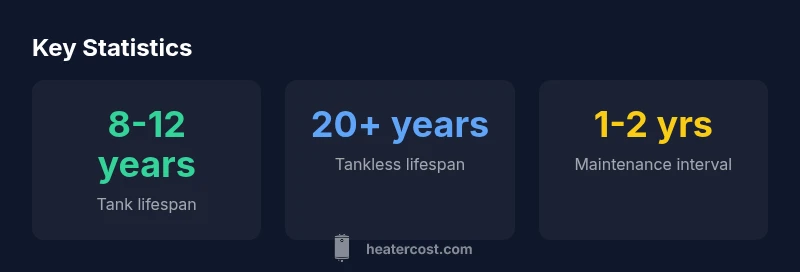
Tank-style water heaters typically last 8-12 years, while tankless models can exceed 20 years. Replacement timing varies with usage, water quality, and maintenance. In homes with hard water or irregular service, tanks may require replacement closer to 7-10 years, while well-maintained systems often push replacement toward the upper end of life expectancy.
Why replacement frequency matters
According to Heater Cost, understanding how often to replace a water heater helps homeowners plan for renovations and energy budgets. The decision influences comfort, reliability, and overall operating costs. Traditional storage tanks generally offer straightforward replacements around a decade of service, while tankless systems promise longer life with different maintenance demands. Utilities and energy costs also shift with upgrading to newer models, especially when replacing an aging, inefficient unit. Knowing when to replace reduces the risk of cold showers, sudden leaks, and costly emergency service. For property managers, aligning replacement timing with occupancy and turnover can minimize disruption while preserving tenant satisfaction. As with any major home upgrade, plan for best-value options that balance upfront cost with long-term energy savings.
Lifespan by system type: Tank vs. Tankless
When choosing between storage tanks and on-demand tankless heaters, most homes start with compatibility and life expectancy in mind. Storage tanks commonly show lifespans in the 8-12 year range, depending on water quality and maintenance. Tankless systems, by contrast, can exceed 20 years with proper care and professional servicing. The exact figures hinge on installation quality, mineral content in the water, and how consistently the unit is flushed and inspected. Tanks are more vulnerable to mineral buildup and corrosion if a water supply is hard, whereas tankless units depend on clean heat exchangers and gas valves. Both types benefit from regular checks, but tankless units often require more attentive component care to maintain longevity.
Factors that influence replacement timing
Several factors influence when you should replace a water heater. Water quality—especially hard water—accelerates sediment buildup and corrosion, shortening life. Regular maintenance, including annual flushing and inspection of the anode rod (for tanks), can significantly extend life. Correct thermostat settings reduce energy strain and overheating, while adequate venting and proper installation prevent premature wear. Finally, operating conditions matter: high hot-water demand, frequent cycling, or improper sizing can lead to earlier failure. By monitoring these variables, homeowners can forecast replacement timing with greater confidence and minimize disruptions.
Repair vs. replacement: a practical framework
Not every failure demands an immediate replacement. Use a framework to decide between repair and replacement: 1) Age of the unit; 2) Frequency and cost of repairs; 3) Severity and type of failure (leaks vs performance decline); 4) Availability of spare parts and technician expertise; 5) Energy efficiency and operating costs. If the system is near the end of its expected life or repair costs exceed a reasonable portion of replacement, replacement is often the wiser choice. For new installations, consider tankless or high-efficiency storage options to maximize value and reduce ongoing energy bills.
Maintaining longevity: simple steps that pay off
Daily maintenance is impractical, but regular, simple tasks can extend life. Flush your tank annually or per manufacturer guidance to reduce sediment buildup. Inspect and replace the anode rod when needed, ensuring continued corrosion protection. Set the thermostat to 120°F (49°C) to balance comfort and energy use. For gas units, ensure proper venting and check for gas leaks. For electric units, inspect wiring and heating elements periodically. A well-maintained system experiences fewer failures and delivers steady hot water for longer.
Budgeting and planning your replacement
Budgeting for a water heater replacement involves considering both upfront costs and long-term operating savings. Fuel type, unit size, and installation complexity all influence cost. While exact prices vary by region, most homeowners plan for a replacement when the current system approaches the end of its expected life or shows persistent performance issues. Shopping for energy-efficient models and professional installation helps maximize long-term value. Use multiple quotes, verify warranties, and consider incentives for high-efficiency models when available.
Quick-start checklist to prepare for replacement
- Verify current life expectancy and assess past maintenance activity.
- Gather quotes from licensed contractors and compare warranties.
- Decide between storage and tankless based on hot-water needs and space.
- Schedule replacement during a low-occupancy period to minimize disruption.
- Plan for post-installation flushing and setup of maintenance reminders.
Lifespan and trade-offs by water heater type
| System Type | Avg Lifespan | Fuel Source | Pros | Cons |
|---|---|---|---|---|
| Tank (Storage) | 8-12 years | Gas or Electric | Reliable hot water, lower upfront cost | Energy use, potential leaks, sediment buildup |
| Tankless (On-Demand) | 20+ years | Gas or Electric | Space-saving, on-demand hot water | Higher upfront cost, potential slow recovery during peak use |
Got Questions?
What is the typical lifespan of a traditional storage water heater?
Most storage tanks last around 8-12 years under normal use. Regular maintenance, including annual flushing and anode rod checks, can help reach the upper end of that range. Leaks or corrosion often indicate it’s nearing the end of life.
Most storage water heaters last 8 to 12 years. Regular maintenance can extend that a bit; leaks usually mean it’s time to replace.
Should I replace now or wait until it fails?
If your unit is close to its expected lifespan, leaks appear, or repair costs mount, replacement is often prudent. Waiting for a failure can lead to cold showers and unplanned outages, especially in colder months.
If it's near the end of its life or showing leaks, replacing now avoids emergencies. Waiting can cost more in downtime.
Do tankless water heaters really last longer than storage tanks?
Yes, tankless models typically exceed 20 years with proper maintenance, compared to 8-12 years for storage tanks. Their longevity also depends on how well they’re cared for and the quality of installation.
Tankless units typically last 20+ years, longer than storage tanks when properly maintained.
What signs indicate my water heater needs replacement?
Common signs include leaking around the tank, rusty water, inconsistent hot water, rumbling noises, and frequent repairs. If several issues arise, replacement is often more cost-effective.
Leaks, rusty water, or frequent breakdowns are strong signals to replace rather than repair.
How does water quality affect heater life?
Hard water accelerates mineral buildup and corrosion, shortening life. Installing a water-softening system or regular flushing can mitigate this effect.
Hard water speeds up wear; regular flushing helps extend life.
Is it worth upgrading to a more efficient model?
Upgrading to a high-efficiency model can reduce energy bills over time and improve comfort, particularly in larger homes or with high hot-water demand. Calculate payback by comparing upfront costs to long-term savings.
Upgrading to a high-efficiency model can save energy and money over time.
“Life expectancy for water heaters is not fixed; it depends on system type, maintenance history, and water quality. Regular service can maximize the interval between replacements.”
The Essentials
- Expect tank-style life to run about 8-12 years on average.
- Tankless systems can exceed 20 years with proper care.
- Hard water and neglect shorten life; regular maintenance helps.