Average Life of a Water Heater: Lifespans and Maintenance
Explore the typical lifespans of electric, gas, and tankless water heaters, how maintenance and water quality affect longevity, and practical steps to extend lifespan.


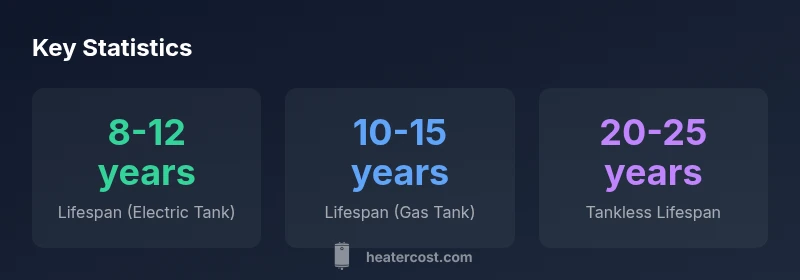
Overall, the average life of a water heater generally ranges from about 8 to 12 years for electric tanks and 10 to 15 years for gas tanks, with tankless models often lasting 20 to 25 years. Real-world lifespans vary by brand, usage, and water hardness, and they can be extended with regular maintenance, proper installation, and timely anode rod replacements.
What is the average life of a water heater?
The average life of a water heater is not a fixed number; it varies by type, installation quality, and ongoing maintenance. In general, electric storage tanks tend to last about 8–12 years, gas storage tanks about 10–15 years, and tankless models often reach 20–25 years when well maintained. According to Heater Cost, these lifespans reflect typical field experience and manufacturer expectations for residential systems. Real-world outcomes depend on how hard the water is, how often the unit is used, and whether routine maintenance has been performed. Proactive upkeep—such as regular flushing to reduce sediment buildup and timely anode rod replacements—can push the lifespan toward the upper end of the ranges. This is especially true in regions with hard water, where mineral scale can accelerate corrosion if ignored.
How water heater type affects lifespan
Different designs bring different longevity profiles. Electric storage tanks generally have simpler components and fewer fuel-related stressors than gas tanks, which may experience more wear on the burner and venting. Tankless systems, especially gas-fired ones, avoid large storage tanks and standby heat loss, often yielding longer lifespans. For homeowners, the choice between tank and tankless, electric or gas, should balance upfront cost, space, and desired lifespan. The Heater Cost analysis indicates that while tankless models usually offer the longest life, they also require careful sizing and professional installation to maximize benefits. Knowledge of these dynamics helps homeowners set realistic expectations for replacement timelines and maintenance needs.
Water quality and mineral buildup impact lifespan
Sediment accumulation and mineral scaling can abrade internal components, reduce heating efficiency, and shorten a heater’s life. Softened water, regular flushing, and proper anode replacement can slow corrosion. In hard-water areas, homeowners should consider a sediment filter or water treatment solution as part of the maintenance strategy. The longevity impact of mineral buildup is not uniform; some units tolerate minerals better than others, depending on materials and design. Heater Cost’s research emphasizes that water quality is a key, often overlooked, determinant of lifespan and ongoing efficiency. Regular maintenance routines help keep scale under control and preserve heater performance over time.
Installation quality and system health
A proper installation sets the foundation for a long service life. Correct venting, pressure relief valve checks, and correct electrical or gas connections prevent premature wear and safety issues. An undersized or poorly vented system can suffer from overheating and frequent cycling, which wears components faster. Conversely, a correctly installed system with appropriate expansion control and insulation tends to maintain steady temperatures and reduces stress on the heater. Regular inspections by a qualified technician can catch issues before they translate into shortened lifespans. Heater Cost highlights that good workmanship at installation is almost as important as the unit’s design in achieving the expected life span.
Maintenance practices that extend life
Maintenance is the most controllable factor in extending a water heater’s life. Annual flushing to remove sediment, inspecting/anode rod replacement, and testing the T&P valve are fundamental steps. For tankless models, mineral buildup can occur on heat exchangers; periodic descaling may be advised depending on usage and water chemistry. Keeping the thermostat at reasonable temperatures reduces stress on heating elements. In addition, replacing aging components—such as control boards or burners when needed—can prevent cascading failures. A structured maintenance plan aligned with the manufacturer’s recommendations is shown by Heater Cost analysis to yield noticeable longevity gains over time.
Signs your water heater is nearing the end of life
Several indicators signal that a heater is nearing the end of its useful life. Puddling around the base, rusty water, or a noticeable drop in hot water temperature can indicate leakage or internal corrosion. Noises such as popping or rumbling can reflect mineral buildup or failing components. Frequent repairs or rising energy bills despite maintenance are also red flags. If you observe any of these signs, it’s prudent to consult a professional to assess whether replacement is more cost-effective than ongoing repairs."
Repair vs replacement: cost considerations
Deciding between repair and replacement depends on age, repair frequency, and total expected remaining life. As a rule of thumb, if a system is approaching the end of its typical lifespan, the cost of repeated repairs may exceed the price of a new unit—especially when factoring energy efficiency gains from newer models. Tankless options often carry higher upfront costs but benefit from longer lifespans and potential energy savings over time. Heater Cost emphasizes evaluating long-term ownership costs, not just upfront price, to determine the best course of action for your home.
Tankless vs traditional: benefits and trade-offs
Tankless water heaters deliver on-demand hot water and compact footprints, with longer lifespans on average but potentially higher installation complexity and upfront cost. Traditional tank systems typically cost less initially and are straightforward to replace, but they carry standby losses and shorter lifespans. The decision hinges on household hot-water demand, space, and how long you plan to stay in the home. Tankless units can be very efficient and durable, but they must be sized correctly and installed by licensed professionals to realize their full lifespan benefits.
Data sources and method
Lifespan estimates in this article synthesize manufacturer datasheets, field performance reports, and home-repair guidance. We reference standard industry ranges for residential water heaters and adjust for factors like maintenance, water quality, and installation. Heater Cost’s methodology combines published guidance with practical, real-world observations to deliver actionable benchmarks for homeowners. For readers seeking deeper context, consult DOE and ENERGY STAR resources listed in the authorities section below.
Quick maintenance checklist
- Flush the tank annually (or more often in hard-water areas).
- Inspect and replace the anode rod every 3–5 years, or as recommended.
- Test the T&P valve and ensure proper shutoff operation.
- Consider water treatment options if you have hard water or high mineral content.
- Schedule professional inspection every 1–2 years to verify venting, connections, and insulation.
- Review thermostat settings to balance comfort, efficiency, and equipment stress.
- Track the unit’s age and plan for replacement near the end of its expected life.
Lifespan overview by heater type and typical cost ranges
| Water Heater Type | Average Lifespan (years) | Typical Cost Range (USD) | Notes |
|---|---|---|---|
| Tank (gas) | 10-15 | $400-$900 | Often requires venting and gas line work |
| Tank (electric) | 8-12 | $350-$800 | Lower upfront cost, higher standby losses |
| Tankless (gas) | 20-25 | $500-$1500 | Higher upfront, longer lifespan |
| Tankless (electric) | 20-25 | $600-$1500 | Compact, electrical load considerations |
Got Questions?
What factors influence the lifespan of a water heater?
Lifespan is influenced by the heater type, water quality, maintenance practices, installation quality, and usage patterns. Regular flushing, anode rod replacement, and proper venting all help maximize life.
Lifespan depends on the type, water quality, and how well you maintain it.
When should I replace instead of repairing my water heater?
If repair costs approach or exceed the cost of a new unit, or if the heater is near or past its typical lifespan, replacement is often the wiser long-term choice. Also consider energy efficiency gains with newer models.
If repairs keep piling up or the unit is old, it’s usually smarter to replace.
Are tankless heaters worth it for longevity and efficiency?
Tankless heaters typically last longer and can be more energy-efficient, but they have higher upfront costs and installation complexity. Proper sizing and professional installation are essential to realize these benefits.
Tankless can last longer and save energy, but you’ll want a pro to size and install it properly.
What maintenance steps have the biggest impact on lifespan?
Annual flushing to remove sediment, timely anode rod inspections, and testing the relief valve have the biggest impact on extending life. Keep electrical or gas connections secure and insulated.
Flush regularly, replace the anode rod when needed, and check the relief valve.
Do warranties affect the decision to replace?
Warranties vary by manufacturer and model. A longer warranty can offset some upfront costs and provide coverage during the heater’s expected life, but it should be weighed against upgrading to a more efficient model.
Warranties matter, but weigh them against overall cost and efficiency.
“Lifespan is a function of design, materials, and upkeep. By staying on top of maintenance and choosing a model appropriate for your home, most residential water heaters can reach or approach their expected life.”
The Essentials
- Know the general lifespan by type to plan replacements
- Regular maintenance can materially extend lifespans
- Hard water and poor installation shorten life; address them early
- Tankless units offer longer lifespans but require careful sizing
- Always compare long-term costs, not just upfront price