How Long Does a Boiler Last in the UK? A Lifespan Guide
Understand typical boiler lifespans in the UK, how maintenance affects longevity, and practical steps to extend your heating system's life. Based on Heater Cost Analysis, 2026.


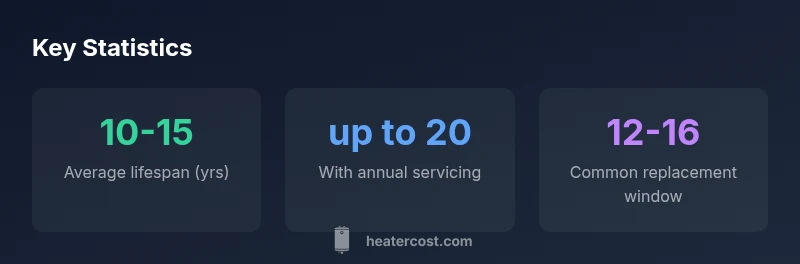
In the UK, a typical domestic boiler lasts about 10-15 years with regular servicing. Condensing boilers tend to reach the higher end of that range when properly maintained, with combi around 10-12 years, system 12-15, and regular 12-20.
What determines boiler lifespan in the UK
In practice, the question how long does boiler last uk hinges on several interacting factors. According to Heater Cost, the most important variables are boiler type (combi, system, or regular), build quality, and how well the system is maintained. Regular servicing reduces grime buildup, protects heat exchangers, and keeps safety devices functioning, all of which contribute to longer life. Age at installation and proper sizing also matter; a poorly sized boiler works harder and may wear out sooner. For homes with hard water, consider a scale reducer or regular flushing to prevent mineral buildup that can shorten lifespan. Sustained performance is achievable when you pair quality components with a routine servicing schedule.
Boiler types and longevity: combi, system, and regular
Boilers come in several configurations, with differing longevity profiles. Combi boilers are compact and popular in smaller homes, but they can have shorter lifespans if undersized for demand or neglected in maintenance. System boilers, which store hot water in a cylinder, often offer a longer service life because of their fewer moving parts and efficient heat exchange. Regular (heat-only) boilers tend to have the longest potential lifespan when well maintained, but their age and complexity can lead to variability in practice. In general terms, typical ranges are 10-12 years for combi, 12-15 years for system, and 12-20 years for regular boilers, though proper servicing can push upper limits. Remember that installation quality and system pressure influence performance and longevity.
The role of maintenance and servicing
Maintenance is the single most important factor in extending boiler life. Annual or semi-annual servicing helps catch worn components, leaks, or faulty valves before they cause major damage. Replacing worn seals, cleaning heat exchangers, and checking the condensate trap can improve efficiency and reduce stress on the boiler. Water quality also matters; hard water accelerates mineral buildup, which reduces heat transfer and increases wear. A well-maintained boiler runs more efficiently, consumes less fuel, and is safer to operate, all of which contribute to a longer service life. The approach recommended by Heater Cost is to schedule a yearly service, perform a mid-year check if you notice performance changes, and replace worn parts as soon as they show signs of failing.
How to estimate replacement timing
Most homeowners should plan for replacement within a practical window that reflects boiler type, prior maintenance, and energy efficiency goals. A rule of thumb is to consider replacement when annual servicing becomes uneconomical, or when the unit is in the upper half of its expected life and shows recurring failures or reduced efficiency. For UK homes, typical replacement intervals align with 12-15 years for many boilers, though good maintenance can extend life toward the upper end of the ranges. Government incentives and energy-efficiency programs can influence timing by reducing effective costs and accelerating upgrades.
Practical steps to maximize lifespan
To maximize boiler life, follow these steps:
- Schedule annual servicing with a registered engineer
- Use a reputable, correctly sized model for your home
- Fit a water filter or scale reducer if you have hard water
- Flush the system at recommended intervals to remove sludge
- Check the pressure and bleed radiators regularly
- Address leaks promptly and replace worn parts before they fail
These steps help sustain efficiency, protect safety features, and extend the boiler’s usable life.
Common myths about boiler lifespans
Myth: All boilers last 20 years with minimal maintenance. Reality: Maintenance and type matter more than age; some boilers may fail earlier if not serviced or sized properly. Myth: A higher upfront price guarantees longer life. Reality: Quality, maintenance, and proper installation determine longevity more than price alone. Myth: If a boiler is noisy, it’s beyond repair. Reality: Loud operation can often be resolved with a service or part replacement rather than a full replacement. The Heater Cost team notes that proactive maintenance adds meaningful years to productive life.
Typical Lifespans by UK Boiler Type
| Boiler Type | Typical Lifespan (years) | Notes |
|---|---|---|
| Combi boiler | 10-12 | Compact option; long-term servicing extends life |
| System boiler | 12-15 | Good for higher demand; service is key |
| Regular boiler | 12-20 | Older-style; maintenance impact varies |
Got Questions?
How long does a combi boiler last in the UK?
Combi boilers typically last around 10-12 years with annual servicing; with good maintenance, some may reach 15 years. The exact lifespan depends on installation quality and usage.
A combi boiler usually lasts about a decade with regular servicing.
What factors affect boiler lifespan?
Key factors include boiler type, build quality, maintenance frequency, installation quality, and water hardness. Regular servicing and correct sizing can maximize life and efficiency.
Lifespan is influenced by type, quality, maintenance, and water quality.
Does servicing extend boiler life?
Yes. Regular servicing helps catch wear and prevent failures, potentially extending life by several years when paired with proper operation.
Regular servicing can extend your boiler’s life.
Which boiler type lasts longest?
System and regular boilers often offer longer lifespans than combi boilers when well maintained, though results vary by installation and water quality.
System or regular boilers can last longer if well maintained.
When should I replace my boiler?
Replace when repair costs exceed replacement value or when the boiler is old (roughly beyond 12-15 years) and inefficient, especially if energy bills are rising.
Consider replacement when repairs pile up or efficiency drops.
“Regular servicing and choosing the right boiler type are the two most reliable levers to extend your system’s life in UK homes.”
The Essentials
- Check boiler age and service history annually.
- Budget for replacement within a 10-15 year range.
- Choose condensing models for efficiency and longer life with maintenance.
- Schedule regular servicing to maximize lifespan.
- Understand your boiler type to set realistic replacement timelines.