heater or humidifier: a practical side-by-side comparison
Compare heater and humidifier options to understand costs, maintenance, and ideal use for warmth, humidity control, and healthier indoor air in 2026. A practical guide for homeowners, renters, and property managers evaluating heating and humidity solutions.


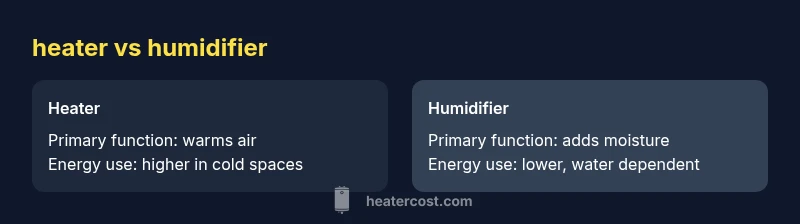
Across most homes, a heater is better for warmth, while a humidifier supports comfort in dry air. If you need reliable temperature control, a heater is often the right choice; if humidity balance matters more, a humidifier is preferred. In mixed climates or multi-room homes, evaluate a hybrid approach or staged operation to optimize comfort and energy use.
Context: How heater and humidifier technologies work
Understanding how heater and humidifier technologies work helps homeowners decide between 'heater or humidifier' depending on seasonal needs and indoor air quality goals. A space heater typically converts electrical energy, natural gas, or propane into warmth, raising air temperature and often affecting humidity indirectly by evaporating moisture from walls or contributing to drier air when a space is heated. In contrast, a humidifier adds moisture to the air to increase relative humidity, counteracting the drying effects of heating systems and low outdoor humidity. The key distinction is that a heater changes temperature, while a humidifier changes moisture content. The best outcomes usually come from matching the device to the goal: warmth in winter and comfort in dry months. For homeowners, renters, and property managers evaluating a 'heater or humidifier' decision, it helps to map rooms, climate patterns, and occupancy. In 2026, many newer models offer smarter controls, energy-efficient modes, and safer safety features that reduce the risk of overheating or over-humidification.
What each device actually does: heat vs humidity
A heater provides thermal energy to raise ambient air temperature. It can operate as a space heater for a single room or as part of a central system in larger homes. A humidifier releases water vapor into the air, increasing relative humidity and making environments feel warmer at lower actual temperatures. The two devices address different comfort drivers: temperature versus moisture. When you say heater or humidifier, you are choosing between altering heat gain or air moisture. A practical rule of thumb is to use a heater when cold, dry air makes rooms uncomfortable, and to use a humidifier when the air feels dry, reduces throat moisture, or contributes to crackling wood floors. In real homes, many households end up using both at different times or select models that provide both functions.
Climate considerations: when to prioritize warmth or moisture
Climatic context matters. Very cold, dry climates tend to benefit from heaters as a primary source of warmth, with humidification used selectively to offset dryness in living spaces. Humidifiers shine in winter when central heating lowers indoor humidity, potentially causing dry skin, irritated sinuses, and static electricity. In warm, humid regions, a dehumidifier might be more relevant than a heater, while a humidity-boosting device could be beneficial during seasonal dry spells. The heater or humidifier decision should align with outdoor humidity levels, indoor occupancy patterns, and room size. For multi-zone homes, temperature zoning, controlled humidity zones, and energy-conscious operation can maximize comfort without incurring unnecessary energy costs. As a practical guideline, aim to keep indoor humidity between 30% and 50% in most climates, adjusting based on health needs and building materials.
Energy use and cost implications
Energy costs vary with how you use these devices. Heaters typically consume more energy to raise room temperatures, especially in larger spaces or poorly insulated homes. Humidifiers have lower energy draw but incur ongoing costs for water consumption and eventual filter changes. The cost-benefit equation for heater or humidifier hinges on climate, insulation, and occupancy. A compact unit that heats a bedroom uses far less energy than heating a whole house, but the latter delivers consistent comfort. If you live in a climate with long dry seasons, a humidifier can provide tangible comfort without the energy spike of a space heater. For property managers overseeing multiple units, consider centralized options with programmable schedules and smart controls to optimize usage across rooms and seasons.
Health and comfort implications
Proper humidity supports nasal comfort, skin hydration, and respiratory health. In dry environments, a humidifier can reduce irritation and improve sleep quality. However, over-humidification invites mold growth and dust mite proliferation, especially in poorly ventilated spaces. Heaters reduce air moisture, which can exacerbate dryness-related discomfort unless humidity is managed. When evaluating a heater or humidifier, consider occupant health needs, allergies, and sensitivity to mold or dust. Smart devices with humidity sensors help maintain stable conditions, minimizing health risks while preserving energy efficiency. In 2026, several models integrate air-quality sensors to alert users if humidity drifts outside a healthy range.
Maintenance and longevity: care routines
Maintenance is a key part of long-term performance. Heaters require periodic cleaning of vents, inspecting electrical components, and annual professional checks for safety. Humidifiers need regular cleaning to prevent mold and mineral buildup; if you use distilled water, you can extend component life and improve air quality. Filters in humidifiers should be replaced according to manufacturer guidance, and reservoirs must be washed routinely. Both devices benefit from proper storage during off-seasons to prevent corrosion or stagnation. By establishing a simple maintenance calendar—filters, descaling, and cleaning—homeowners, renters, and property managers can ensure safer operation and longer equipment life, while reducing the risk of odors or health concerns.
Safety implications and common hazards
Safety is non-negotiable with any heater or humidifier. Heaters can pose fire risks if left unattended, or if placed near flammable materials; they may also cause overheating in enclosed spaces. Humidifiers can harbor mold or bacteria if not cleaned regularly, and excessive humidity can lead to condensation on windows or walls. Electrical safety, proper venting, and following appliance manuals are essential. Use devices with automatic shutoff features, tip-resistant bases, and humidity sensors where possible. In spaces used by children or pets, choose models with robust safety certifications and consider smart plugs or thermostats to regulate operation.
How to compare models: features that matter
When evaluating heater or humidifier options, focus on these criteria:
- Safety certifications and thermal cutoff features
- Energy efficiency ratings and standby power
- Humidity control accuracy and sensor reliability
- Noise levels and fan design for comfort
- Maintenance requirements and filter accessibility
- Size and capacity relative to room volume
- Smart features: scheduling, remote control, and integration with home automation
- Water quality compatibility and ease of cleaning In practice, two essential checks are a misalignment risk between device capacity and room size and whether a unit can maintain stable humidity or temperature under fluctuating conditions. A well-chosen model minimizes energy use while maximizing comfort across seasons.
Scenarios: common home layouts and best fit
- Small apartment with limited airflow: A compact space heater or a small humidifier can improve comfort without overdoing humidity. Prioritize safety and auto-shutoff features.
- Medium living room in a temperate climate: A multi-zone approach with a heater for warmth and a separate humidifier for dry periods offers flexibility.
- Large, well-insulated home in dry winter climates: Consider a central heating system paired with a humidity management strategy that targets specific rooms and uses sensors to maintain 30-50% RH.
- Bedroom-focused setups: A low-noise heater or humidifier designed for bedrooms supports restful sleep, with programmable schedules to avoid overnight excess humidity or overheating.
Hybrid solutions: combining heat and humidity
Some homes benefit from hybrid systems that blend warmth and humidity control in a single unit or coordinated pair. These setups enable warmer temperatures while maintaining comfortable humidity levels, reducing nighttime dryness and seasonal health concerns. When selecting hybrids, pay attention to cross-compatibility with existing HVAC equipment, maintenance requirements, and the availability of multi-room zoning.
Buying guide: questions to ask before you buy
- What room size and insulation level will the device serve?
- Do you prefer a portable unit or a fixed installation?
- What humidity target should you maintain, and does the model offer sensors?
- What safety certifications does the device carry, and is auto shutoff present?
- How often are filters and components replaced, and what are the ongoing costs?
- Can the model operate in multiple modes or seasons without high energy use?
- Is the device compatible with smart home features or programmable schedules?
- Are there warranty and service options in your area? Answering these questions helps ensure you pick a heater or humidifier that aligns with climate, budget, and health goals.
Common myths clarified
- Myth: Humidifiers cure all indoor air problems. Reality: Humidity helps comfort, but mold risk increases with over-humidification.
- Myth: Heaters are always more expensive to run. Reality: Efficiency and room size determine costs; properly sized heaters can be economical.
- Myth: Any humidifier will improve sleep. Reality: Correct humidity levels matter; overly humid air can trigger respiratory issues and condensation.
- Myth: Portable devices are equally effective in large homes. Reality: Large spaces often require centralized or zoned solutions for consistent results.
Comparison
| Feature | heater | humidifier |
|---|---|---|
| Primary function | Raises ambient temperature to feel warmer | Adds moisture to the air to improve comfort |
| Ideal climate | Cold, dry or large spaces needing warmth | Dry indoor environments or heating-dominated winters |
| Energy considerations | Higher energy usage when heating spaces | Lower energy draw, but ongoing water/filter costs |
| Maintenance | Vent cleaning, safety checks, periodic service | Regular cleaning, mineral control, filter changes |
| Noise level | Moderate to high depending on model | Typically quiet to moderate depending on model |
| Initial cost | Moderate to high, depending on type | Lower upfront for basic models |
| Operating costs | Higher ongoing energy costs | Lower ongoing energy, but water/filters add cost |
| Best for | Large temperature rise and winter warmth | Humidity balance and indoor comfort |
The Good
- Helps achieve targeted comfort in cold seasons
- Variety of models and sizes to fit spaces
- Clear upfront cost ranges for planning
- Flexible for single rooms or whole-home setups
Negatives
- Higher energy bills when used to heat large spaces
- Humidifiers require regular cleaning to prevent mold
- Humidifiers can cause condensation if misused
- Heaters pose safety risks if not properly maintained
Hybrid approaches often offer the best balance for many homes
If your climate shifts between cold and dry, a combined strategy minimizes energy use while maintaining comfort. For single-season needs, choose the device that addresses your primary concern—heat or humidity—and consider future upgrades as climate and occupancy patterns change.
Got Questions?
What is the main difference between a heater and a humidifier?
A heater changes air temperature to create warmth, while a humidifier increases moisture in the air to improve comfort. Knowing which goal matters helps decide between heater or humidifier.
The heater changes warmth, while the humidifier adds humidity. Pick based on whether you need warmth or moisture.
Can I use a heater and humidifier together safely?
Yes, but you should ensure proper placement, avoid over-humidifying, and use devices with safety features like auto shutoff and humidity sensors. Adequate ventilation reduces risks.
Yes, you can use both, just place them safely and monitor humidity to stay within healthy levels.
How do I know if my home needs humidity control?
If occupants experience dry skin, throat irritation, or static electricity, or if indoor humidity stays below 30%, a humidifier may help. Use a hygrometer to monitor levels.
If people feel dry or you see condensation issues, test humidity with a hygrometer.
Are there energy-efficient humidifiers?
Yes, look for models with humidity sensors and automatic shutoff, energy-saving modes, and easy-to-clean designs. Proper sizing matters for efficiency.
Yes—get one with sensors and smart controls to save energy.
What maintenance do heaters require?
Regular cleaning, safety checks, and professional servicing as needed ensure safe operation. Follow manufacturer guidelines for filter replacement and vent care.
Keep it clean, check safety features, and service periodically.
What are signs of over-humidification?
Mold growth, musty odors, condensation on windows, and damp walls indicate too much humidity. Tune humidity levels and clean devices regularly.
If you see mold or damp spots, reduce humidity and clean the device.
The Essentials
- Match device to climate and room size
- Maintain humidity targets to avoid health risks
- Prioritize safety and easy maintenance
- Consider a hybrid approach for mixed climates