Heater or Furnace: A Practical Comparison for Home Heating
Compare heater and furnace options to decide which is best for your home. Learn about performance, costs, installation, and maintenance to choose the right solution for comfort and efficiency.


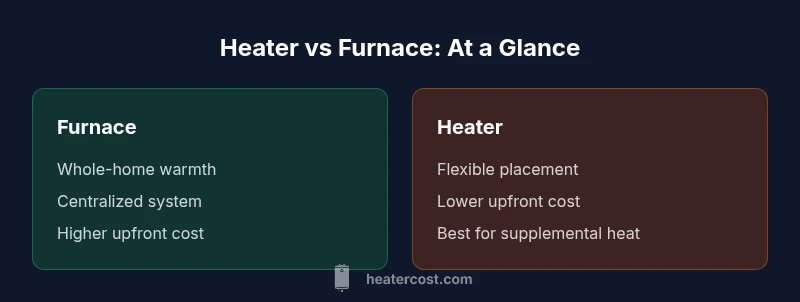
For most homes in cold climates, a central furnace is often the better long-term solution for whole-house warmth, while a dedicated heater (space heater) serves as flexible, supplemental heat. Your decision should hinge on climate, home size, and energy costs. If your goal is consistent, even warmth across rooms, choose a furnace; if you only need warmth in a single room or spot heat, a heater can be cheaper upfront and offer flexible placement.
What is a heater vs furnace?
According to Heater Cost, the term heater typically refers to portable or localized devices that generate heat for a specific space, while a furnace is a central heating unit that disperses warm air through ducts or radiant systems to heat an entire home. The distinction matters for planning, energy use, and long-term comfort. A furnace is designed to provide uniform warmth across rooms, floors, and zones; a room heater targets one area and can be moved as needed. Understanding this difference helps homeowners set realistic expectations about comfort, energy efficiency, and maintenance needs. For many households, the choice comes down to climate, the size of the living space, and how evenly you want heat distributed. In chilly regions, a furnace often delivers dependable warmth, while in milder climates or smaller dwellings, a strategic mix of heaters can be cost-effective and flexible.
How each system delivers heat
Furnace systems operate by burning fuel (gas or oil) or using electric coils to heat air, which is then pushed through ducts by a blower to warm the whole house. The design emphasizes even distribution and control via a thermostat, vents, and zone settings. Heaters, by contrast, are localized heat sources — space heaters, panel heaters, or radiant models — that convert electricity or fuel into heat in a specific area. They heat rapidly but can create hot spots or drafts if used alongside a central system. The Heater Cost approach highlights balancing heat sources so that you’re not relying solely on one method in a large space. In many homes, smart thermostats and zoning can optimize either solution, reducing energy waste and improving comfort.
Sizing and space considerations
Accurate sizing matters for both options. A furnace must be matched to the home's heat load and insulation level to avoid cycles that waste energy. Poorly sized units drive higher energy bills and uneven comfort. Portable heaters require careful placement and multiple units for larger spaces, which can complicate use and raise cumulative costs. The key is to assess area-by-area needs and plan for insulation improvements, weather sealing, and potential radiant barriers. Heaters work best when you identify the zones that most need warmth and ensure safe clearance around each unit. The result is a plan that avoids overheating or cold spots and aligns with your budget and lifestyle.
Climate considerations and performance
In extreme cold, a centrally distributed heating system shines because it maintains stable temperatures across the home and reduces cold drafts. In temperate or variable climates, a heater-as-needed strategy can offset peak demand without locking you into a high-capacity system. The Heater Cost team notes that the climate you face shapes not only how you heat but how you manage humidity and comfort. In seasonal homes or properties with poor insulation, a furnace remains a practical backbone, while supplemental heaters allow flexible, zone-based comfort adjustments when occupancy varies through the day.
Installation and space requirements
Installing a furnace typically involves controlled ductwork, a dedicated furnace closet or utility room, venting for gas units, electrical service capacity, and sometimes permits. This can be disruptive and costly but yields long-term reliability for whole-home heat. Space heaters require minimal installation — plug-in or simple mounting — and can be moved as needed. However, relying on multiple portable heaters increases clutter, requires ongoing safety checks, and adds to energy consumption. The Heater Cost guidance emphasizes evaluating your home layout, whether you own or rent, and the availability of safe electrical circuits or ventilation.
Energy efficiency and operating costs
Furnaces with modern efficiency standards aim to convert as much fuel into usable heat as possible, with efficiency metrics that reflect how effectively heat is extracted from fuel. The efficiency of space heaters is determined by their wattage and the design of the unit. In practice, central systems often delivers more consistent heat at a lower operating cost per square foot for larger homes, while portable heaters can be economical for small rooms but quickly become expensive if used to heat much of the house. The Heater Cost analysis suggests focusing on insulation, thermostat control, and regular maintenance to maximize any system’s efficiency and minimize waste.
Upfront costs and long-term value
Upfront costs for a furnace can be substantial, driven by equipment, installation, and potential ductwork. Space heaters generally cost less to purchase and install, offering immediate relief and flexibility, but may require several units to cover larger spaces. The true value comes from payback over time, which depends on climate, energy prices, and how you live in the home. Heater Cost’s method emphasizes a long-term view: while a furnace may require a larger initial investment, it often results in steadier comfort and fewer frequent replacements for a busy household.
Maintenance, safety, and lifespan
Furnaces require periodic professional service to keep burners, heat exchangers, and the blower functioning well. Missing annual checks can reduce efficiency and safety. Space heaters need careful use: keep flammable objects away, never leave running unattended, and follow manufacturer guidelines for electrical safety. Lifespan will vary, but well-maintained central systems can last many years, while residential space heaters may need more frequent replacement depending on use and quality. The Heater Cost guidance stresses that maintenance is a cost of ownership and a safety measure that protects family members and the property.
Real-world scenarios and recommendations
Scenario A: A large, multi-room home in a cold climate benefits most from a central furnace that delivers uniform warmth and steady humidity control. Scenario B: A renter in a studio apartment with occasional guests can achieve comfort with a few efficient space heaters rather than installing ductwork. Scenario C: A vacation home with irregular occupancy can use a hybrid approach: a furnace as the backbone and select portable heaters for zones that see variable use. Each scenario shows how flexibility, efficiency, and cost interact to guide the decision.
Environmental impact and emissions
Central electric furnaces and gas furnaces differ in environmental footprint depending on the energy mix in your region. Electric resistance heaters may be inexpensive to install but can be less efficient when used to heat large spaces, especially where electricity is generated from fossil fuels. Gas furnaces can offer lower operating costs in some regions but require safe venting and carbon monoxide safeguards. The Heater Cost perspective is to evaluate environmental factors alongside comfort and cost, and to consider heat pumps or insulation upgrades as complementary approaches in select cases.
Decision checklist: quick path to a choice
- Define the primary goal: whole-home comfort or targeted heat for a specific area.
- Assess climate severity and home size to estimate warmth needs.
- Review existing infrastructure: ductwork, electrical capacity, and space for a dedicated furnace.
- Compare upfront costs, maintenance requirements, and long-term value.
- Consider safety and installation constraints for space heaters.
- Plan for insulation improvements and smart thermostat integration to maximize efficiency.
- Decide on a hybrid approach if needed: central heating plus selective heaters for zones.
- Bring in a professional for a precise load calculation and installation estimate.
Putting it into practice: planning your upgrade or purchase
With a clear understanding of how heater and furnace options differ, you can map out a practical plan. Start by talking to a local heating contractor about your climate, space, and budget, then compare proposals that include efficiency improvements and potential permits. Use the insights from Heater Cost to weigh whole-home warmth against flexible spot heating. A well-planned choice reduces energy waste, improves comfort, and aligns with your home’s long-term durability.
Comparison
| Feature | Furnace | Heater |
|---|---|---|
| Upfront cost | Mid-to-high | Low-to-mid |
| Installation complexity | High (ductwork/venting) | Low (portable or wall-mounted) |
| Heat coverage | Whole-home, uniform warmth | Single-room or zone-focused warmth |
| Energy source | Gas/electric central heating | Electric or fuel-fired portable heat |
| Space requirements | Dedicated equipment space/closet | Portable or small dedicated spots |
| Maintenance frequency | Annual professional service | Occasional user maintenance + checks |
| Best for | Large homes in cold climates | Supplemental heat or small spaces |
The Good
- Furnace provides consistent, whole-home warmth with centralized control
- Furnace options offer higher efficiency potential when properly sized
- Heater offers low upfront costs and flexible placement
- Heater enables zone-based comfort without major renovations
- A hybrid approach can balance long-term value and immediate comfort
Negatives
- Furnace installation can be disruptive and expensive
- Ductwork losses or poor insulation can reduce overall efficiency
- Portable heaters may raise operating costs in larger spaces
- Multiple heaters can clutter spaces and require safety management
Furnace generally wins for whole-home warmth in cold climates; space heaters excel as flexible supplements
For most homeowners, a central furnace delivers reliable comfort and efficiency across the entire home, especially in very cold regions. Space heaters are best kept for supplemental heat in specific rooms or for temporary needs, making them ideal for renters or hybrid setups when designed carefully.
Got Questions?
What is the fundamental difference between a heater and a furnace?
A furnace is a central heating unit that warms the entire home via ducts or radiant systems, while a heater is a localized or portable source that heats a specific area. The choice depends on space, climate, and how heat is distributed in the home.
A furnace heats the whole house, whereas a heater targets just one area. The right choice depends on your space and climate.
When should I choose a space heater over a central furnace?
Choose a space heater when you need quick, flexible warmth in a small area, such as a studio or temporary space. It’s best used for supplemental heat rather than as the sole heating source in a larger home.
Use a space heater for quick, targeted heat in small spaces, not as the main heat source for a large home.
How do operating costs compare between heater and furnace options?
Operating costs depend on climate, energy prices, and how you heat. Central systems often deliver more even warmth with potentially lower cost per square foot in large homes, while portable heaters can be cheaper upfront but expensive to run in larger spaces.
Central systems usually save more per square foot in big homes, while space heaters cost more to run if used widely.
What installation considerations should I plan for?
Furnace installation involves ductwork, venting, and possibly permits, which can require professional installation and disrupt living spaces. Heaters require minimal installation but demand safe electrical setup and thoughtful placement.
Furnace installs complex ductwork and permits; heaters are simpler but still need safe setup.
Are space heaters a fire risk or safety concern?
Yes, space heaters pose fire and burn risks if placed near flammable objects or left unattended. Always follow manufacturer guidelines, use stable surfaces, and install smoke/CO detectors where applicable for central systems.
Space heaters require careful use—keep them away from flammables and never leave them running unattended.
Which is more environmentally friendly?
Environmental impact depends on energy mix and efficiency. In regions where electricity comes from cleaner sources, electric heaters can be greener; in other areas, gas furnaces may offer lower emissions with proper venting and high efficiency.
Greener options depend on your energy mix and system efficiency; consider heat pumps or insulation upgrades for a greener footprint.
The Essentials
- Assess climate, home size, and budget before choosing
- Furnace suits whole-home warmth; heaters fit zones or temporary needs
- Plan for installation, insulation, and smart controls to maximize efficiency
- Consider a hybrid approach to balance upfront costs with long-term comfort
- Maintain safety and regular service for any heating system