heater or dehumidifier: costs, uses, and guidance for homes
Compare a heater and a dehumidifier to understand costs, efficiency, and when to choose each for better comfort, energy use, and humidity control in your home.


TL;DR: A heater and a dehumidifier address different problems—one adds warmth, the other reduces humidity. If your primary issue is cold rooms, prioritize a heater; if you contend with damp air and mold risk, a dehumidifier is more effective. For many homes, evaluating climate, space, and energy costs helps decide which to buy first.
Understanding the heater or dehumidifier decision
Choosing between a heater or dehumidifier starts with clarifying the problem you want to solve. In climates with cold winters, a heater quickly raises room temperature; in humid spaces, a dehumidifier lowers moisture and improves comfort. According to Heater Cost, many households underestimate how climate, insulation, and occupancy patterns affect long-term costs when selecting between these devices. The Heater Cost team found that buyers who focus solely on immediate comfort often overlook the impact of humidity on air quality, energy efficiency, and appliance wear. By framing the decision around climate, space constraints, and performance goals, you can create a clear buying path that reduces regret and wasted energy.
How a heater works and what to expect
A space heater converts electricity or fuel into heat, warming the air in a targeted area. The speed and uniformity of heating depend on insulation, ceiling height, and room layout. For homeowners, key considerations include wattage or BTU output, thermostat control, safety features, and the presence of drafts. Heaters can provide rapid warmth in small rooms or zones, but they may lead to uneven temperatures if the space is poorly insulated. Energy efficiency varies widely by model, with modern heaters offering features like programmable schedules and smart thermostats that help curb waste. When evaluating options, think about how often you need warmth, whether you desire quick heat bursts or steady warmth, and how much you’re willing to spend on upfront costs and ongoing energy use.
When to choose a heater
If your primary problem is cold indoor environments during winter months, a heater is typically the most immediate solution. Heaters are especially useful in rooms that are hard to heat with central systems, such as basements, garages, or finished attics. Consider room size, insulation quality, and existing HVAC capabilities. If you frequently experience chilly mornings or extended evenings when temperatures drop, a compact, well-rated heater can deliver comfortable warmth without running up far-reaching energy bills, provided you pair it with sensible temperature controls and safety practices.
When to choose a dehumidifier
A dehumidifier targets moisture rather than temperature. If your home experiences persistent dampness, condensation on windows, musty odors, or signs of mold, a dehumidifier can dramatically improve indoor air quality and comfort. Dehumidifiers work best in areas with humidity levels that exceed comfort thresholds, such as basements, bathrooms, laundry rooms, and storage spaces. Size and humidity capacity matter: too small a unit will run constantly without achieving targets, while too large a unit may remove moisture too aggressively, leading to overly dry air. Expect ongoing energy use, water collection, and occasional filter maintenance as part of routine operation.
Space and sizing considerations for both devices
Sizing is critical for both heaters and dehumidifiers. An undersized unit struggles to reach desired conditions, while an oversized unit wastes energy and can overshoot comfort targets. For heaters, consider the square footage, insulation quality, air leakage, and whether you need zone heating versus whole-room warming. For dehumidifiers, evaluate room volume, existing moisture sources, and the unit’s humidity removal rate. In spaces with high moisture-generating activities (laundry, cooking, showers), a dehumidifier should be appropriately sized to keep relative humidity in healthy ranges. When in doubt, err on the side of a slightly larger, well-reviewed unit and monitor performance with a simple hygrometer.
Energy use and cost implications
Energy costs depend on usage, climate, and efficiency ratings. Heaters often show more variability because the objective is warmth, which may be seasonal or year-round in extreme climates. Dehumidifiers tend to run more steadily in humid environments, with energy use tied to humidity targets and cycle patterns. Based on Heater Cost analysis, the most cost-effective approach balances comfort goals with energy stewardship: choose high-efficiency models, use programmable controls, and pair devices with good insulation and air sealing. In some homes, a single device with dual functionality in a compact form factor can offer a practical compromise, but performance will hinge on the unit’s spec and the space it serves.
Practical scenarios and decision rules
Consider a few practical scenarios to guide your choice. If you live in a dry climate and struggle with cold, chapped air, a heater focused on warmth will be the primary tool. If your space remains comfortable yet humid, with signs of condensation and mildew, prioritize dehumidification. In mixed conditions, a phased approach may work well: use a heater for seasonal warmth and add a dehumidifier in damp seasons or zones. For multi-room homes, you might assign dedicated devices to problem areas rather than a single all-purpose unit, maximizing both comfort and energy efficiency.
Maintenance and operating tips
Regular maintenance can extend the life of both devices. Clean or replace filters on dehumidifiers to preserve efficiency and air quality. Inspect cords and safety features on heaters, and schedule periodic service for fuel-powered models to ensure safe combustion and venting. Always follow product manuals for safe operation, keep the area around each device clear, and use timers or smart controls to avoid overuse. A well-maintained unit not only performs better but also reduces the risk of energy waste and breakdowns over time.
Installation considerations and safety
Placement matters: heaters should be kept away from flammable materials, with clearances per manufacturer guidelines. Dehumidifiers perform best when placed in open, well-ventilated spaces and near moisture sources, but not where they block airflow. If you’re hooking devices into existing HVAC or plumbing lines, consult a professional to ensure proper venting and drainage. Safety features like tip-over protection, automatic shutoff, and child locks add peace of mind, especially in homes with kids or pets. Energy performance labels can help compare efficiency across models, while reviews and test results can offer real-world insights.
How to combine devices for optimal comfort
In many homes, a combined approach yields the best comfort and air quality. Use a heater to maintain comfortable temperatures in living areas during winter and a dehumidifier in humid spaces such as basements or bathrooms to control moisture year-round. Smart thermostats and humidity sensors enable coordinated operation, reducing energy waste. When you install both devices, consider a shared control strategy that prioritizes safety and comfort, and ensure each space has adequate ventilation to prevent stale or overly dry air.
Common myths and misconceptions
A common myth is that you can treat humidity with a heater or vice versa. In reality, humidity control and temperature management require targeted devices and proper sizing. Another misconception is that running a dehumidifier will heat a space; the opposite is true—the device removes moisture and can slightly cool the air while running. Finally, some assume larger units always perform better; oversized devices can cause short cycling, wasted energy, and uneven comfort.
Short guide to evaluating cost and ROI
When evaluating cost and ROI, focus on both upfront and ongoing expenses. Upfront costs vary by unit size, features, and brand, while ongoing costs depend on energy price, runtime, and maintenance. Consider life-cycle costs, not just sticker price, and weigh comfort improvements against energy use. A thoughtful approach includes scenario planning for winter and wet seasons, then choosing a device or combination that minimizes total cost while maximizing home comfort and air quality.
Comparison
| Feature | heater | dehumidifier |
|---|---|---|
| Primary purpose | Provide warmth in living spaces | Reduce humidity and improve comfort |
| Energy efficiency / operating costs | Highly climate- and usage-dependent; efficiency varies by model | Moderate to high energy use in humid environments; efficiency varies by model |
| Maintenance needs | Filter checks and safety inspections as needed | Regular filter cleaning and bucket/drain maintenance |
| Best for | Cold climates, quick warmth in specific rooms | Damp spaces, moisture control and mold prevention |
| Upfront price range | Low to moderate (varies by size and features) | Moderate to high (depends on capacity and features) |
| Seasonality | Seasonal to year-round warmth in cooler areas | Year-round humidity management in damp spaces |
The Good
- Clear differentiation of each device's main benefit
- Opportunity to tailor solutions to climate and space
- Modern models offer energy-saving features and smart controls
- Easy to compare by function and cost over time
Negatives
- Single-device focus can miss complex, mixed climates
- Over- or under-sizing leads to inefficiency and discomfort
- Maintenance and drainage requirements add to ongoing effort
- Noise and space constraints may limit placement
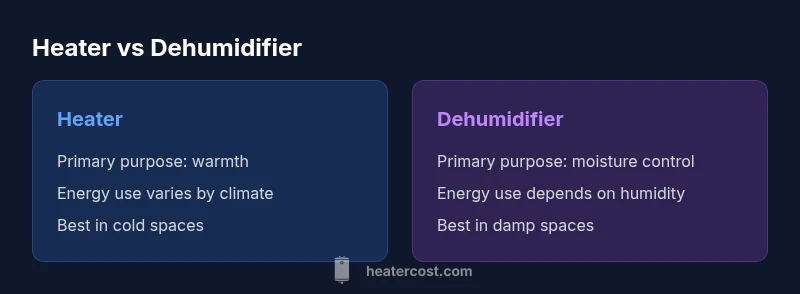
Heater is best for warmth where cold is the dominant problem; dehumidifier excels at moisture control where humidity is high
Choose based on the most impactful home issue: warmth vs humidity. In versatile climates, a staged approach or combined solution may provide the best overall comfort and efficiency.
Got Questions?
What is the main difference between a heater and a dehumidifier?
A heater adds warmth to a space, while a dehumidifier removes excess moisture. They address distinct comfort problems, so your decision should hinge on whether cold temperatures or humidity is the bigger issue in your home.
A heater adds warmth, while a dehumidifier removes moisture. Your choice should focus on whether cold or damp air is the bigger problem.
Can I use a single device for both heating and dehumidification?
Some models offer dual-function capabilities, but true effectiveness depends on the space and climate. Dual-function devices may trade off performance in one area for convenience, so assess whether the compromise meets your needs.
There are dual-function models, but check performance in real-world conditions to ensure it fits your goals.
How do climate and insulation affect operating costs?
Climate and insulation strongly influence costs. Warmer climates reduce heating needs, while poor insulation increases heating losses. Humidity and ventilation affect dehumidifier efficiency; well-sealed spaces typically require less moisture control.
Climate and insulation shape how much you’ll pay to run these devices, so consider sealing and insulation first.
What size should I choose for a small room?
For small rooms, choose compact, energy-efficient options with appropriate safety features. Avoid oversized units that cycle too quickly or run continuously without stabilizing conditions.
Pick a compact model with good efficiency and safety features. Bigger isn’t always better.
Are there safety concerns I should know about?
Always follow manufacturer instructions, keep flammables away from heaters, use proper ventilation when needed, and ensure cords aren’t damaged. Dehumidifiers should be placed to avoid blocked airflow and spills from drainage.
Follow safety guides, keep space clear, and ensure proper placement to prevent accidents.
What maintenance helps extend device life?
Regular filter cleaning, timely replacement, and checking seals and vents extend device life. Schedule professional checks for fuel-burning heaters to maintain safe operation.
Clean filters, check vents, and schedule professional checks when needed.
The Essentials
- Identify whether cold or moisture is the primary issue
- Size devices to the problem space and insulation quality
- Prioritize efficiency features and programmable controls
- Consider a phased approach for mixed climates
- Regular maintenance improves long-term performance