Difference Between Heater and Humidifier: A Practical Guide
A balanced, analytical comparison of the difference between heater and humidifier, covering purpose, operation, safety, costs, and maintenance to help homeowners, renters, and property managers make informed choices.


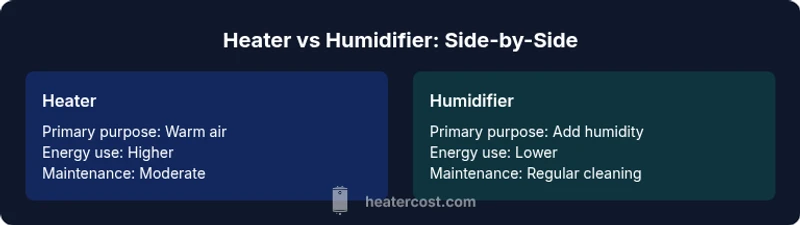
The difference between heater and humidifier centers on their core purpose: a heater warms indoor air to raise room temperature, while a humidifier adds moisture to the air to increase humidity. In practice, many homes use both tools seasonally, but their safety, maintenance, and operating costs vary. This quick comparison highlights the key distinctions and when each device is most appropriate.
Difference between heater and humidifier: core distinction
Understanding the difference between heater and humidifier starts with purpose. A heater is designed to raise the temperature of a space, creating warmth when outdoor conditions are cold or when comfort requires higher air temperatures. A humidifier, by contrast, is intended to elevate humidity levels in a dry environment, improving comfort, reducing static electricity, and helping preserve wood furnishings. The phrase difference between heater and humidifier appears frequently in homeowner conversations because these devices address different problems. In many climates, you may find both devices essential at different times of the year. The Heater Cost team notes that while both devices affect indoor air, their primary functions, safety considerations, and energy profiles are distinct, and mixing up their roles can lead to suboptimal outcomes for comfort and health.
How heaters and humidifiers work: basic mechanics
Heaters convert electrical energy, gas, or oil into heat that warms surrounding air. Radiant panels, convective elements, or heat exchangers may drive the warming process, with fans helping distribute warm air. Humidifiers release water vapor or mist into the air, consuming far less energy than space-heating devices. Ultrasonic humidifiers generate a fine mist using high-frequency vibrations, while evaporative models use a wick or filter to draw water into the air. The essential difference is that heaters change temperature, whereas humidifiers modify moisture content. The Heater Cost analysis emphasizes that both devices influence perceived comfort, but they do so through different physical processes that interact with your home’s insulation, ventilation, and existing humidity levels.
Impact on indoor air quality and comfort
Humidity levels influence comfort, health, and even the perceived warmth of a room. A heater increases air temperature but can dry out the air if humidity is not monitored, potentially leading to irritated skin and respiratory discomfort. A humidifier, while raising humidity, can introduce mineral dust or mold growth if not properly maintained. The practical takeaway is that humidity and temperature are not interchangeable levers; they must be managed together for optimal comfort. The difference between heater and humidifier becomes critical when balancing dryness, condensation, and air quality, especially in bedrooms and living spaces where occupants spend long periods. Regular humidity checks help you calibrate the devices to maintain a healthy comfort range.
Safety considerations and common hazards
Both devices carry safety concerns if used improperly. Heaters can pose fire risks, particularly if placed near fabrics, curtains, or stacked clutter, and gas-powered heaters require proper venting to avoid carbon monoxide buildup. Humidifiers can promote mold and bacterial growth if water tanks are not cleaned regularly, and mineral dust can accumulate in the air with certain water supplies. The difference between heater and humidifier is not just about function; safety protocols differ. Always follow manufacturer guidelines, use a properly sized unit for the space, and ensure adequate ventilation. For households with children or pets, keep units out of reach and install carbon monoxide detectors when using fuel-burning heaters.
Energy use, efficiency, and operating costs
The energy profile of a heater typically dominates winter energy bills, especially in poorly insulated rooms. Humidifiers generally consume modest energy, focused on moving air or generating mist, rather than heating. In many homes, total operating costs will hinge on insulation, thermostat settings, and how long devices run. According to Heater Cost, energy costs reflect both the device type and usage patterns; a small, well-maintained humidifier used in a climate with evaporative needs may prove cost-effective, while an oversized heater used without proper zoning can waste energy. When evaluating the difference between heater and humidifier, assess not only price but how each device affects overall comfort and energy dynamics.
Humidity control: when to choose each device
Humidity management becomes essential in dry winter climates or homes with dry indoor air due to heating. A humidifier is often the best choice when humidity falls below recommended levels, typically around 30-50% relative humidity, depending on personal comfort and health considerations. In damp environments or seasons with frequent precipitation, a humidifier alone may be excessive. A heater is indispensable for raising room temperature when outdoor conditions are harsh. The difference between heater and humidifier is thus a question of whether your priority is warmth or moisture, and many homes benefit from a combined approach using both devices in different rooms or at different times of day.
Installation considerations and placement tips
Placement matters for both devices. Heaters should be placed on stable, non-flammable surfaces with clear space around them to promote safe airflow. Avoid enclosed or cluttered areas that trap heat. Humidifiers need a level surface, a water-tight reservoir, and proper drainage to avoid spills or leaks. Consider room size, existing ventilation, and whether you need a portable or a built-in solution. The difference between heater and humidifier becomes apparent in how you size and position the units: heaters require more space clearance and clearance to exhaust heat, while humidifiers demand easy access to clean the water reservoir and a nearby outlet.
Maintenance, longevity, and part replacement
Regular maintenance extends the life of both devices. Heaters benefit from periodic electrical checks, vent cleaning, and, if gas, annual service to ensure safe combustion. Humidifiers require cleaning of the water reservoir, replacement of filters if applicable, and mineral residue management. The Heater Cost team emphasizes establishing a maintenance routine to prevent safety hazards and preserve efficiency. Neglecting maintenance can reduce performance and shorten device lifespan, regardless of whether you own a heater or a humidifier.
Real-world scenarios: climate, room size, and usage patterns
In large, drafty rooms, a heater delivers reliable warmth but may create uneven temperatures if not paired with proper air circulation. Smaller rooms with dry air benefit from a humidifier to improve comfort and protect furnishings. In homes with central heating, localized humidification in bedrooms or living spaces often makes daily life more comfortable without overheating. The difference between heater and humidifier becomes a practical decision: choose the heater to maintain warmth when temperatures drop, and add a humidifier to maintain comfortable humidity levels in spaces where white noise and humidity balance your environment.
Myths, misconceptions, and clarifications
A common myth is that a humidifier can replace a heater in winter. While it can improve comfort by increasing humidity, it does not provide substantial warmth. Conversely, some people think heaters always dry out the air; modern HVAC systems and well-placed humidity control can maintain balance. The difference between heater and humidifier is not a competition; it is a question of matched outcomes. Educating yourself about the capabilities and limits of each device helps avoid overreliance on a single solution and leads to more stable indoor air quality.
Budget considerations: upfront cost vs long-term value
Upfront costs for heaters vary with fuel type, size, and features, while humidifiers tend to be lower in initial price but require ongoing filter or cleaning costs. Long-term value comes from energy efficiency, maintenance frequency, and reliability. The Heater Cost analysis suggests weighing purchase price against operating costs and maintenance needs. In dry climates, investing in humidification can yield better long-term comfort with manageable upkeep. In colder, better-insulated homes, a carefully chosen heater may deliver stronger long-term value if paired with a humidity strategy that preserves air quality.
Quick-start checklist for homeowners
- Identify your climate and measure typical humidity and temperature ranges
- Choose a heater for warmth or a humidifier for humidity, or both if needed
- Check room size and select appropriately rated units
- Plan for safe placement and adequate ventilation
- Establish a maintenance schedule for each device
- Monitor humidity levels and adjust settings to stay within comfortable ranges
- Prioritize devices with built-in safety features and energy-saving modes
Comparison
| Feature | Heater | Humidifier |
|---|---|---|
| Primary purpose | Warming indoor air | Adding moisture to the air |
| Humidity impact | Can dry air if used alone | Increases humidity levels |
| Energy efficiency | Typically higher energy use | Generally lower energy use (air movement or mist) |
| Maintenance needs | Annual safety checks; vent/heat source maintenance | Regular cleaning; mineral buildup management; filter changes |
| Noise level | Moderate to high depending on model | Low to moderate; ultrasonic types are quieter |
| Best environments | Cold, dry spaces needing warmth | Dry rooms needing humidity stabilization |
| Cost range | Moderate to high upfront and operating costs | Low to moderate upfront; running costs depend on model |
| Safety considerations | Overheating risk; venting required for gas units | Water tank hygiene; mold risk with improper cleaning |
| Ideal use-case | Space heating in living areas | Humidity management in bedrooms and living areas |
The Good
- Provides clear, task-specific benefits for comfort and health
- Supports climate control by addressing distinct needs
- Relatively straightforward to select and operate
Negatives
- Humidifiers can foster mold or mineral buildup if not cleaned
- Heaters can raise energy bills and may impact air quality without ventilation
- Relying on one device for both tasks is inefficient and unreliable
Choose a humidity-focused approach when dry air is the primary comfort problem; choose heating when warmth is the priority, and consider using both in different spaces.
The Heater Cost team recommends aligning device choice with climate, room size, and comfort goals. If humidity is consistently low, start with a humidifier while evaluating insulation. If warmth is the main need, select a properly sized heater and monitor humidity separately to maintain healthy indoor air quality.
Got Questions?
What is the main difference between a heater and a humidifier?
The heater raises room temperature, while the humidifier increases humidity levels. They address different comfort needs and should be used accordingly.
A heater warms the room; a humidifier adds moisture. They’re not interchangeable for climate control.
Can a heater also humidify a room?
Some heaters add moisture indirectly if they release vapor (like certain gas heaters with venting), but they are not designed to control humidity. A dedicated humidifier or HVAC system with humidification is recommended for consistent humidity.
Heaters aren’t reliable humidifiers. Use a humidifier for humidity control.
Is it safe to run a humidifier all night?
Most humidifiers are designed for extended use, including overnight. Keep water clean, use clean tanks, and position the unit away from bedding to avoid excess moisture near sleeping areas.
It’s usually fine to run a humidifier overnight if you follow cleaning and placement tips.
Which should I buy first for a dry climate?
If dryness is the immediate issue, start with a humidifier to restore comfortable humidity. Add a heater only if you also need warmth or consider a combined HVAC solution.
Start with humidity control if air feels dry; warmth can come later if needed.
Can I use both devices in the same room safely?
Yes, using both in the same home is common. Ensure safe clearances around heaters and proper cleaning of humidifier tanks to avoid safety issues.
Using both is fine, just keep them properly spaced and cleaned.
How do I choose the right size for a heater or humidifier?
Measure room volume, insulation quality, and existing ventilation. A unit sized for your space will perform more efficiently and reduce energy costs.
Get the right-sized unit by checking the room size and insulation.
The Essentials
- Prioritize purpose: warmth vs humidity.
- Match device to room size and climate.
- Monitor humidity to avoid over- or under-humidification.
- Regular maintenance protects safety and efficiency.
- Consider using both devices for year-round comfort.