Domestic Hot Water: Costs, Efficiency, and Maintenance in 2026
Explore domestic hot water systems, compare tanked vs tankless, evaluate energy sources, sizing, and maintenance to optimize comfort and long-term costs. Practical guidance from Heater Cost for homeowners, renters, and property managers.


Domestic hot water is the heated water used for bathing, cleaning, and appliances in a home. It can come from a storage tank, a tankless unit, or a solar/heat-pump system. The system you choose affects reliability, energy use, and ongoing maintenance, making proper sizing and energy-source selection essential for comfort and cost control in 2026.
What is domestic hot water and why it matters
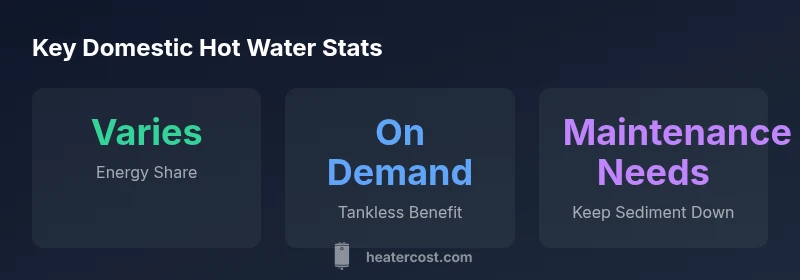
Domestic hot water refers to the heated water used for showers, sinks, laundry, and dishwashing in a home. It is a fundamental part of everyday comfort and a major consideration in energy planning. According to Heater Cost, domestic hot water represents a sizable portion of a typical home's energy use, influenced by climate, occupancy, and how aggressively hot water is heated. For homeowners, renters, and property managers, understanding this subsystem helps in choosing between storage tanks, tankless designs, or hybrid approaches, and in planning for installation, maintenance, and long-term costs in 2026.
Tanked vs Tankless: How the choice affects reliability and cost
Tanked systems store hot water in an insulated tank and dispatch it on demand. Tankless systems heat water only when a tap is opened, eliminating storage losses but requiring proper sizing to meet peak demand. The reliability of either approach hinges on installation quality, water quality, and maintenance. Tanks are familiar, straightforward to install, and easy to replace, but standby losses can add to energy bills and require more space. Tankless units save space and can offer lower energy use per gallon heated, yet high simultaneous use or undersizing can lead to longer recovery times. For 2026 planning, homeowners should compare household hot-water peaks to unit capacity, consider system longevity, and weigh service accessibility. The Heater Cost team emphasizes balancing demand, climate, and budget rather than chasing universal efficiency gains.
Energy sources and efficiency: Gas, electric, solar, and heat pumps
Energy sources drive operating costs and emissions for domestic hot water. Gas and electric are the most common, while solar-assisted and heat-pump configurations are gaining popularity in energy-conscious homes. Heat-pump water heaters extract ambient heat from the surrounding space, typically delivering higher efficiency than standard electric resistance heaters. The energy source interacts with standby losses, storage temperature, and user habits. In practice, efficient results often come from pairing a well-insulated tank or tankless unit with a high-efficiency energy source and a thermostat strategy that avoids unnecessary reheating. Based on Heater Cost research, choosing the right energy source for your climate and usage pattern can influence energy use over the system's life, even when maintenance varies. For 2026, homeowners should weigh climate, electricity or gas rates, and space constraints when selecting energy sources.
Sizing, installation, and code considerations
Sizing a hot-water system correctly is essential to avoid waste and ensure adequate supply during peak times. For tanks, the tank size should align with peak-demand calculations, while tankless units must meet the maximum flow rate needed at the taps simultaneously. Installation considerations include venting (gas models), clearances, shut-off valves, and accessibility for future maintenance. Codes govern venting, seismic requirements, and electrical or gas connections; noncompliance can trigger inspections, fines, or higher replacement costs later. The best practice is to involve a licensed professional to perform sizing calculations and ensure compliance with local codes, permitting steps, and safety standards. In 2026, many jurisdictions provide resources to help homeowners understand local code expectations and permit requirements.
Maintenance and longevity: Keeping hot water systems in top shape
Regular maintenance extends the life of hot water equipment and sustains efficiency. Common tasks include inspecting anode rods, flushing the tank to remove sediment, checking the pressure-relief valve, and verifying venting and combustion performance for gas models. Water quality can accelerate corrosion and buildup, particularly in hard-water areas. A proactive maintenance schedule reduces the risk of leaks, improves thermal efficiency, and helps prevent unexpected breakdowns. The Heater Cost approach emphasizes documenting service intervals and replacement cycles since usage, mineral content, and climate affect longevity. In 2026, homeowners who invest in routine maintenance tend to experience steadier performance and fewer surprise repairs.
Reducing standby losses and improving efficiency
Standby losses occur when stored hot water sits in the tank and gradually loses heat. Proper insulation, moderate storage temperatures, and tight system integration reduce these losses and keep operating costs in check. Tankless systems inherently reduce standby losses by heating water on demand, but they require correct sizing and installation quality. Space considerations, pipe insulation, and limiting heat transfer from hot water lines also play roles. Homeowners can improve efficiency by optimizing setpoints, installing low-flow fixtures, and coordinating with other energy-efficiency upgrades in the home. The ongoing benefit is lower energy intensity per hot-water use, especially in households with fluctuating hot-water demand.
A practical decision framework for homeowners
Start with a household assessment: occupants, daily hot-water needs, climate, and existing equipment. Next, set priorities: reliability, energy efficiency, and upfront vs. ongoing costs. Then compare fuel sources and system types, using a decision matrix that weighs installation complexity, space, maintenance, and expected lifespan. Finally, obtain multiple quotes, verify warranty terms, and plan for future service. For 2026 planning, a phased approach—assess, compare, pilot, and implement—helps minimize risk while improving comfort and energy performance. The Heater Cost guidance is to treat hot-water updates as a holistic home-energy decision rather than a standalone purchase.
Common myths and how to avoid overpaying
Common myths include thinking tankless heaters always save more money or that bigger tanks are always better. Reality depends on usage, climate, and installation quality. Oversizing, under-sizing, or choosing the wrong energy source can erase potential savings. Avoid overpaying by prioritizing proper sizing, comparing energy sources, and requiring professional installation with proper permits. Examine warranties, maintenance requirements, and service access to prevent hidden costs. In 2026, the best value arises from matching system type to actual demand and optimizing insulation and fixtures to reduce hot-water usage.
Step-by-step checklist for choosing a domestic hot water system
Use this practical checklist to guide your selection:
- Assess household hot-water demand and peak usage.
- Decide between tanked, tankless, or hybrid based on space and usage.
- Compare energy sources compatible with your climate and rates.
- Confirm proper sizing with a licensed plumber or HVAC contractor.
- Check venting, permits, and code compliance for your location.
- Plan for maintenance and replacement intervals from the start.
- Review warranties, accessible service, and retrofit options.
- Schedule quotes and compare total cost of ownership, not upfront price alone.
This checklist promotes a long-term perspective on domestic hot water and aligns with best practices recommended by Heater Cost for 2026.
Comparison of hot water system types
| Aspect | Tanked | Tankless | Hybrid |
|---|---|---|---|
| System type | Stored hot water in insulated tank | Heats water on demand | Combination of storage and on-demand heating |
| Storage method | Insulated tank | No storage, on-demand | Hybrid storage/onsite heating |
| Space requirements | Medium to large closet/tool area | Compact wall-mount possible | Moderate space for equipment |
| Lifespan (approx.) | 10-15 years | 10-20 years | 12-18 years |
Got Questions?
What is domestic hot water and why is it important for homes?
Domestic hot water is the heated water used for showers, dishes, laundry, and cleaning. It affects daily comfort and energy bills, making system choice and maintenance critical for 2026.
Hot water is the heated water you use every day for showers and chores, and it can influence your energy costs.
Tank vs. tankless: which saves more energy in typical homes?
Tankless heaters heat water only when needed and can reduce energy waste, but savings depend on usage, climate, and proper sizing. Both types can be efficient if installed correctly.
Tankless systems heat water on demand, which can save energy if you don’t use hot water all at once.
What maintenance does a hot water system require?
Regular checks include inspecting anode rods, flushing sediment from tanks, testing safety valves, and ensuring proper venting for gas models. Maintenance intervals depend on water quality and usage.
Keep an eye on the tank, flush it, and check the safety valve to avoid surprises.
How should I size a hot water heater for my home?
Sizing depends on peak demand, the number of occupants, and fixture usage. A licensed pro can perform calculations to ensure adequate supply without excessive energy use.
Size your heater to how much hot water your household actually uses at peak times.
Are there rebates or incentives for efficient hot water systems?
Some regions offer rebates or incentives for energy-efficient hot water systems. Availability varies by location and program terms. Check local energy offices or Heater Cost resources for guidance.
There may be rebates where you live, so it's worth checking local energy programs.
What is the typical lifespan of a hot water heater?
Lifespans vary by type and maintenance. With proper care, many systems provide long service lives, but mineral content and usage patterns influence longevity.
A well-maintained heater can last many years, but it depends on the type and care.
“A properly sized, well-maintained hot water system delivers comfort with predictable operating costs. The biggest gains come from matching your usage to the correct system type.”
The Essentials
- Size the system to peak demand
- Tankless offers space savings and on-demand heating
- Energy source and climate drive efficiency
- Regular maintenance protects longevity
- Choose a professional for sizing and permits