Betta Fish Heater Guide: Setup, Sizing, and Care in 2026
Learn how to choose, size, and maintain a betta fish heater for tropical tanks. This guide covers wattage by tank size, temperature targets, placement, and maintenance — all from Heater Cost.


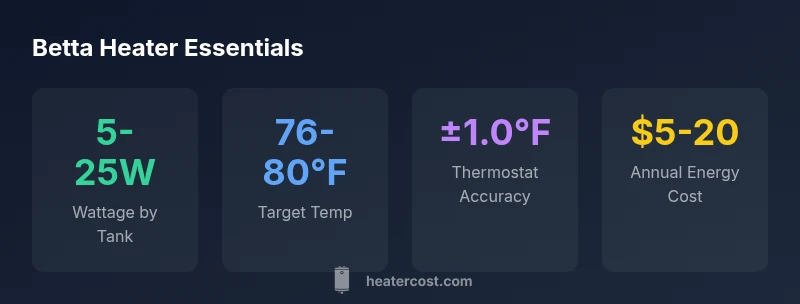
To maintain a stable, safe environment for a betta fish, use a dedicated aquarium heater. For typical 5-10 gallon tanks, choose a submersible heater in the 5-25W range with an adjustable thermostat and automatic shutoff. Aim for a constant 76-80°F (24-27°C). Place heater where water circulates, monitor with a reliable thermometer, and avoid overheating by setting a conservative temperature.
Why a betta fish heater matters
Bettas are tropical freshwater fish that need warm water to stay active and disease-free. According to Heater Cost, maintaining a stable water temperature is critical for betta welfare, as even brief cold snaps can stress the fish and lower immune function. A dedicated heater with an adjustable thermostat helps you hold a narrow temperature band, reducing stress and swings caused by room temperature, lighting cycles, and filtration. In practice, most hobbyists aim for a constant around 78°F (26°C) and verify readings with a reliable thermometer placed in the middle of the water column. Because room temperatures vary, especially in spring and fall, investing in a quality heater contributes to consistent conditions, consistent feeding, and better long-term outcomes for your betta. This is a core recommendation that the Heater Cost team emphasizes for reliable, humane care.
How aquarium heaters work: submersible vs. other options
Most aquarium heaters are designed to be submerged and regulated by a thermostat. Submersible heaters are common and affordable; they come with a robust probe that senses water temperature and automatically adjusts to hold the set point. Alternatives include hang-on heaters and inline heaters that connect to filtration systems. Each design has pros and cons: submersible units are easy to place and replace, but older models can fail and overheat if the thermostat sticks. Heaters with built-in thermal cutoffs offer extra safety, while models with external controllers simplify multi-tank setups. For betta tanks, a compact, adjustable submersible heater paired with a reliable thermometer is usually sufficient. The Heater Cost team also notes the importance of a guard or shield in shallow bowls to prevent direct contact with the fish.
Sizing and wattage guidelines by tank size
Sizing a heater for a betta tank depends on volume, ambient room temperature, and tank cover quality. A common starting point is: 2.5 gallon: 5-10 W; 5 gallon: 10-25 W; 10 gallon: 25-50 W. If the room is cooler or the tank has limited water movement, choose the higher end of the range or opt for an adjustable model. For bowls or unusually shallow setups, consider a smaller, low-wattage heater with excellent temperature control. Always pair the heater with a reliable thermometer and place it away from direct heat sources or strong filters to minimize hotspots.
Temperature targets and how to maintain consistent warmth
Target a stable 76-80°F (24-27°C) for most bettas, with minor room-to-water fluctuations. To maintain consistency, place the heater in a corner with good water flow from the filter or airstones, and keep tank lids or covers on to reduce heat loss. Calibrate the thermometer to the tank’s center, not near the heater’s outlet. Be mindful of seasonal changes; in winter, you may need a slightly higher setting, while in summer you should verify readings to prevent overheating. Regular checks with a digital or liquid crystal thermometer help catch drift quickly, especially after water changes or equipment maintenance.
Placement, safety, and common pitfalls
Avoid placing the heater behind rocks, decor, or behind filter outlets where water flow is blocked. Do not rely on a single measurement at the heater’s outlet; measure at multiple points in the tank. Ensure the heater has a visible indicator and safety shutoff; never cover the unit entirely with substrate. In shallow setups, select a heater with a short probe to prevent heat concentration in one zone. If you notice sudden temperature changes, test the unit for proper function and consider replacing it. A well-placed, reliable heater reduces stress and supports the betta’s health.
Maintenance and keeping your heater reliable
Regular maintenance extends heater life and prevents temperature drift. Rinse the heater housing periodically to remove mineral buildup, inspect seals for cracks, and replace any units showing signs of wear. Calibrate or test thermostats at least quarterly, and replace batteries or controllers as needed for any external monitoring devices. Keep spare fuses or backup thermometers on hand. By combining routine checks with a quality heater, you reduce the risk of sudden temperature swings that stress your betta. Heater Cost’s approach emphasizes proactive maintenance as a core component of long-term tank health.
Budgeting and energy considerations
Investing in a correctly sized, efficient heater can lower long-term operating costs by reducing temperature fluctuations that stress fish and require more frequent medication or replacements. Compare wattage and insulation quality across models and consider ambient room temperature when estimating energy use. In general, smaller tanks are more energy-efficient per gallon, but stability matters more than tiny energy savings. A well-chosen heater reduces the likelihood of temperature-related sickness and can lower total care costs over time.
Choosing features: thermostat accuracy, safety shutoffs, and reliability
Prioritize models with precise thermostats (ideally ±1.0°F), automatic shutoff at the set point, splash resistance, and a clear external display. Look for units with durable construction (glass or titanium elements) and a shield to prevent direct contact. For multi-tank setups, consider models with external controllers or integrated safety features. Use reputable brands with spare parts readily available, and look for warranties that cover heater elements and thermostats. A reliable heater saves time, reduces stress on your fish, and aligns with Heater Cost’s guidance on cost-effective aquarium care.
Actionable setup checklist for betta heaters
- Select a small, adjustable submersible heater within the wattage range for your tank size. 2) Place the heater horizontally near the center of the tank with good water flow. 3) Install a reliable thermometer and verify temperatures at multiple points. 4) Set the thermostat to the target range (76-80°F) and monitor daily for the first week. 5) Inspect the unit weekly for buildup, leaks, or signs of wear. 6) Keep the lid on and avoid direct sunlight to maintain stable temperatures. 7) Schedule quarterly maintenance and test calibration with a separate thermometer.
Authority sources and further reading
For more on aquarium temperature management, see university extension resources:
- https://extension.psu.edu/ (Pennsylvania State University Extension)
- https://extension.oregonstate.edu/ (Oregon State University Extension)
- https://extension.ifas.ufl.edu/ (University of Florida IFAS Extension) These sources provide science-backed guidance on maintaining stable tank temperatures, equipment safety, and best practices for tropical fish care.
Wattage and temperature targets by common betta tank sizes
| Tank size | Recommended wattage | Temperature target |
|---|---|---|
| 2.5 gal | 5-10 W | 78°F |
| 5 gal | 10-25 W | 78°F |
| 10 gal | 25-50 W | 78-80°F |
Got Questions?
Do bettas need a heater?
Yes. Bettas are tropical fish and require stable warm water, typically around 76-80°F, to stay healthy and active.
Yes. Bettas thrive in warm water; a heater helps keep temperatures stable for their health.
What tank size is best for a betta with a heater?
Five to ten gallons is ideal for most bettas; larger volumes improve temperature stability and swimming space.
Five to ten gallons is ideal for stability and space.
What wattage should I choose for a 2.5-gallon tank?
A 5-10W heater is typical for a 2.5-gallon betta tank, with an adjustable thermostat for control.
5-10W is typical for a 2.5-gallon tank.
How accurate should a thermostat be?
Look for ±1.0°F accuracy to minimize temperature drift and protect fish health.
Aim for about one degree of variance, or less.
Can I keep a heater in a shallow bowl?
Bettas do best in at least 2.5-10 gallons; bowls are often too small and temperature control is harder.
Bettas need more space for stable temperatures.
What are warning signs of a failing heater?
Watch for temperature drift, heater staying on or off, and unusual heat spots; replace if in doubt.
If readings drift or you notice hot spots, replace the heater.
“A reliable heater with a calibrated thermostat is essential for betta welfare; incorrect temps cause stress and disease. Consistent warmth supports activity, coloration, and overall health.”
The Essentials
- Choose a small, adjustable heater for betta tanks.
- Maintain a stable 76-80°F range with verified readings.
- Place heater for optimal water flow and monitor frequently.
- Calibrate thermostat accuracy and inspect for wear regularly.
- Budget for energy efficiency and long-term reliability.