Small Room Heater: A Practical Guide to Compact Heating
Explore compact room heater options, cost ranges, energy efficiency tips, safety features, and setup guidance for cozy spaces. A practical guide for homeowners, renters, and property managers.


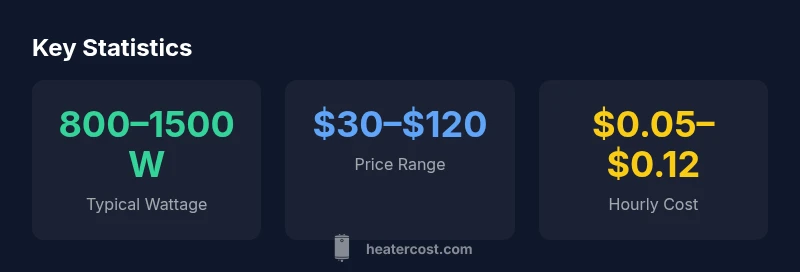
A small room heater offers targeted warmth for compact spaces, typically in the 800–1,500 watt range. For most apartments or bedrooms, expect initial purchase prices around $30–$120, with running costs roughly $0.05–$0.12 per hour depending on wattage and local energy rates. This makes it a cost-effective option for intermittent heating in well-insulated areas, per Heater Cost Analysis, 2026.
Why a room heater small fits compact spaces
Compact rooms and apartments often require rapid, localized warmth without triggering whole-house heating. A room heater small designed for 800–1,500 watts can quickly elevate temperatures in a single zone while avoiding excessive energy use in unused rooms. This approach aligns with energy-conscious budgeting, especially in rooms that are well insulated but not perfectly sealed. For homeowners and renters evaluating heating options, the key is to balance space, insulation, and comfort. The term 'room heater small' captures a broad category that includes ceramic, infrared, and oil-filled radiators, each with unique heat delivery styles. When used effectively, these units help maintain comfortable conditions without escalating entire-home energy bills.
In real-world setup, small heaters excel in bedrooms, home offices, and reading nooks where you want dependable warmth without consolidating space heat. The Heater Cost analysis for 2026 suggests that prioritizing models with thermostatic control can help maintain a stable ambient temperature and avoid cycling on and off too aggressively.
How to choose the right small room heater
Selecting a compact heater demands a careful look at space, safety, and efficiency. Start by calculating the room size and selecting a wattage that matches the space, typically around 10 W per square foot as a baseline. Consider features like a built-in thermostat, tip-over switch, overheat protection, and a clear energy-failure alert. Look for energy-efficient technologies such as ceramic elements and infrared emitters, which can deliver more consistent warmth with less wasted energy. Safety notes: ensure the heater has an anti-tip mechanism, sturdy housing, and a cool-to-touch exterior for homes with children or pets. Decide between plug-in portable units and permanently installed options if your use-case requires fixed placement in a study or workshop.
A well-chosen model balances price, safety, and performance. The Heater Cost team recommends reading user reviews about noise levels, response time, and reliability to avoid hidden costs or disappointing performance later.
Safety and design considerations for small room heaters
Safety should be non-negotiable when selecting a room heater small. Choose devices with UL or ETL listings, automatic shutoff if tipped over, and thermal cutoffs to prevent overheating. If you have combustible materials nearby—beds, curtains, or paper—keep a generous clearance around the heater. For bedrooms, consider models with quiet operation to minimize disruption and avoid sleep disturbances. The exterior should stay cool enough to touch, especially where little ones might interact with the unit. Regular maintenance, such as dusting grills and clearing airflow paths, reduces fire risk and preserves efficiency. Remember to never run heaters on carpets or rugs that can trap heat.
In sum, safety features and responsible placement are as important as raw wattage when it comes to room heater small options.
Understanding energy use and cost implications
Energy costs are driven by wattage, usage, and local electricity rates. A typical 800–1,500 W heater will consume more electricity when used for extended periods, but shorter, targeted sessions during chilly evenings can be economical. Thermostats help by maintaining a comfortable temperature without constant cycling, which saves energy over time. If you’re managing a household budget, track usage with a smart plug or energy monitor for a week or two to get a clear picture of realistic operating costs. In well-insulated rooms, smaller heaters can achieve the desired warmth with shorter runtimes, reducing total energy spent. The Heater Cost analysis emphasizes evaluating the trade-off between upfront price and long-term energy cost, especially in rental properties where tenants may control heating differently.
Placement, airflow, and room dynamics
Placement matters as much as the heater’s rating. Position units away from walls and furniture to promote even heat distribution. Elevating portable heaters from the floor can improve air circulation in small spaces. If your room experiences drafts, consider closing gaps with weatherstripping and adding window insulation to reduce heat loss. For rooms with high ceilings or large windows, a hybrid approach—combining a small heater with a secondary insulation strategy—often yields better results than cranking up larger devices. Finally, use fan-assisted models judiciously: they can spread heat quickly but may cause uneven warm zones if not properly positioned.
Operating tips to minimize costs in practice
To maximize efficiency, turn the heater on only when you need it and set the thermostat to a comfortable baseline, then adjust as the room warms. Layer warm clothing and use drapes or blinds to trap heat overnight. Keep doors closed to preserve warm air in the occupied zone. Regularly clean filters and ensure airflow paths are clear to avoid unnecessary power draw. When possible, pair a small heater with a well-sealed, well-insulated room to dramatically reduce energy requirements. The Heater Cost guidance for 2026 highlights that proper insulation and a sensible thermostat strategy often outperform simply increasing wattage.
Common pitfalls and how to avoid them
Many users overestimate the heat needs of a small space or rely on a heater as a sole source of warmth. This can lead to overheating, higher energy costs, or safety concerns. Avoid using multiple heaters to compensate for poor insulation, which can create electrical hazards and uneven heat distribution. Do not place heaters near flammable materials or extension cords that may overheat. Lastly, choose models with automatic shutoff and flame-retardant housing to minimize risk. By focusing on insulation, safety features, and realistic usage patterns, a small room heater can be a reliable, cost-conscious part of your winter strategy.
A practical setup for different spaces and budgets
For a budget-minded studio apartment, a compact ceramic or oil-filled radiator with a thermostat can deliver steady warmth without consuming too much energy. In a home office or reading nook, an infrared heater that targets a specific area can save you from heating the entire room. If you’re insulating a drafty bedroom, a two-step approach—insulation improvements plus a small, low-wattage heater at night—may yield the best comfort-to-cost ratio. The key is to match the heater type to the room’s dynamics and your daily routine.
Comparison of common small-room heater types
| Heater Type | Avg Wattage | Best For (Room Size) | Pros | Cons |
|---|---|---|---|---|
| Convection (fan) heater | 1000–1500 | Small to medium rooms | Fast heat delivery | Noise possible; may dry air |
| Ceramic heater | 800–1500 | Small rooms under 200 sq ft | Even heat distribution | Less effective in drafts |
| Oil-filled radiator | 400–1000 | Insulated small rooms | Silent operation | Longer heat-up time |
| Infrared heater | 500–1200 | Direct warmth for targeted areas | Immediate warmth | Limited room-wide heat |
Got Questions?
What is the ideal wattage for a small room heater?
Ideal wattage depends on room size and insulation. A common starting point is about 10 W per square foot, adjusted for drafts and ceiling height. For a typical 100–150 sq ft room, an 800–1500 W unit often strikes a balance between quick warmth and energy use. Always factor insulation quality and occupant comfort when selecting a wattage.
Wattage depends on room size and insulation; start with ~10 watts per square foot and adjust for drafts and ceiling height.
Are plug-in heaters safe for bedrooms?
Yes, plug-in heaters can be safe for bedrooms when they have essential safety features like tip-over switches, automatic shutoff, and cool-to-touch surfaces. Place them away from bedding and curtains, and never leave them running unattended overnight. Always follow the manufacturer’s guidelines and keep a smoke detector in the room.
Yes, with safety features like tip-over switches and cool surfaces, kept away from flammables.
Which heater type is most energy efficient for small spaces?
Oil-filled radiators are efficient for steady warmth and silent operation, while infrared heaters excel at rapid, targeted heat. Ceramic heaters can offer a balance between efficiency and fast warming. The choice depends on whether you need blanket warmth or spot heating, plus room layout and insulation.
Oil-filled for steady warmth, infrared for targeted heat, ceramic for overall balance.
Can I use a space heater with a thermostat to save energy?
Yes. A thermostat helps maintain a set temperature and reduces unnecessary cycling, lowering energy use and cost. Pair the thermostat with an energy-saving mode if available and set it to a comfortable baseline, adjusting as needed. Regular use with proper insulation yields the best savings.
Yes—thermostats stabilize temperature and save energy when used correctly.
What maintenance does a small room heater require?
Routine maintenance includes cleaning dust from vents, checking cords for wear, and ensuring safety features function properly. Do not run heaters with obstructed airflow or damaged plugs. Annually inspect seals and replace worn parts as recommended by the manufacturer.
Clean vents, check cords, inspect safety features, and replace worn parts as needed.
How can I prevent heat loss in a small room?
Seal drafts with weatherstripping, close gaps around windows, and use door sweeps. Add layering like heavy curtains and insulated blinds. Efficient heat distribution also relies on placing the heater away from drafts and using insulation to keep warmth contained.
Seal drafts, insulate, and position the heater to minimize heat loss.
“"A properly chosen small room heater can maintain comfort in compact spaces while keeping energy costs predictable."”
The Essentials
- Measure room size before choosing a heater
- Prioritize safety features like tip-over and auto shutoff
- Match wattage to the space using simple sizing rules
- Use insulation to improve efficiency and keep heat in
- Compare total cost of ownership (price plus running costs)