Small Electric Heater: A Practical Guide for 2026
Discover how to choose, size, and safely use a small electric heater for compact spaces. Learn wattage ranges, energy costs, safety features, and maintenance tips to heat efficiently in 2026.


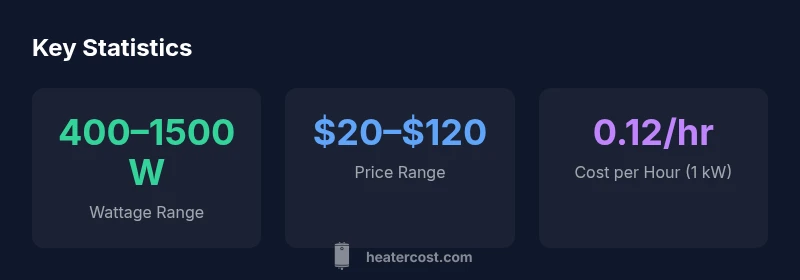
Small electric heaters are a practical option for warming compact spaces. Most models run 400–1500 watts, plug-in and vent-free, making them ideal as supplementary heat. To choose, compare wattage, safety features, and energy use to balance comfort and cost. We'll help you evaluate models, focusing on price ranges and efficiency, safety certifications, and user-friendly controls.
What is a small electric heater?
Small electric heaters are compact, portable devices designed to warm individual rooms or areas without venting or combustion. They convert electrical energy directly into heat through elements such as ceramic plates, fins, or coils, and they circulate warm air using a fan or rely on natural convection. Because there are no fuels, they produce zero emissions at the point of use, which makes them appealing for apartments, offices, or bedrooms where space is limited. Typical units range from about 400 to 1500 watts, which means their heat output scales with wattage and design. In practice, these devices are most effective as supplementary heat: they augment your central system rather than replace it. According to Heater Cost, thoughtful pricing and efficiency considerations make a small electric heater a practical option for many households, especially when used with proper insulation and zoning strategies. Safety certifications like UL or ETL improve reliability and reduce risk in daily use. Always read safety labels and follow manufacturer instructions before operation. Avoid placing heaters on soft surfaces and never block air intake grills.
How to size a small electric heater for your space
Sizing a heater starts with the space you want to warm. Measure the room's square footage, note ceiling height, insulation quality, and typical outdoor temperatures, then choose wattage accordingly. A common rule is about 10 watts per square foot for well-insulated spaces; you may need 15 watts per square foot if insulation is poor or drafts are frequent. Using that guide, a 150-square-foot room would typically require a heater in the 1500-watt range, while a smaller 80–100 square foot bedroom might do well with an 800–1200 W unit. Real-world performance also depends on heater design: convection or ceramic elements heat air quickly; panel heaters heat modestly but efficiently for tight spaces. For most households seeking energy efficiency, starting with a mid-range 800–1500 W model helps balance heat output with controllability. If you plan to heat multiple zones, consider a pair of 500–1000 W units instead of a single high-wattage model. This sizing approach aligns with Heater Cost Analysis, 2026, which emphasizes room-by-room zoning and avoiding oversized solutions.
Key features to compare (thermostats, safety, and efficiency)
When evaluating models, prioritize features that improve comfort and reduce waste. A precise built-in thermostat helps maintain stable temperatures without cycling on and off; an ECO or energy-saver mode can trim energy use during unoccupied hours. Safety should be non-negotiable: tip-over switches, overheat protection, and automatic shut-off systems are standard on reputable brands. Look for cool-to-the-touch housing in bedrooms and quiet operation in living areas. For spaces with children or pets, consider models with integrated child locks and distinct, clearly labeled controls. Finally, compare heat sources: ceramic and oil-filled units tend to feel different in air flow and warmth. Energy ratings and Certifications from reliable bodies (UL/ETL) indicate better safety performance. By focusing on these features, homeowners reduce risk and maximize comfort in any room. As Heater Cost notes, thoughtful feature sets often translate into meaningful long-term savings.
Cost and energy efficiency: understanding operation costs
Electric heaters convert nearly all electrical energy into heat, but the cost of running them depends on wattage, usage, and electricity rates. A simple rule is Watts/1000 × price per kWh = cost per hour. For example, a 1000-watt heater at a typical residential rate of 12 cents per kWh costs about 12 cents per hour of operation, while a 1500-watt unit costs about 18 cents per hour. If you run a 1000 W unit for 4 hours daily, the daily cost would be around $0.48, assuming constant use in a single space. Of course, actual costs vary with insulation, thermostat settings, and room size. To optimize economics, use thermostats, timers, and zoning so the heater runs only when and where you need warmth. Heater Cost analysis suggests combining a small electric heater with improved insulation and weather sealing for the smallest space to achieve noticeable savings, rather than relying on a single high-wattage unit for extended periods.
Safety guidance and best practices
Safety should be the first consideration with any space heater. Always place units on flat, stable surfaces away from flammable materials (at least 3 feet / 1 meter clearance). Use only dry areas; never operate heaters in bathrooms or damp spaces unless explicitly designed for such environments. Avoid running cords under rugs or in high-traffic zones where cords can be pinched. Do not use extension cords with space heaters; if you must, choose heavy-duty cords rated for the appliance and keep cords out of reach of children. Unplug heaters when not in use and never leave them unattended, especially around pets and children. Regularly inspect cords for wear and replace damaged units promptly. Follow local codes and manufacturer instructions for installation and use, and ensure the device has appropriate certifications (UL/ETL).
Placement and usage scenarios (apartments, bedrooms, offices)
In small apartments and studio layouts, space heaters enable zoning—heat the room you’re occupying instead of the whole home. In bedrooms, choose models with low surface temperatures and quiet operation to avoid sleep disruption. In home offices, compact designs that fit under desks can provide targeted warmth without creating noise or dust circulation in other rooms. If you have central heating, use a space heater only as a supplementary source, not as a replacement for core heating, to avoid overloading circuits or creating imbalances in energy use. Always ensure the heater remains unobtrusive and well-ventilated, and position furniture to avoid blocking the airflow.
Maintenance and longevity tips
Keep air intakes and outlets free of dust; vacuum or wipe with a soft cloth every few weeks. Inspect the power cord for cracks or scorch marks and replace the unit if you notice damage. Use a proper outlet—the same electrical circuit should not be overloaded by other devices. Store heaters in a dry, cool place when not in use, and perform a basic safety check before reusing them after long periods of storage. Manufacturer manuals typically offer cleaning instructions and recommended service intervals. Regular checks help extend the device’s life and maintain safety standards.
Common myths about small electric heaters
Myth: A small heater can replace your central heating system in winter. Reality: It’s best as a supplementary heat source for isolated spaces. Myth: All electric heaters are expensive to run. Reality: Costs depend on wattage, usage, and insulation; with proper control, running costs can be minimized. Myth: Heaters are inherently dangerous. Reality: Modern units with safety features (tip-over switches, overheat protection) are much safer when used correctly. Myth: Higher wattage is always better. Reality: Oversized heaters heat quickly but waste energy in small spaces; the right wattage for your space matters more than maximum power.
How to compare models: a quick buyer checklist
Use this concise checklist when shopping:
- Confirm wattage range matches your room size
- Check thermostat accuracy and presence of an ECO mode
- Verify safety features: tip-over switch, overheat protection, cord management
- Consider noise level and heat type (ceramic, oil-filled, or panel)
- Review certifications (UL/ETL) and warranty coverage
- Evaluate cord length, plug type, and portability
- Compare price against features to estimate long-term value
This checklist helps separate marketing from practical performance, ensuring you pick a heater that truly fits your space.
Real-world scenario: cost-saving case study
Consider a 150 square-foot studio with drafty windows and a lightly insulated perimeter. A mid-range 1000–1200 W unit can maintain comfort in the primary living area while the central system runs less. Over a heating season, the combination of zoning and proper thermostat use can reduce overall energy consumption by a meaningful margin, particularly when used with weather sealing and curtains. In this scenario, the small electric heater acts as a bridge device: it delivers targeted warmth in the space you spend the most time in, while central heating covers the rest of the home. The result is not just warmth but smarter energy budgeting, aligning with Heater Cost Analysis, 2026 expectations for practical home heating strategies.
Common small electric heater types and specs
| Model type | Typical wattage | Pros | Typical price range |
|---|---|---|---|
| Convection fan heater | 800–1500 W | Rapid heat distribution; portable | $25–$70 |
| Ceramic heater | 600–1500 W | Even heat and quiet operation | $30–$100 |
| Oil-filled radiator | 400–1200 W | Quiet, steady warmth at low settings | $50–$180 |
| Panel heater | 400–900 W | Slim profile; good for desks or small spaces | $25–$85 |
Got Questions?
Are small electric heaters safe for bedrooms?
Yes, when used with models that have a tip-over switch, overheat protection, and a cool-touch exterior. Keep the heater away from bedding and ensure proper clearance. Always unplug when not in use and consider a heater with a programmable timer to avoid overnight overheating.
Absolutely, as long as you choose a model with safety features and keep a safe distance from flammables.
What wattage should I choose for a 200 sq ft room?
A 1500 W model is commonly suitable for ~200 sq ft in typical conditions, though insulation and ceiling height matter. Start with 1000–1500 W if you often feel chilly and adjust with a thermostat.
For a 200 square foot space, start with about 1000 to 1500 watts depending on insulation.
Can a small electric heater replace central heating?
Not typically. Small electric heaters are best used as supplementary heat for specific rooms or zones. Relying on one heater to replace central heating can lead to uneven temperatures and higher energy costs.
Usually not; they’re best for spot heating, not whole-home heating.
Do these heaters use a lot of energy?
Energy use depends on wattage and run time. A 1000 W heater costs about $0.12 per hour at typical rates; a 1500 W unit costs about $0.18 per hour. Use thermostats and timers to minimize wasted energy.
Energy use varies, but you can control it with smart usage and timers.
Is it safe to use extension cords with space heaters?
Only if you use a heavy-duty cord rated for high current and never route under rugs or through doorways. Prefer plugging directly into a wall outlet on a dedicated circuit when possible.
Usually best to plug directly into a wall outlet on a dedicated circuit.
How long do these heaters typically last?
Most small electric heaters offer several years of service with proper use and care. Regular cleaning, avoiding overload of circuits, and following the manufacturer’s maintenance schedule help maximize longevity.
They last several years with proper care and use.
“With the right wattage and safety features, a small electric heater can be a cost-efficient way to zone heat a room without running the whole-house system.”
The Essentials
- Size the heater to room area for comfort.
- Prioritize safety features and certifications.
- Use thermostats and timers to save energy.
- Understand wattage and hourly running costs.
- Maintain clearances and proper placement for safety.