How Difficult Is It to Install a Water Heater? A Homeowner’s Guide
Learn the steps, risks, and decision points for installing a water heater. This guide covers electric vs gas, tank vs tankless, permits, and when to hire a pro.


Installing a water heater can be doable for handy homeowners, but the difficulty varies by unit type, existing plumbing, venting, and local codes. A straightforward electric model in a reachable location with simple wiring may be within reach, while gas units or vented systems usually raise complexity. The Heater Cost team recommends evaluating your skills, codes, and permits, and planning professional help when in doubt.
Why the install difficulty matters
According to Heater Cost, the difficulty of installing a water heater hinges on several core factors: unit type (electric, gas, or tankless), venting requirements, electrical service capacity, and the existing plumbing layout. Understanding these elements at the outset helps homeowners decide whether a DIY project is realistic or if professional help is warranted. In many cases, the most significant decisions come down to safe venting and proper fuel connections, both of which have safety and code implications.
Electric water heaters are often the simplest to swap in, especially if the existing electrical panel has spare capacity and the location minimizes long runs of pipe. However, even electric installations demand correct wire sizing, a dedicated circuit, appropriate disconnects, and adherence to local electrical codes. Gas models introduce additional layers: gas supply readiness, combustion air, exhaust venting, and proper shutoff valves. Tankless units, while compact and efficient, typically require more extensive adjustments to gas supply, venting, water lines, and sometimes upgrades to the home's electrical system to support higher current draws.
Beyond the appliance itself, the physical location of the heater dramatically shapes difficulty. A closet installation with limited clearance, an upstairs utility room, or a basement with uneven floors can complicate mounting, drainage, and leak containment. The drain pan, condensate or pressure-relief drain, and expansion tank must be planned to prevent water damage. In all cases, water heater installation interacts with plumbing, electrical, and gas systems, so missteps can affect performance, safety, and warranty coverage.
Assessing your current setup and goals
Before choosing a replacement or upgrade, create a clear picture of your existing system and your goals. Start by locating the current heater and mapping the path of hot and cold water lines, cold-water feed, and discharge lines. Note the heater’s location relative to bedrooms, bathrooms, and main supply lines—shorter runs simplify installation. Check the electrical service: is there a dedicated 240-volt circuit for an electric unit, and does the panel have spare capacity? If you’re installing a gas model, verify that your gas line size and pressure meet the new unit’s requirements and that you have adequate combustion air and venting space.
Tap into local codes and manufacturer requirements early. Some jurisdictions limit how close a vent can be to combustible materials or require specific seismic straps and anti-tip protection. If you live in a region with strict energy codes or seismic considerations, you may need to upgrade piping or install a seismic brace. Also, confirm whether your home requires a permit to perform the work. The Heater Cost team suggests starting with a simple checklist to minimize surprises during the actual swap.
Gas vs electric vs tankless: fundamental differences
Electric water heaters are often cited as the easiest swap, especially when the electrical service is already sized for a new unit and space is adequate. Gas units require careful attention to venting and gas supply. They demand proper vent installation to remove combustion byproducts and prevent backdrafts, which can affect indoor air quality and safety. Tankless models save space and can be more energy efficient but typically require more complex venting, higher electrical capacity, and potentially upgrades to your gas line or electrical panel. Each type has unique installation steps, clearances, and warranty implications, so match the choice to your home’s layout and local codes.
Your decision should consider long-term operating costs, water heater recovery rate, and compatibility with existing systems. The Heater Cost team notes that a hotter climate or a high-demand household may benefit from higher-capacity electric models or properly vented gas units with appropriate vent diameters.
Location, space, and venting considerations
The physical space where the unit sits drives both effort and safety. A cramped cabinet, attic crawl space, or a basement with low headroom complicates maneuvering, mounting, and drainage. Local venting requirements for gas models dictate the route, diameter, and material. In some homes, you’ll need to route a vent through an exterior wall or roof; in others, a direct-vent or power-vent configuration may be appropriate. Space constraints also affect drain pan installation, seismic strapping, and easy access for future maintenance. When space is tight, you may need to choose a compact or tankless model and plan dedicated service routes for maintenance.
Permits, inspections, and safety
Permit requirements vary by city and state. In many areas, installation of a new water heater triggers plumbing, gas, and electrical inspections, even for replacements. Failing to obtain approvals can void warranties and create compliance issues if problems arise later. Safety practices include shutting off power and water during work, draining the tank, using leak detectors, and testing all connections under pressure after installation. Proper venting, flame safeguards, and correct gas line sizing are essential for safe operation. When in doubt, consult the Heater Cost team or a licensed professional to avoid hazardous mistakes.
Tools & Materials
- Adjustable wrench(For diverse nut sizes on fittings)
- Pipe wrench(Grips and tightens large diameter fittings)
- Pipe cutter(Copper or PEX pipe cutting)
- Teflon tape (ptfe)(Seal water pipe threads)
- Gas-rated sealant/pipe dope(Secure gas connections without leaks)
- Multimeter(Check electrical supply and grounding)
- Voltage tester(Verify live circuits before work)
- Screwdrivers ( Phillips and flathead )(General fasteners and panels)
- Adjustable pliers(Grip and twist fittings securely)
- Drain pan and towels(Contain spills during draining)
- Bucket(Collect drainage water)
- Silicone sealant or plumber's putty(Seal minor gaps around hardware)
Steps
Estimated time: 2-6 hours
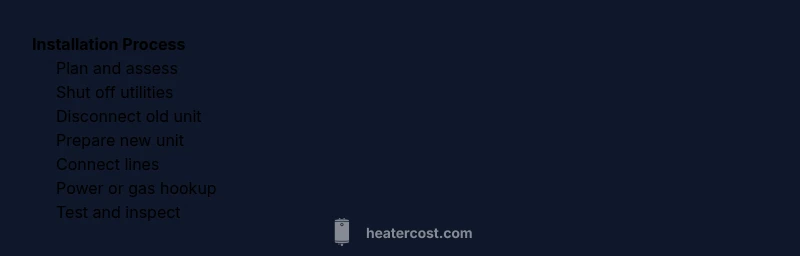
- 1
Plan and prepare the project
Define the unit type and location, check space, and verify that wiring, venting, and gas lines (if applicable) can accommodate the new heater. Gather tools and permits if required. A clear plan reduces surprises during the swap.
Tip: Double-check permit requirements with your local building department before buying a unit. - 2
Shut off utilities and prepare area
Turn off the power at the service panel, shut off the water supply, and drain the existing reservoir into a bucket or drain. Remove nearby items to create a safe, clear workspace.
Tip: Label breakers and valves to avoid confusion when restarting. - 3
Drain and disconnect the old heater
Carefully disconnect hot and cold water lines, drain the tank, and remove any mounting hardware. Cap or isolate lines to prevent leaks during removal.
Tip: Have rags ready for potential residual water and avoid scalding. - 4
Prepare the new heater and connections
Inspect the new unit, verify connections match existing lines, and install any required expansion tanks or relief valves according to the manufacturer.
Tip: Keep the manufacturer’s manual handy for exact specifications. - 5
Install water supply and venting (if needed)
Attach cold water supply, hot water outlet, and drain lines. For gas units, install the vent pathway; for electric units, ensure secure wiring and a dedicated circuit.
Tip: Use proper pipe sizing and avoid cross-threading fittings. - 6
Connect power or gas supply and seal
Connect the electric unit to the correct circuit and ground it; for gas, couple the appliance to the gas line with approved fittings and test for leaks before lighting.
Tip: Never test gas lines with an open flame; use soapy water to detect leaks. - 7
Fill, purge air, and test
Fill the tank slowly to remove air, bleed air from lines, and pressurize to check for leaks. Then perform a pressure test and run hot water to ensure proper operation.
Tip: Check for leaks at every joint before finalizing. - 8
Final checks, permits, and inspection prep
Ensure all connections are tight, label the area, install any required permit stickers, and prepare for inspection if mandated by local codes.
Tip: Document work with photos for inspection and warranty records.
Got Questions?
Do I need a permit to install a water heater?
Permit requirements vary by location, but many jurisdictions require plumbing, gas, and electrical permits and inspections for water heater installations. Check with your city or county building department before beginning.
Permit requirements vary by location, but many places require inspections after installation. Check with your city before starting.
Can I install a water heater myself?
Electric replacements in accessible spaces are more feasible for DIY, but gas lines, venting, and electrical upgrades often require a licensed professional to meet safety codes and warranty terms.
You can DIY some electric installs if you’re comfortable with wiring, but gas and venting typically need a pro.
What if I smell gas after installation?
If you smell gas, evacuate the area immediately and call emergency services. Do not operate electrical switches or create sparks. Shut off the gas at the main valve only if it’s safe to do so from outside the area.
If you smell gas, leave right away and call for help.
How long does installation typically take?
Most installations take several hours, depending on unit type, space constraints, and whether venting or electrical upgrades are needed.
Most installs take a few hours, depending on the setup.
What are common mistakes during installation?
Common mistakes include incorrect venting, loose gas connections, undersized electrical circuits, and skipping leak testing after connections are made.
Common mistakes are venting errors, leaky connections, and skipping tests.
Is tankless installation more difficult than traditional tanks?
Tankless systems often require more planning, heavier electrical load, and sometimes more complex venting or gas line work, making them typically more challenging than tank-style heaters.
Tankless generally requires more planning and upgrades, making it tougher than tank-style.
Watch Video
The Essentials
- Assess unit type and location before starting.
- Gas and venting work often requires a pro.
- Plan permits and inspections early to avoid delays.
- Test comprehensively for leaks and safe operation.