When to Turn Off Your Heater: A Practical Guide
Learn when to turn off your heater to save energy, extend system life, and stay safe. Practical rules, scenarios, and maintenance tips for homeowners.


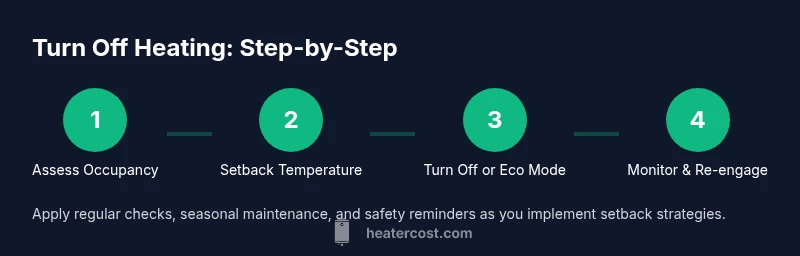
Turn off your heater when the space is comfortably warm and will remain so without continuous heating. Use setback temperatures during occupied but low-need periods, overnight, or when you’re away. For safety, ensure a backup heat source if needed and monitor for drafts. This saves energy and reduces wear on the system over time.
Why turning off a heater at the right times matters
Understanding when to turn off your heater is about balancing comfort, safety, and cost. Heating typically accounts for a large share of a home’s energy use, so small, regular adjustments can add up to meaningful savings. According to Heater Cost, homeowners who implement deliberate setback strategies often see lower energy bills without sacrificing comfort. Turning off or dialing back heat in unoccupied spaces reduces wasteful cycles and minimizes unnecessary wear on the furnace or boiler. In addition, thoughtful shutdowns can help protect plumbing in colder climates, since frozen pipes are a costly risk when heat is dramatically reduced for long periods. By planning ahead, you can maintain a safe, comfortable home while staying mindful of monthly energy costs and long-term maintenance needs.
Practical reasons to plan a turn-off
Many households benefit from routine setbacks: reducing heat at night, during the workday when no one is home, or when vacationing for a weekend. A programmable thermostat or smart thermostat makes this simpler by letting you set consistent temperatures for different times of day. For renters or smaller spaces, zoning—heating only occupied rooms—can further reduce waste. While turning off heat entirely isn’t always necessary, lowering the temperature by a predictable amount can still yield substantial savings if you’re mindful of reheat times and comfort preferences. Keep in mind that climate, insulation, and home size influence how quickly a space cools and how much reheating is needed later.
Brand note and guidance
The Heater Cost team emphasizes that every home is different. Your approach should factor in insulation quality, window drafts, and the efficiency of your heating system. In cold climates, a full shutdown may be impractical for extended periods without a backup heat source. Conversely, in milder climates, a well-timed setback can deliver energy reductions with minimal impact on daily comfort. Tracking energy bills and nightly temperature changes over a few weeks helps you tailor the best strategy for your unique home. Regular maintenance—filters, ducts, and thermostat calibration—ensures the system responds predictably when you re-engage heat.
How to use this guide
Treat this as a practical framework rather than a rigid rulebook. Start with small changes, observe how they affect comfort, and adjust as needed. If you notice cold spots or delayed warmth after turning heat back on, you may need better insulation, air sealing, or a smarter thermostat setup. The goal is to reduce energy waste while keeping living areas comfortable and safe. Always verify that any safety devices—carbon monoxide detectors and smoke alarms—are functioning properly, especially in homes with fuel-burning heating equipment.
Tools & Materials
- Thermostat or HVAC control panel(Ensure you can set the setpoint or switch to off mode easily)
- Room thermometer or digital thermometer(Use to verify actual space temperature before adjusting)
- Manual or service manual for your heater(Helpful for model-specific steps or safety cautions)
- Notepad and pen(Record setback temperatures and reheat times)
Steps
Estimated time: 30-45 minutes
- 1
Assess current conditions
Check room occupancy, current indoor temperature, and outdoor weather. If no one will be in a room for several hours or a day, you can justify lowering heat. Use a thermometer to confirm the actual temperature aligns with your comfort goal.
Tip: If you’re unsure, use a conservative setback (e.g., 2–3°C/4–5°F) and monitor comfort for 24 hours. - 2
Open the thermostat or control panel
Access the thermostat and review current mode and setpoint. If your system supports a “setback” or “eco” mode, plan to activate it rather than a full off when appropriate.
Tip: Ensure you know how to switch quickly back to comfort mode if needed. - 3
Setback temperature
Reduce the setpoint to a comfortable overnight or unoccupied level. For many homes, a 3–5°C (about 5–10°F) reduction is common, but adjust based on insulation and personal comfort.
Tip: Avoid large drops if the space cools quickly; small, steady setbacks reduce reheating energy. - 4
Turn off long-unoccupied zones
If you have zoning, turn off heat in rooms that are unoccupied or use a lightweight alternative (e.g., a space heater) only if you’re present to supervise. This prevents overheating and reduces wasted cycles.
Tip: Don’t leave a space heater unattended or in bedrooms where people sleep. - 5
Reassess safety before leaving
Before going away, verify CO detectors and smoke alarms function and ensure ventilation for any combustion-based equipment. Confirm that all necessary safety measures are in place.
Tip: If in doubt, keep a baseline temperature rather than a full shutdown. - 6
Monitor after re-engaging heat
When you return or the space feels cooler, re-engage heat gradually. Check for any drafts or cold spots and adjust insulation or sealing as necessary. Record how long reheating takes to refine future setbacks.
Tip: Keep a log of setback times and observed comfort for future seasons.
Got Questions?
Is it safe to turn off the heater while sleeping?
Yes, you can turn down or off heat at night if you have appropriate bedding and clothing. Use a safe setback temperature and a thermostat with a sleep mode to maintain comfort. If you rely on a fuel-burning system, ensure proper ventilation and smoke/CO alarms are functioning.
Yes, you can lower heat at night if you have proper bedding and a safe setback temperature, but always ensure ventilation and safety alarms are in good working order.
What is a thermostat setback and why use one?
A thermostat setback reduces the setpoint during periods of low activity or absence. This minimizes energy use while allowing temperature to remain comfortable after reheat. The savings depend on climate, insulation, and system efficiency.
Setback lowers the temperature when you’re away or asleep so you save energy without needing to heat from cold each time.
Should I turn off the heater when I’m away for a weekend?
If the climate is mild and your home is well insulated, you can set back heat or turn it off for a weekend. In very cold climates, a partial shutdown with a low baseline temperature is safer to prevent frozen pipes and comfort loss.
If it’s mild and your home is well sealed, you can setback or turn heat off for a short trip; in cold climates, keep a safe baseline temperature.
Will turning off heat damage my HVAC system?
Turning off heat as part of a setback routine does not damage the HVAC system. Problems arise from neglecting safety checks, poor insulation, or abrupt, extreme temperature swings that cause moisture and stress on components.
No, not by itself. Regular maintenance and avoiding extreme temperature swings protect the system.
What if I have a space heater as backup?
A space heater can supplement heat in a single room, but it should be used with caution: keep away from flammable materials, never leave it unattended, and ensure it doesn’t clash with the main heating schedule.
A space heater can help in a small space if used safely and not as a primary heat source.
Watch Video
The Essentials
- Turn off or setback heat when spaces are unoccupied or comfortably warm.
- Use programmable settings to maintain consistent comfort and savings.
- Safety checks and ventilation are critical for fuel-burning systems.
- Regular maintenance supports effective reheat and reduces waste.
- Track energy use and reheating times to optimize future setbacks.