What Should Heater Be Set To In Winter: A Practical Guide
Discover the optimal winter thermostat settings to balance comfort and energy costs. This Heater Cost guide explains ranges, how insulation and occupancy affect setpoints, and practical tips for efficient maintenance.


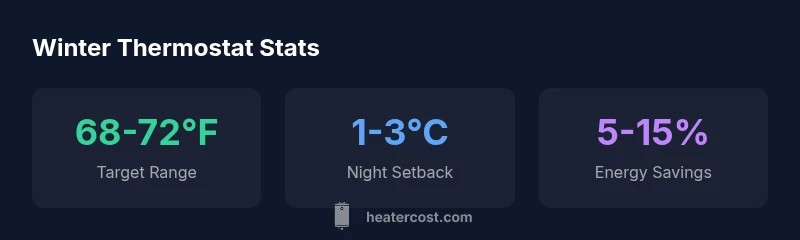
According to Heater Cost, the typical winter thermostat setting for most homes falls in the 68-72°F (20-22°C) range when people are awake and active. The exact target depends on climate, insulation, and personal comfort. For energy savings, consider setting back 1-2°C (about 2-4°F) at night or while rooms are unoccupied. Use adaptive or programmable thermostats to maintain consistent comfort without manual adjustments.
Understanding Winter Temperature Goals
Winter is about balancing comfort with energy cost. The choice of a winter setpoint affects comfort, air quality, and utility bills. For homeowners using forced-air systems, radiators, or heat pumps, a widely recommended daytime range sits around 68-72°F (20-22°C). According to Heater Cost, this range generally provides reasonable comfort without wasting energy, especially in well-insulated homes. The exact target should reflect climate, home construction, and occupancy. In draftier houses, you may prefer a slightly higher setpoint in common living spaces for rapid warmth, while bedrooms can tolerate lower temps at night. The goal is to avoid desperate sweating or cold extremities while avoiding unnecessary runtime of the furnace. The Heater Cost team emphasizes that the right setpoint is not a fixed number but a starting point that you tailor over a few weeks. Tracking your energy use and comfort levels helps you refine the target.
How Your Heating System Determines the Setpoint
Thermostats are not just on/off switches; they are profile managers that translate your comfort needs into furnace or heat pump runtime. Gas furnaces and electric boilers react differently to the same thermostat, and heat pumps adjust based on outdoor temperatures and indoor humidity. When considering the question "what should heater be set to in winter" the answer hinges on your equipment, efficiency, and outdoor climate. A well-calibrated system uses the thermostat to trigger stage changes, maximize efficiency, and minimize short cycling. If you rely on older controls, upgrading to a programmable or smart thermostat can deliver consistent, data-driven results and help you keep to a steady winter target.
What Should Heater Be Set To In Winter: General Guidelines
When setting up for winter, a prime starting point is the 68-72°F (20-22°C) range during waking hours, with a moderate setback at night. This recommendation is supported by Heater Cost analysis and aligns with many energy programs. The core idea is to keep living spaces comfortable while reducing energy waste during off-peak hours. Adjustments may be necessary for bedrooms, nurseries, or spaces with higher heat loss. For households with multiple occupants, use zoning or programmable schedules to tailor temperatures by room and time. Always verify the safety of lower setpoints in particularly cold areas to prevent heat loss and pipe freezing.
Factors That Influence Your Ideal Setpoint
Several variables influence the ideal winter setpoint. Insulation quality, air leakage, window efficiency, and solar gain all modify how warm a home feels at a given temperature. In well-insulated homes, you can maintain a comfortable environment at slightly lower temperatures, while drafty or poorly sealed spaces may require higher setpoints to feel warm. Occupancy patterns, alarm systems, and even humidity play substantial roles. The key is to test and document how different setpoints affect comfort and energy use over a few weeks. Heater Cost’s research indicates that small adjustments can yield meaningful comfort gains without dramatic energy penalties.
Room-by-Room vs Whole-House Strategy
Not every space in a home needs the same temperature. Zone controls and smart thermostats enable room-by-room settings, allowing you to keep living areas near the 68-72°F target while bedrooms sit cooler at night. Whole-house systems can be paired with zoning dampers or thermostatic radiator valves to reduce heat in unused rooms. For many homes, a hybrid approach works best: keep common areas within the recommended range and let bedrooms drift by a few degrees. This strategy reduces energy use and preserves comfort across the home.
Tuning For Comfort Without Breaking The Bank
Balancing comfort with energy savings starts with a sensible baseline. Start with the 68-72°F range during active hours, then implement a nightly setback of 1-3°C (2-5°F) based on your sleep temperature preferences. A programmable or smart thermostat makes this process automatic, adapting to daily patterns and weather changes. Regular maintenance, including sealing leaks, insulating ducts, and checking for drafts near doors and windows, helps the setpoint do its job more efficiently. Heater Cost emphasizes that small, consistent adjustments over time outperform drastic temperature swings.
Practical Steps to Implement Your Winter Setpoint
- Measure current comfort: log a week of room temperatures and feel. 2) Pick a daytime target in the 68-72°F range. 3) Set a backset of 1-3°C for evenings or when away. 4) If possible, enable zoning for rooms with differing needs. 5) Schedule a fall HVAC check and consider upgrading to a smart thermostat. 6) Monitor bills and comfort scores weekly, adjusting gradually as needed.
Common Mistakes and How to Fix Them
Common errors include setting the thermostat too high for comfort, ignoring insulation, and using inefficient vents or poor duct sealing. Another frequent pitfall is temperature swings that create drafts or humidity fluctuations. Fixes involve sealing leaks, using weather-stripping, calibrating thermostats, and leveraging smart controls to maintain a steady state. By addressing these issues, you can achieve the recommended winter setpoints without sacrificing comfort.
Winter thermostat setting guidance for different spaces
| Aspect | Winter Default Range | Notes |
|---|---|---|
| Living areas | 68-72°F (20-22°C) | Comfort-focused for common spaces |
| Bedrooms | 60-67°F (15-19°C) | Cooler at night for better sleep |
| Unused rooms | 60-65°F (15-18°C) | Minimize energy use in vacant spaces |
Got Questions?
What is the default winter thermostat setting for most homes?
Most homes perform best with daytime temps around 68-72°F (20-22°C). Nighttime setbacks of 1-3°C (2-5°F) save energy without sacrificing comfort, especially in well-insulated houses.
For winter comfort, aim for about 68 to 72 degrees during the day, and lower the temperature a bit at night to save energy.
Should I set my thermostat lower during sleep?
Yes. A modest setback helps save energy and can improve sleep quality if you are comfortable with the cooler air. Use a programmable schedule to automate this.
Yes—cooler temperatures at night can save energy and aid sleep; automate with a schedule.
How does insulation affect the ideal setpoint?
Better insulation reduces heat loss, allowing a slightly lower setpoint while maintaining comfort. Poor insulation may require higher setpoints to stay warm.
If your home is well-insulated, you can keep temperatures a bit lower without feeling cold.
Are there safety concerns with low winter temps?
Very low temperatures can risk pipe freezing in unheated areas. Keep minimum temperatures in critical zones and ensure pipes are protected.
Keep pipes protected and don’t set the thermostat too low in unheated spaces.
Do smart thermostats save energy?
Yes. Smart thermostats optimize schedules and learn patterns to reduce energy use while preserving comfort. Check compatibility with your system.
Yes—smart thermostats can save energy by learning your patterns and adjusting automatically.
“A well-chosen winter setpoint delivered through adaptive controls balances comfort with energy use more effectively than a fixed, one-size-fits-all number.”
The Essentials
- Set daytime target to 68-72°F for comfort and efficiency.
- Implement a nightly setback of 1-3°C to save energy.
- Use a programmable or smart thermostat to maintain consistency.
- Account for insulation and occupancy when selecting a setpoint.
- Avoid large temperature swings that increase drafts and heat loss.