What Should Heater Be Set At? A Practical Guide for 2026
Learn how to set your heater for comfort and energy savings with practical ranges, seasonal adjustments, and smart-thermostat tips. Based on Heater Cost Analysis, 2026, this guide helps homeowners, renters, and managers optimize heating.


Set your thermostat to about 68°F when you’re home and awake in winter, and lower it 1–2 degrees for each hour you’ll be away or asleep. For energy savings, aim for 60–66°F during extended absences. Consider a programmable or smart thermostat to automatically adjust. Always tailor the setting to your comfort needs and health considerations; seniors or those with respiratory sensitivities may require a higher baseline. (Heater Cost Analysis, 2026)
Understanding the Core Question
What should heater be set at? This question is about balancing daily comfort with ongoing energy costs. According to Heater Cost, homeowners frequently ask for a reliable baseline that works across rooms and schedules. The central idea is simple: start with a comfortable standard, then fine-tune based on season, occupancy, and the performance of your heating system. Comfort and efficiency are not mutually exclusive—incremental adjustments often yield meaningful results without sacrificing warmth. As you read, keep in mind that every home is different, and your goals may shift as weather, health needs, and insulation change. The key is to establish a dependable default and adjust gradually, rather than making dramatic swings that waste energy and disrupt comfort.
How to frame the goal: comfort vs. cost
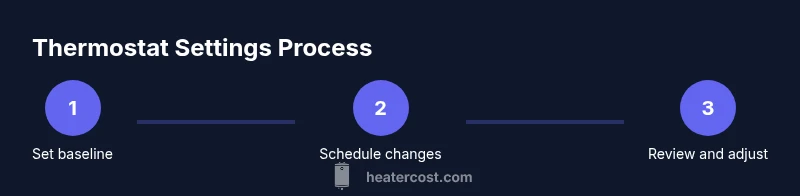
The goal is to achieve reliable warmth while avoiding needless energy use. A practical approach is to treat the thermostat as a tool for balancing these factors. Even small changes—like a 1°F difference during key hours—can accumulate into noticeable savings over a season. Heater Cost's guidance emphasizes a proactive plan: set a baseline, create a predictable schedule, and monitor results over a couple of weeks. This makes it easier to detect when a setting feels too hot or too cold for your household.
Quick-start framework for most homes
- Start with a baseline around 68°F (20°C) when you’re home and awake in winter.
- Lower the setting by 1–2°F for each hour you’ll be away or asleep, depending on whether you’re protecting health and comfort for family members.
- Use a programmable thermostat to automate these changes so you don’t have to remember daily schedules.
- If you have a multi-story home or zones, consider upgrading to zoning or a smart thermostat that can manage different areas independently. These tools help translate a single baseline into a comfortable reality across rooms.
Why the specific ranges matter
Comfort is subjective, but energy use is measurable. A typical indoor temperature range for living spaces in winter is around 65–72°F; staying closer to the lower end during absence or sleep reduces heating load. Humidity, drafts, and insulation quality also influence perceived warmth. The goal is to maintain warmth with minimal cycling and temperature swings, which can waste energy and shorten system life. The practical takeaway is: start at a sensible baseline, then adjust in small steps while observing comfort and bill impact over a week or two.
Tools & Materials
- Programmable or smart thermostat(Choose one with scheduling features and compatibility with your heating system)
- Smartphone or computer(Needed for app-based controls or remote access)
- Screwdriver (Phillips #2)(Optional for mounting a wall plate or upgrading hardware)
- User manual(Keep for model-specific programming steps)
- Backup batteries(Optional if the thermostat uses batteries for memory or display)
Steps
Estimated time: 180-210 minutes
- 1
Check your baseline comfort
Assess how warm you feel at your current thermostat setting and identify any rooms that feel consistently too hot or too cold. This helps establish a starting point for adjustments and sets the stage for an effective schedule.
Tip: Track how long you stay in each room to determine if zoning could help; you may find some spaces require less heating than others. - 2
Choose a target winter baseline
Select a winter baseline around 68°F (20°C) for occupied periods. This is a practical compromise between comfort and energy savings for most households.
Tip: If certain residents require warmer settings due to health or comfort, adjust those zones individually rather than raising the entire house. - 3
Plan a daily schedule
Create a schedule that mirrors your routine: higher temps while awake, lower temps during work or school hours, and a comfortable pre-bed warm-up before bedtime.
Tip: Program weekdays differently from weekends if occupancy changes; this avoids wasting energy when the house is empty. - 4
Enable automatic setbacks
Use the thermostat's setback feature or a smart routine to drop temperatures during absences and overnight periods. Sensors and learning algorithms can optimize these adjustments over time.
Tip: Test a 1–2°F setback first, then monitor comfort and energy use over 1–2 weeks before deeper setbacks. - 5
Calibrate and verify
If your thermostat feels inconsistent with room temperatures, verify it reads accurately; many devices can be placed away from direct sunlight or drafty spots that skew readings.
Tip: Reposition the thermostat away from heat sources (racks, electronics) or drafts to improve accuracy. - 6
Fine-tune for zones
If your home supports zones, set target temperatures per area to avoid overheating less-used spaces. A smart thermostat can coordinate multiple zones for smoother operation.
Tip: Evaluate if a zoning system reduces overall energy use without compromising comfort in key living areas. - 7
Review maintenance and upgrades
Regularly replace filters and inspect the heating system. An efficient system maintains steady temperatures with less energy waste. Consider insulation improvements if drafts persist.
Tip: Combine thermostat strategy with weatherization (sealed doors/windows, attic insulation) for larger savings. - 8
Monitor results and adjust
Track indoor comfort and energy bills over several weeks. If you notice cold spots or rapid temperature swings, revisit zone setup and schedule changes.
Tip: Keep a simple log of days when you felt too cold or too warm to guide future tweaks.
Got Questions?
What is a good winter thermostat setting for comfort and energy savings?
A practical starting point is around 68°F (20°C) when occupied. Reduce by 1–2°F during absences or sleep and adjust based on comfort needs. A programmable thermostat helps automate these changes.
A good winter starting point is about 68 degrees Fahrenheit when you are home, with a 1–2 degree reduction when you’re away or sleeping.
Should I use a setback at night or when I’m out for the day?
Yes. Setbacks save energy by lowering heat during times of lower activity. Start with a small 1–2°F change and increase gradually if comfort remains acceptable.
Yes. Setting back the temperature during sleep or when away can save energy; start small and adjust as needed.
Can a smart thermostat make a big difference in energy use?
Smart and programmable thermostats tailor heating to occupancy patterns, reducing waste. They are especially effective when combined with weatherization and zone heating.
Smart thermostats help tailor heating to your schedule, which can reduce energy use when you’re not home.
What if a family member needs more warmth?
Increase the baseline for the affected zone rather than the whole home, and use local heaters or portable options only where appropriate to avoid cooling costs elsewhere.
If someone needs more warmth, adjust that zone rather than the entire house and monitor overall energy use.
How often should I recalibrate my thermostat?
Check calibration if you notice consistent temperature differences between rooms. Recalibrate or relocate the thermostat if readings seem inaccurate.
Check calibration if rooms feel off by more than a degree or two from the thermostat readings.
Are there safety concerns I should know about heating settings?
Never block vents and ensure CO detectors are installed if you have gas heat. Regular maintenance reduces the risk of malfunctions and temperature swings.
Make sure vents aren’t blocked and CO detectors are in place if you have gas heating.
Watch Video
The Essentials
- Set a winter baseline around 68°F when home and awake.
- Lower the setting by 1–2°F during absences or sleep.
- Use a programmable thermostat to automate adjustments.
- Inspect insulation and consider zoning for larger savings.
- The Heater Cost team recommends consistent scheduling and gradual tuning for best results.