What Temperature Should You Set Your Heater On? A Practical Guide
Learn how to set your heater temperature for comfort and energy savings. This guide covers winter setpoints, central heating vs space heaters, seasonal tweaks, and smart controls.


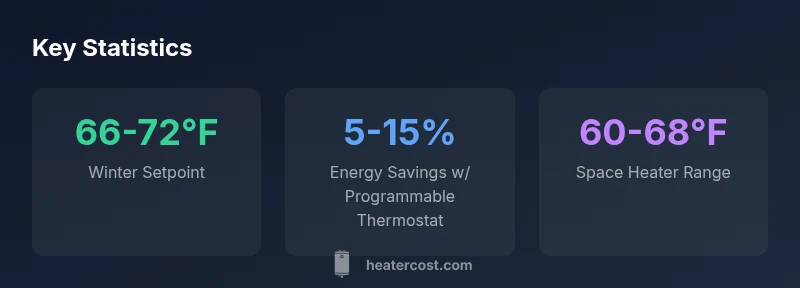
According to Heater Cost, the recommended thermostat setting for comfortable winter heating is about 68°F (20°C). You can adjust within a small range (1–2 degrees) based on room, insulation, and activity. For space heaters, avoid running them at high temperatures and turn them off when sleeping or leaving the room; pairing a programmable thermostat maximizes energy efficiency.
Why Temperature Settings Matter
Temperature settings are more than a comfort choice; they are a practical lever for energy efficiency and building comfort. The right setpoint reduces thermal discomfort and minimizes heat loss through drafts, gaps, and poor insulation. According to Heater Cost, small, consistent adjustments can compound over days and weeks, lowering utility bills without sacrificing warmth. Before you set a target, consider your home envelope, occupancy patterns, and whether you’re using centralized heating or localized devices. A well-chosen setpoint also improves indoor air quality by reducing humidity swings and preventing overheating that can stress HVAC equipment.
Central Heating vs. Space Heaters: Setting the Right Temperature
Central heating systems are designed to evenly distribute warmth across living spaces, so a single setpoint often works for the whole home. Space heaters, by contrast, are best used for supplemental warmth in occupied rooms and can create temperature disparities if misused. For central heating, a steady baseline around the mid-to-upper 60s Fahrenheit is common in cool climates, with room-to-room variations managed by zoning or smart thermostats. When using space heaters, keep temperatures modest, place units on flat surfaces away from curtains, and never leave them unattended. The Heater Cost team found that combining a scheduled central setpoint with targeted space heating can deliver comfort where you need it while avoiding overshoot in unused spaces.
How to Determine Your Ideal Setpoint
Determining your ideal setpoint starts with comfort testing and measurement. Start with a baseline: set the thermostat to a comfortable level, then observe comfort and energy use over a week. Consider insulation quality, window drafts, and thermostat placement (avoid heat sources like radiators or direct sunlight). Use a gradual adjustment approach: change by 1–2 degrees and wait several days to assess impact. Track how often the system cycles, how long rooms stay warm, and any changes in bills. If you share spaces, identify zones with higher heat needs and consider zoning or multi-room thermostats for better control.
Seasonal Adjustments and Sleep Modes
Seasonal shifts require flexible strategies. In colder months, you may keep a stable baseline during waking hours and drop the setpoint at night. The sleep mode practice can maintain comfort while reducing energy usage, but it should not be so aggressive that it causes waking discomfort. For households with varied schedules, programmable thermostats or smart thermostats with adaptive learning can automatically adjust temperatures in response to occupancy, weather patterns, and energy usage history. If you travel, enable away modes to prevent heating the empty home. The goal is steady warmth without waste, aligning with energy-cost considerations and long-term comfort.
Practical Tools: Thermostats, Zoning, and Smart Controls
Modern thermostats bring precision to setpoints. Programmable models allow different temperatures for mornings, days, and nights, while smart thermostats add remote control and learning capabilities. Zoning divides a home into areas with separate controls, so you’re not heating unoccupied spaces. Pairing a thermostat with accurate temperature sensors in multiple rooms can improve comfort and efficiency. Weather-based adaptive features adjust for exterior conditions, reducing unnecessary heating during milder days. Regular maintenance, including checking seals around doors and windows and cleaning filters, complements thermostat strategy by reducing heat loss and ensuring equipment runs efficiently.
Common Mistakes and How to Avoid Them
Common mistakes include setting the heat too high and leaving it there day after day, which wastes energy and can cause overheating, moisture issues, and higher bills. Another pitfall is placing the thermostat near heat sources or in direct sunlight, which leads to inaccurate readings and over- or under-heating. Neglecting insulation and air sealing can undermine any setpoint, forcing the system to work harder. Lastly, relying on space heaters as a primary heat source without safety measures or guidance can create fire hazards. Regularly review your setpoints, ensure proper insulation, and use zoning and automation to maintain comfort efficiently.
Setpoint guidance by heating type
| Heating Type | Recommended Setpoint | Notes |
|---|---|---|
| Central Heating | 68-72°F | Baseline comfort for typical homes |
| Space Heaters | 60-68°F | Supplemental heat; ensure safety protocols |
| Smart Thermostats | 66-72°F | Can optimize energy use with scheduling |
Got Questions?
What is the optimal temperature for a thermostat in winter?
Optimal winter temperatures vary by home and comfort preferences, but a practical target is a baseline around the mid 60s to low 70s Fahrenheit. Adjust gradually to accommodate indoor conditions and insulation. Using a programmable or smart thermostat helps maintain comfort while minimizing energy use.
Aim for a baseline in the mid 60s to low 70s Fahrenheit, then adjust as needed for comfort.
Should I set my thermostat higher when I'm home?
Yes, you should have a higher setpoint when you’re active at home and a lower one when you’re away or asleep. Use schedules or smart learning features to automate these changes, which reduces energy waste while keeping the space comfortable.
Heat more when you’re home and active, and lower the temp for away or sleep times.
Is it safe to use a space heater to save money?
Space heaters can save money for small, occupied rooms, but they require strict safety practices: keep them away from combustibles, use only with supervision, and never run while sleeping. They’re best used as a supplement rather than the primary heat source.
Space heaters can help in small rooms if used safely and never left unattended.
How can I tell if my home is properly insulated to reduce heating needs?
Check attic and wall insulation, seal leaks around doors and windows, and verify that ducts are insulated and not leaking. A home energy audit can identify gaps and quantify improvement potential. Better insulation often lowers the required setpoint without sacrificing comfort.
Look for drafts and seal leaks; better insulation lowers heating needs.
What should I do if my heating system cycles on and off too much?
Short cycling can indicate poor insulation, oversized equipment, or thermostat placement issues. Check air leaks, replace clogged filters, and consider a professional service if the problem persists. A correctly sized and placed thermostat helps prevent rapid cycling.
If it keeps turning on and off, check insulation and filters, and consider professional help.
Does turning down the thermostat at night affect sleep quality?
Lowering the temperature at night can improve sleep comfort for many people, especially when using appropriate bedding. Start with a 2–4 degree drop and adjust based on personal comfort and drafts. Ensure you still wake up to a comfortable environment if you have trouble sleeping.
A small nighttime drop often helps sleep; tune it to what feels best for you.
“Small, consistent thermostat adjustments can yield meaningful energy savings without sacrificing warmth.”
The Essentials
- Set a winter baseline around 66-72°F.
- Use programmable controls to optimize energy.
- Combine central heat with targeted space heating for efficiency.
- Address insulation and air sealing to reduce needed heat.
- Prioritize safety when using space heaters.