Room with Heater: Costs, Options, and Efficiency
Discover how to heat a room with a heater efficiently, with cost ranges for electric, propane, and other options. Learn sizing, placement, and safety to minimize energy use and maximize comfort.


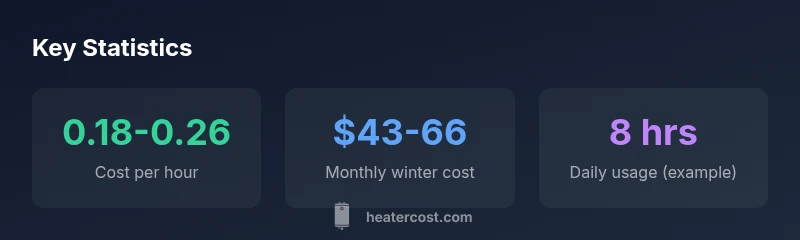
A typical small room heated with a 1500W electric space heater costs about 0.18 to 0.26 dollars per hour to run, depending on local electricity rates. If you operate it eight hours a day for a winter month, expect roughly 43 to 66 dollars in electricity. Costs for fuel-based heaters depend on fuel price and efficiency.
Understanding Room Heating Needs
A room with heater isn’t only about turning on a device; it’s about understanding how heat moves and where losses occur. Start by evaluating the usable space, ceiling height, insulation quality, and window exposure. A well-insulated 150-200 square foot room will require less continuous heat than a drafty space of the same size. Occupancy matters too—doors opening frequently or a crowded room will lose heat faster. Beyond size, identify heat loss sources such as exterior walls and poorly sealed windows. Simple upgrades—weatherstripping, draft-proofing, and heavier curtains—can dramatically reduce heat loss, allowing any chosen heater to operate more efficiently. According to Heater Cost, the big payoff comes from pairing proper insulation with a properly sized heater, rather than chasing dramatic wattage increases.
In practical terms, measure the room, note heat loss sources, and set realistic comfort goals. Record keeping helps you compare before-and-after results when you test insulation improvements. Remember that a room heater’s role is to augment existing heating or fill a cold corner—never rely on a single device to heat an entire home.
Electric Heaters: When to Choose Them
Electric heaters continue to be popular for quick, portable warmth in small rooms. They come in several styles, including ceramic, oil-filled radiators, and infrared panels. For a room around 100-250 square feet, a heater in the 1000-1500 watt range is commonly sufficient for day-to-day comfort, especially when paired with solid insulation. Ceramic models heat rapidly and distribute warmth evenly, oil-filled radiators tend to retain heat once switched off, and infrared units excel at direct warmth for occupants and nearby objects. When evaluating a room with heater, prioritize safety: look for tip-over switches, overheat protection, thermal cutoffs, and a dedicated outlet. For bedrooms or nurseries, choose models with lower surface temperatures and built-in thermostats to balance safety and energy use. Always compare operating costs and reliability, and consider longer-term efficiency rather than upfront price alone.
Fuel-Based Heaters: Pros, Cons, and Safety
Fuel-based options such as propane or natural gas heaters can deliver strong heat and may be cost-effective in the right setting. They require ventilation and proper exhaust management, and they produce combustion byproducts that must be managed with CO detectors and compliant venting. Fuel heaters can be efficient in larger or poorly insulated spaces where plugging in electric heat would be impractical. However, they introduce safety considerations that electric units do not: carbon monoxide risk, fuel storage, and the need for regular vent maintenance. In a well-insulated room with a heater, you’ll still need to observe safe clearances and ensure fuel is stored safely away from ignition sources. If you choose this path, pair the unit with a CO detector and ensure proper room ventilation.
Sizing and Placement for Optimal Comfort
Proper sizing is the single most important step in achieving comfort without wasted energy. A common starting rule is roughly 10-15 watts per square foot for a well-insulated room, and 15-20 watts per square foot for a space with drafts or poor insulation. Use a room’s area (square feet) multiplied by the chosen wattage to estimate needed output, then adjust for ceiling height and window exposure. Placement matters too: position portable heaters to avoid drafts, keep them away from flammable materials, and use a stable surface. For a typical 150-200 square foot room, a mid-range heater (1000-1500 watts) placed away from walls and curtains can deliver steady warmth without overheating. Programmable thermostats or smart controllers help maintain consistent temperatures, reducing energy waste over time. In a tight space, heat distribution matters as much as total output; consider fans or convection-assisted designs to spread warmth evenly.
Energy Costs and Efficiency: Real-World Numbers
Electric space heaters are convenient, but their operating costs depend on local electricity prices and usage patterns. In regions with higher energy prices, the hourly running cost climbs accordingly, while efficient models with thermostats and auto-shutoff features can reduce waste. Based on Heater Cost research, choosing energy-efficient models and using them only when needed can substantially lower monthly bills. For a small, well-insulated room heated a few hours daily, consider pairing a heater with a programmable thermostat to avoid overheating. This approach is especially relevant for rooms that aren’t used continuously throughout the day, where a smart strategy can reduce waste and improve comfort without sacrificing convenience. The main takeaway is to resist the urge to run a heater at full blast for long periods—target moderate, controlled warmth instead. The impact on energy costs compounds over the heating season.
Insulation and Draft-Proofing Make a Big Difference
Insulation and sealing drafts are often the cheapest, most effective ways to improve room comfort and reduce heating costs. Ensure walls, doors, and windows are well sealed, install weatherstripping on exterior doors, and consider thermal curtains for windows that lose heat rapidly. In many cases, upgrading insulation to a higher R-value and sealing air leaks yields a noticeable change in how much heat a room retains. A well-insulated room needs less heat to stay comfortable, which translates into lower operating costs for any heater you choose. For room with heater setups, combining heat with proper door seals and window treatments can dramatically extend warmth, reduce cold drafts, and lower energy usage over the winter season. Even modest improvements can yield meaningful year-over-year savings.
Portable vs Fixed Heaters: What Fits Your Space
Deciding between portable units and fixed installations depends on room size, usage patterns, and permanence. Portable heaters offer flexibility for temporary needs, quick deployment, and easy relocation between rooms. They’re ideal for bedrooms or home offices where heat is needed intermittently. Fixed installations, such as wall-mounted infrared panels or mini-splits, can deliver consistent heat with greater efficiency for rooms that require steady warmth. When choosing a solution for a particular room with heater, assess heat stability, noise levels, maintenance needs, and long-term operating costs. For frequently used spaces, a more permanent solution may prove cheaper over time; for seasonal or occasional use, portable options may be best.
Maintenance, Safety, and Longevity
Regular maintenance extends the life of any heating solution. Clean heater grilles, check cords and plugs for wear, and replace filters as recommended by the manufacturer. For fuel-based heaters, schedule vent inspections, test CO detectors, and ensure proper ventilation. Always follow manufacturer safety guidelines, particularly about clearance from walls and furniture. A well-maintained unit operates more efficiently and lasts longer, reducing total cost of ownership for the room you heat. In the end, the best approach blends proper sizing, solid insulation, and routine care to create a safe, comfortable space with sensible energy use.
Authority Sources
- https://www.energy.gov/energysaver/space-heaters
- https://www.eia.gov/energyexplained/
- https://www.nrel.gov
Comparison of common room heating options
| Option | Upfront Cost (est.) | Operating Cost (est.) | Notes |
|---|---|---|---|
| Electric space heater | 50-200 | 60-120 | Portable, quick heat |
| Propane space heater | 150-600 | 120-350 | Ventilation required |
| Infrared panel heater | 250-700 | 50-150 | Efficient for targeted warmth |
| Mini-split / small heat pump | 1000-2500 | 100-300 | High efficiency, larger install |
Got Questions?
What size heater do I need for a room?
Size by calculating the room area in square feet and multiplying by a wattage guideline (10-15 W per sq ft for well-insulated rooms, 15-20 W for drafty spaces). Adjust for ceiling height and window exposure. A correctly-sized heater delivers consistent comfort without excess energy use.
Size by area and insulation; aim for the right wattage for your room.
Can a room heater be used safely in a bedroom?
Yes, but choose models with automatic shutoff, tip-over protection, and low surface temperature for bedroom use. Keep combustibles away and ensure proper ventilation if using fuel-based heaters.
Yes, with safety features and proper placement.
How can I lower heating costs without sacrificing comfort?
Improve insulation, seal drafts, and use programmable thermostats. Choose energy-efficient models with thermostats and auto-shutoff, and heat only spaces in use. Consider zone heating to avoid warming unused rooms.
Seal drafts and use a programmable thermostat.
Is a thermostat necessary for a room heater?
A thermostat helps maintain stable temperatures and reduces overshoot, saving energy. A programmable or smart thermostat can optimize heat for different times of day and room usage.
Yes, it helps you keep warm without waste.
What safety steps should I follow with fuel-powered heaters?
Install CO detectors, ensure proper ventilation, and never leave the heater unattended. Follow manufacturer guidelines for clearance from flammables and regular maintenance.
Always follow safety guidelines and use detectors.
“Sizing accurately and pairing heat output with solid insulation is the most effective way to heat a room efficiently. Safety features and thermostats complete the picture.”
The Essentials
- Size the heater to room and insulation.
- Insulation upgrades dramatically reduce energy use.
- Electric heaters are portable but plan safety features.
- Compare operating costs, not just upfront price.
- Use a thermostat to maintain comfortable, efficient heat.