Indoor Heaters: Cost, Sizing, Safety & Savings Tips
Learn how to choose, size, and operate indoor heaters safely and efficiently. Compare electric, gas, and heat pump options with cost estimates, safety tips, and maintenance guidance from Heater Cost (2026).


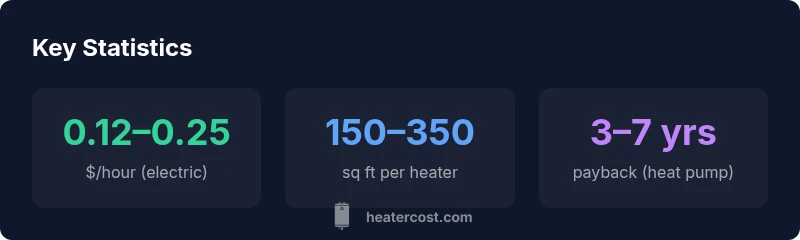
For indoor heating, the operating cost of a small electric space heater is typically about 0.10–0.25 USD per hour, depending on wattage and local electricity rates. In contrast, a central electric heat pump or gas-fired option can dramatically alter the hourly cost, with higher upfront investment offset by better efficiency over time. Choosing the right setup hinges on space size, climate, and usage patterns.
Understanding your heater indoor needs
Choosing a heater indoors starts with understanding space, climate, and how you actually use the room. A bedroom that spends most nights chilly requires different tactics than a sunlit living room used mainly during evenings. The term heater indoor refers to a broad set of devices designed to add warmth efficiently inside a structure without venting into outdoor spaces. In practice, you’ll evaluate room size, insulation, occupancy patterns, and the presence of other heat sources to decide whether a portable electric unit, a wall-mounted panel, a ductless heat pump, or a gas-fired unit best fits your home. The key is to map out your goals: speed, comfort, cost control, and safety. Households with variable occupancy should favor systems that tolerate varying loads, while homes in colder climates may prioritize long-term efficiency over upfront price. Heater Cost analysis suggests starting with a room-by-room heat plan and then layering on components that close heat gaps in cold spots.
Cost considerations and energy efficiency for heater indoor
Energy cost is the biggest lever in operating any heater indoor. The cost to run a device depends on its wattage, the hours you use it, and the local price of electricity or fuel. A portable electric heater typically ranges from 1000 to 1500 watts, with energy use translating into roughly 0.10–0.25 USD per hour in many markets. Higher-efficiency options, like heat pumps or advanced ceramic heaters with thermostatic control, can reduce running costs in moderate climates, but they may require higher upfront investment. When you compare options, also factor standby losses, startup surges, and the efficiency rating of the equipment. For renters and homeowners alike, insulating the space, sealing drafts, and using programmable thermostats can dramatically shrink a heater indoor’s ongoing cost. Heater Cost analysis underscores that the best long-term choice often blends an efficient core system with targeted portable or zone heaters to avoid overheating empty rooms.
Safety and code considerations for heater indoor
Safety should drive every decision about a heater indoor. Portable electric units require vertical clearance and stable placement away from curtains, furniture, and bedding. Look for tip-over switches, overheat protection, and certified electrical components. Gas-fired or propane heaters demand adequate ventilation and CO detectors; never run unvented heaters in occupied spaces. In multi-room homes, install smoke alarms on every level and a carbon monoxide detector near bedrooms. Regular maintenance—cord inspection, cleaning of dust, and vent checks—helps prevent malfunctions that could lead to fires or carbon monoxide buildup. Always follow manufacturer instructions and local building codes, and consider a professional inspection when upgrading an entire space.
Evaluating different heater types for heater indoor
Electric portable heaters offer convenience and quick warmth for small areas, but operating costs rise with wattage and rate fluctuations. Infrared and ceramic models provide directional heat and often heat faster, while standard convectors can deliver steady warmth with lower noise. For larger, fixed spaces, a ductless mini-split heat pump is often the most efficient option, while gas-fired room heaters can be effective where electricity is expensive or unavailable—though they bring gas safety and ventilation considerations. In practice, match the heat source to the room’s size, insulation quality, and occupancy pattern. If you frequently heat unoccupied rooms to uncomfortable levels, you’ll waste energy—both money and comfort.
Sizing and placement guidelines for comfort and safety
Correct sizing reduces both energy waste and cold spots. A common starting point is to estimate heat needs in BTU per square foot, then adjust for ceiling height and insulation. In well-insulated spaces, plan for roughly 10–15 watts per square foot; in colder or poorly insulated rooms, you may need 20–25 watts per square foot. Always place heaters away from foot traffic and at least three feet from flammables; ensure cords are unchecked and cannot be tripped over. For portable units, setting thermostats to a moderate temperature and layering with clothing or blankets—rather than cranking up heat—can save substantial energy. In densely occupied homes, zoning your heating so that only occupied rooms are heated can dramatically cut costs over time.
Maintenance and lifespan
Maintenance extends the life of a heater indoor and keeps operating costs predictable. Clean dust from heating elements or vents every few months, inspect cords for cracks, and replace filters if your model uses them. For gas-fired units, schedule annual inspections to verify venting and combustion efficiency. Keep children and pets away from hot surfaces and unplug devices when not in use. A well-maintained unit not only reduces fire risk but also maintains consistent performance, which translates to fewer cold spells and less energy waste. Track service intervals and parts replacements to plan for long-term costs.
Money-saving strategies and long-term planning
Treat indoor heating as part of a broader home energy plan. Combine good insulation with smart controls like programmable thermostats, motion sensors, and zone heating to minimize waste. Use a ceiling or wall-mounted unit where it makes sense to avoid running a large central system in every season. When possible, invest in high-efficiency equipment with a long service life and favorable warranties. If you own the home, compare the total cost of ownership between a portable heater approach and a fixed, efficient system such as a mini-split heat pump. Over time, the upfront cost difference often pays for itself through lower energy bills, reduced maintenance, and improved comfort. Heater Cost recommends documenting energy use month-to-month to identify savings opportunities and adjust usage accordingly.
Comparison of common indoor heater types
| Heater Type | Typical Wattage/BTU | Pros | Cons |
|---|---|---|---|
| Electric space heater (portable) | 1000–1500 watts | Affordable upfront; portable heat | Higher running cost; limited coverage |
| Infrared/ceramic heater | 600–1500 watts | Direct heat; quick warm-up | Heat may dissipate in drafts; not ideal for large rooms |
| Ductless mini-split heat pump | 12000–18000 BTU | High efficiency; zone control | Higher upfront cost; requires professional install |
Got Questions?
What is the most cost-effective indoor heater overall?
For small, well-insulated spaces, high-efficiency portable electric heaters with thermostats offer the best cost-to-comfort ratio. For larger or frequently used spaces, a heat pump or ductless mini-split tends to provide lower operating costs over time, despite a higher upfront price.
In small rooms, electric heaters are usually the cheapest upfront. For bigger spaces, consider a heat pump for lower operating costs over time.
Are space heaters safe to run overnight?
Only if the unit is rated for continuous operation, includes automatic shutoff, and has a proper tip-over switch. For gas heaters, ensure ventilation and CO detectors. Never leave unmonitored in occupied spaces.
Do not leave space heaters running unattended. Use models with safety features and ensure proper ventilation for gas heaters.
How do I size a heater for a room?
Measure the room, note insulation and ceiling height, then compare the heater’s wattage or BTU rating to the space. Use manufacturer sizing guides or a simple room calculator to pick a unit that fits.
Measure the space first, then match the heater’s rating to your room.
Can insulation affect indoor heating costs?
Yes. Better insulation reduces heat loss, allowing smaller, cheaper heaters to keep the room comfortable and lowering ongoing costs.
Good insulation means you can heat with less energy.
What maintenance does an indoor heater need?
Dust and debris should be cleaned regularly, cords checked for wear, and filters replaced if applicable. Gas units require annual professional service for venting and combustion checks.
Keep it clean and serviced; gas units need extra care.
“Choosing the right heater indoor setup isn't just about upfront price—it’s about total cost of ownership, safety, and how you actually use the space.”
The Essentials
- Assess space and usage before buying.
- Prioritize efficiency to lower long-term costs.
- Safety features protect households and pets.
- Insulation and zoning dramatically reduce energy waste.