Outdoor Electric Space Heaters: A Practical 2026 Guide
Comprehensive guide on outdoor electric space heaters for patios and decks, covering types, safety, sizing, placement, energy costs, and maintenance.


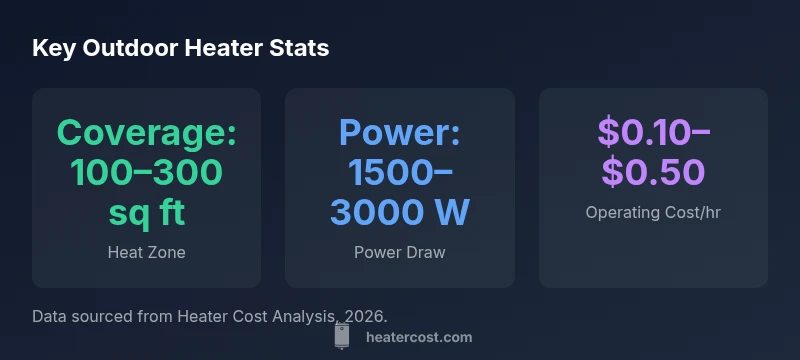
Outdoor electric space heaters deliver targeted warmth for patios, decks, and outdoor seating. According to Heater Cost, sizing for 100–300 square feet per unit is common, with power ratings typically between 1500 and 3000 watts. Operating costs depend on local electricity rates but can be modest when used with wind breaks. This quick guide helps you pick, place, and use these devices safely.
What exactly is an outdoor electric space heater?
An outdoor electric space heater is a weather-resistant device designed to emit heat to people in outdoor spaces without combustion. These heaters rely on electric resistance elements to generate warmth, using radiant or convection heat transfer to warm a defined zone. You’ll find portable units that move between spaces and fixed models designed for a deck or patio ceiling. For most homes, a single unit can heat a defined seating area of roughly 100–300 square feet, depending on wind, insulation, and the heater’s wattage. When used correctly, these devices provide instant warmth, reduce the chill factor, and extend outdoor use into shoulder seasons. The term 'outdoor electric space heater' covers infrared panels, quartz heaters, and hybrid designs that blend radiant and convection heating.
According to Heater Cost, correct sizing for your space is the foundation of comfort and efficiency.
How outdoor electric space heaters work: radiant vs convection
There are two primary ways these heaters deliver warmth: radiant heat that travels directly to people and objects, and convective heat that warms the surrounding air. Radiant models—often infrared or quartz—are most effective for outdoor seating because they heat people directly without depending on air temperature. Convective designs heat the air, which is then carried by breezes. In practical terms, radiant outdoor electric space heaters usually feel warmer at greater distances and are less affected by slight air movement, while convection-focused units can warm a broader area but may lose heat more quickly on windy days. Energy efficiency depends on how well the heater minimizes heat loss to the environment and avoids unnecessary standby power.
How to choose the right model for your space
Start by measuring the area you want to heat and choosing a unit sized for that zone. A common rule of thumb is 100–300 square feet per unit, but wind exposure and enclosure matter. Look for wattage in the 1500–3000 W range for residential patios. Check safety features such as overheat protection and a tip-over switch, and ensure the housing is weatherproof (IP ratings). Favor models with controllers for heat settings and timers to tailor usage. Finally, compare upfront costs with expected operating costs to find a balance between comfort and budget.
If you’re heating a covered deck or sheltered patio, a single mid-range unit may suffice; for exposed spaces, consider two units or a ceiling-mounted option to avoid cold spots.
Safety considerations for outdoor use
Outdoor heat is convenient, but it carries risk if you don’t follow basic rules. Always use a certified outdoor-rated model, plug into a GFCI-protected outlet, and avoid running cords across walkways or wet surfaces. Do not place heaters under overhangs or near flammable materials. Maintain a safe clearance around the heater—check manufacturer guidelines, with more room required for taller units. Be mindful of weather: rain, snow, and standing water can compromise electrical components, and windy conditions can disperse heat away from where people are sitting. Finally, turn off and unplug when not in use or when you leave the area.
Placement, weather, and installation tips
Position outdoor electric space heaters where heat can reach the seating area without creating a hot zone at feet or ankles. Elevate heaters above foot traffic if possible, and avoid placing them directly under awnings that could trap heat. For windy spaces, a partial windbreak can help maintain warmth, but avoid blocking airflow entirely. Never rely on extension cords for permanent installation; use a dedicated outdoor-rated circuit. When you install multiple units, stagger their placement to reduce crowding and distribute heat evenly. Weatherproof enclosures and secure mounting reduce the risk of damage during storms.
Costs, energy efficiency, and maintenance considerations
Energy costs for outdoor heating depend on wattage, duration, and local electricity rates. A typical 1500–3000 W unit can be used selectively for short, warm bursts rather than continuous heating. If wind is present, heat will dissipate quickly, reducing efficiency. Look for models with thermostats, timers, and variable heat settings to minimize runtime. Maintenance is simple: keep vents clear, wipe dust from reflectors, and inspect the power cord and plug for wear. Store or cover units in harsh weather to prolong life. Regular checks also help catch electrical faults early, improving safety and longevity.
Real-world use cases: patios, decks, and small businesses
Residential patios commonly use a single wall-mounted or freestanding electric unit to create a cozy zone near seating. For decks and larger spaces, multiple units or a ceiling-mounted heater can ensure even warmth. In small businesses such as cafes or beer gardens, outdoor electric space heaters extend service into cooler evenings without the emissions of gas-powered heaters. In all cases, be mindful of local codes and electrical capacity, and plan heat distribution so that guests feel comfortable rather than overheated.
Common myths vs. facts about outdoor heat
Myth: Outdoor electric space heaters are unsafe for winter use. Fact: When rated for outdoor use and properly maintained, they are safe for seasonal outdoor heating. Myth: They heat large areas like central HVAC. Fact: These devices are designed for defined zones, not whole spaces. Myth: They can replace a well-insulated indoor system. Fact: Outdoor heaters are supplementary and perform best in sheltered outdoor zones with wind breaks. Myth: All models are equally weatherproof. Fact: Weatherproof ratings and proper installation vary by model; check IP ratings and manufacturer instructions.
Model types and typical heat zones for outdoor electric space heaters
| Model Type | Power (W) | Typical Coverage (sq ft) |
|---|---|---|
| Portable infrared | 1500–2400 | 100–200 |
| Portable radiant | 2000–3000 | 150–300 |
| Ceiling-mounted/pendant | 3000 | 200–400 |
Got Questions?
Are outdoor electric space heaters safe to use on patios?
Yes, they are safe when you use outdoor-rated units and follow basic safety guidelines such as keeping them away from water and flammable materials, and using a GFCI outlet.
Yes, they’re safe for patios if you use weather-rated models and follow safety guidelines.
Can these heaters be used in rain or snowy conditions?
Most are weather-resistant but not fully waterproof; avoid direct exposure to rain or standing water and unplug during storms. Check the IP rating prior to use.
They’re weather-resistant but not waterproof; avoid direct rain and water.
How do I size an outdoor heater for my space?
Measure the seating area, consider wind exposure, and select wattage in the 1500–3000 W range. For larger or windy spaces, multiple units may be better than a single large unit.
Measure your space and consider wind; two units can be better for larger areas.
What safety features should I look for?
Look for overheat protection, a tip-over switch, weatherproof housing, and a properly rated outlet; avoid using damaged cords and ensure secure mounting where applicable.
Look for tip-over switch and overheat protection, plus weatherproof housing.
Do outdoor electric space heaters work for large patios?
They help in defined zones; for large spaces, use multiple units or a ceiling-mounted heater to distribute heat more evenly.
Yes, for defined zones; for very large spaces you may need several units.
How can I maintain an outdoor electric space heater?
Regularly clean vents, inspect cords and plugs for wear, and store the unit properly during harsh weather. Follow the manufacturer’s storage and maintenance guidelines.
Clean vents and cords, and store safely when not in use.
“Outdoor electric space heaters are most effective when used to create defined warm zones with properly sized units and safe placements.”
The Essentials
- Size the unit to your space and wind exposure
- Choose weather-rated models with safety features
- Position heaters to create warm zones, not just heat air
- Use timers and settings to minimize operating costs
- Perform regular maintenance to extend life