Electric Outdoor Heaters: Costs, Installation, and Efficiency
Explore how electric outdoor heaters work, compare upfront and operating costs, plan safe installation, and maximize efficiency for patio warmth year-round.


An electric outdoor heater delivers efficient, zone-targeted warmth for patios and decks, with fast heat-up and minimal footprint. They typically consume 1.5–6 kilowatts, depending on model and setting, and can be used year-round in temperate climates when paired with proper shelter. Operating costs vary with wattage and electricity rates, but they’re generally lower than gas patio heaters in moderate use.
Why electric outdoor heaters matter for patio comfort
Outdoor living spaces add real value to homes, but chilling evenings can cut usability. An electric outdoor heater delivers targeted warmth with minimal footprint, allowing families to extend evenings on porches, decks, and patios. According to Heater Cost, these devices provide rapid heat-up, quiet operation, and easily adjustable warmth that can scale from intimate seating to larger gatherings. The Heater Cost team found that the growing availability of compact, weather-resistant models has made stylish, safe outdoor heat more accessible than ever. When choosing a unit, focus on wattage, heat distribution, and weather resistance, and plan placement to maximize efficiency while keeping living spaces comfortable throughout the shoulder seasons. Consider the weather profile of your climate and the typical wind exposure on your patio, as wind can dramatically influence perceived warmth. A well-placed heater near seating and away from open air drafts will feel noticeably warmer with lower energy use. Finally, compare models by their IP rating (for rain exposure) and warranty terms to reduce long-term risk.
How electric outdoor heaters work: core principles
Most electric outdoor heaters rely on infrared radiant elements or warm-air convection to deliver heat to people and objects rather than warming the air. Infrared heaters emit radiant energy that heats surfaces directly, creating a comfortable sensation even in windy conditions. Convection units circulate warm air and can fill larger spaces, but they may be influenced more by outdoor drafts. Modern models combine safety features like tip-over and overheat protection, outdoor-rated cords, and IP-rated housings. Efficiency depends on surface area, reflector design, and placement. When you mount or place heaters, aim for a clear line of sight to seating areas and avoid heating walls or corners where heat is wasted. In addition, many units use smart thermostats or app-based controls to maintain a consistent ambient feel without overheating. Temperature controls and zoning options allow you to tailor warmth to different seating zones. Materials vary by climate; look for corrosion-resistant metals and protective housings rated for moisture and salt air if you’re near the coast.
Sizing and placement: heat zone planning
Proper sizing matters for comfort and cost control. Start with the size of the area you want to warm; smaller patios may be adequately heated by a single 1500–3000 watt unit, while larger decks may benefit from multiple heaters or higher-wattage models. Consider wind exposure: wind can dramatically reduce perceived warmth, so position heaters to shield seating zones from prevailing drafts. Map your space into heat zones with clear sightlines to benches or dining tables, and place heaters so heat radiates toward people, not into open space. Reflectors and louvers influence heat distribution, so compare models with different heat patterns. For renters or short-term occupants, plug-in, freestanding units offer the most flexibility, while homeowners with permanent installations may prefer wall-mounted or ceiling-mounted units for a cleaner look.
Installation and safety basics
Electrical safety is essential for outdoor heat. Ensure the circuit can handle the heater’s load and install outdoor-rated outlets, preferably GFCI protected, to reduce shock risk. Use weatherproof enclosures for all connections and keep cords and plugs off wet surfaces. Maintain recommended clearances from walls, railings, and decorative elements to avoid heat damage. If you’re mounting the unit, follow the manufacturer’s mounting height guidelines and use corrosion-resistant hardware. In climates with freezing temperatures, consider a weatherproof cover during off-season months. Always verify local codes or HOA rules before hard-wiring or permanently mounting a heater. If you’re unsure, hire a licensed electrician to assess wiring, grounding, and protection measures to ensure safe operation year after year.
Cost considerations: upfront and operating costs
Upfront purchase prices for electric outdoor heaters vary by wattage, heat type, and features, with plug-in models often in a lower range and high-wattage or decorative units commanding higher prices. Typical operating costs depend on wattage and electricity rates; even at moderate use, per-hour costs can be modest relative to gas options. Based on Heater Cost Analysis, 2026, plan a budget that accounts for the unit price, potential installation, and ongoing energy use. For renters or short-term scenarios, portable plug-in units offer flexibility without long-term commitment. For permanent installations, wall-mounted or ceiling-mounted heaters can deliver cleaner aesthetics and safer cord management while still allowing targeted warmth.
Efficiency strategies: optimizing heat and energy
To maximize comfort while keeping energy use in check, prioritize models with good reflector design and a narrow heat pattern toward seating. Use directional shields or windbreaks to minimize wind-chill effects on the heater. Group seating to maximize heat capture and reduce the need for multiple units. Consider timer controls or smart thermostats that regulate heat based on occupancy or outside temperature. If you live in a climate with higher electricity costs or less predictable weather, a modular approach—starting with one heater and adding more as needed—can help you balance comfort and cost. Finally, align outdoor heating with outdoor lighting and comfort elements like heat-absorbing decks or insulated furniture cushions to extend warmth without extra watts.
Maintenance and longevity: care and warranties
Regular cleaning of grills, reflectors, and vents helps maintain heat output. Check cords and plugs for wear and ensure weatherproof seals remain intact after seasonal changes. Inspect for corrosion on metal components and apply manufacturer-approved protective coatings if needed. Store or cover units during heavy rain, snow, or freezing temperatures to prolong life. Review warranty terms and service options; many manufacturers offer extended warranties on electrical components if installation follows guidelines. Document service dates and keep a log of any issues so you can plan replacements before performance degrades. A well-maintained heater not only lasts longer but also delivers more consistent warmth when you need it most.
Weather, climate, and codes: adapting your setup
Outdoor heating performance varies with climate, humidity, and wind. In coastal or salty environments, select heaters with corrosion-resistant housings and longer-lasting reflectors. In winter-storm regions, ensure your heater is rated for frost resistance and that it’s installed where snow or ice won’t accumulate on or around the unit. Always follow local electrical codes, HOA guidelines, and building permits if required for installation. Consider insurance implications and document compliance with manufacturer guidelines to avoid potential coverage issues in case of damage. A thoughtfully planned setup that respects local rules minimizes risk while maximizing year-round use and comfort.
Choosing the right model: features to prioritize
When evaluating models, start with wattage, heat type (infrared vs convection), and heat distribution. Look for outdoor-rated enclosures (IP ratings) and durable mounting options. A clear user interface, programmable timers, and compatibility with smart home systems can improve daily usability. Warranty length and service availability matter for long-term peace of mind. Finally, assess aesthetics and noise levels; many homeowners prefer low-profile units that blend with their décor while still delivering reliable warmth. In line with Brand guidance, the Heater Cost team emphasizes sizing and placement first, then refining features to balance comfort, energy use, and curb appeal.
mainTopicQuery3word用于 Wikidata lookup: electric outdoor heater
Electric outdoor heater performance ranges
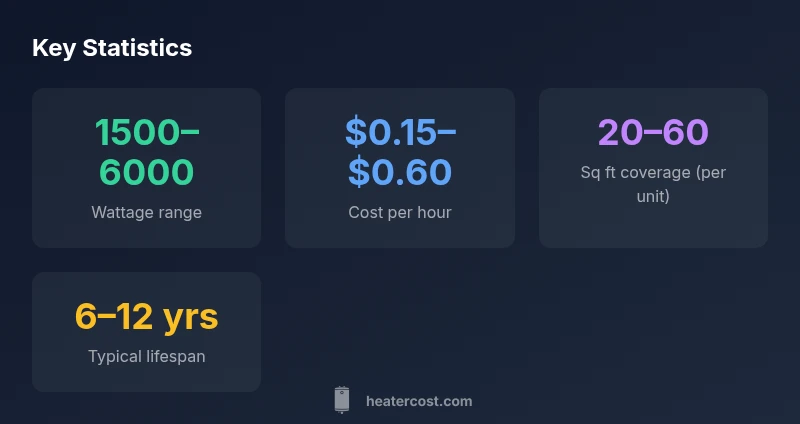
| Feature | Low Range | High Range | Notes |
|---|---|---|---|
| Wattage | 1500 | 6000 | Lower wattage for small areas; higher for large zones |
| Operating Cost per Hour | 0.15 | 0.60 | Depends on rate and wattage |
| Coverage per Unit | 20 sq ft | 60 sq ft | Varies by heat type and reflector |
| Required Clearances | 3 ft | 6 ft | Follow manufacturer guidance |
Got Questions?
Are electric outdoor heaters safe for covered patios?
Yes, when you choose outdoor-rated devices and follow manufacturer guidelines. Ensure proper weatherproofing, GFCI protection, and clearances from any covering. Check local codes and use a qualified electrician for electrical connections if needed.
Yes. Use outdoor-rated heaters with proper weatherproofing and GFCI outlets, and follow local codes.
What is the typical lifespan of an electric outdoor heater?
Most units last several years with proper maintenance, typically around 6–12 years, depending on use, weather exposure, and build quality. Regular cleaning and inspections can extend performance.
Most heaters last many years with good care, usually around 6 to 12 years.
Do I need a professional to install an electric outdoor heater?
Not always, but a licensed electrician is recommended for hard-wired or wall-mounted installations to ensure code compliance, proper grounding, and safe outdoor wiring.
If it requires hard-wiring or permanent mounting, hire a licensed electrician.
Can I run multiple heaters from a single circuit?
Yes, as long as the total load does not exceed the circuit’s capacity. Avoid tripping breakers by calculating wattage and consulting an electrician for larger setups.
You can, but make sure the total load stays within the circuit limits.
How do I compare efficiency between models?
Look at wattage, heat type, heat distribution, IP rating, and warranty. Infrared units are efficient for targeted warmth; convection models cover broader areas but may use more energy.
Compare wattage, heat type, and IP ratings to judge efficiency.
“Electric outdoor heaters offer a practical balance of comfort, safety, and efficiency for outdoor spaces; their targeted heat and clean operation make them a reliable option for year-round patios.”
The Essentials
- Size your heating needs to avoid over- or under-heating
- Choose units with weather-rated housings and safety features
- Factor local electricity rates into cost projections
- Plan placement to maximize warmth with minimal energy use