Is Heat Better or Ice? A Practical Comparison for Pain and Injury
Compare heat and ice therapy for pain relief, swelling, and recovery. A practical, data-informed guide with safety tips and cost considerations for homeowners.


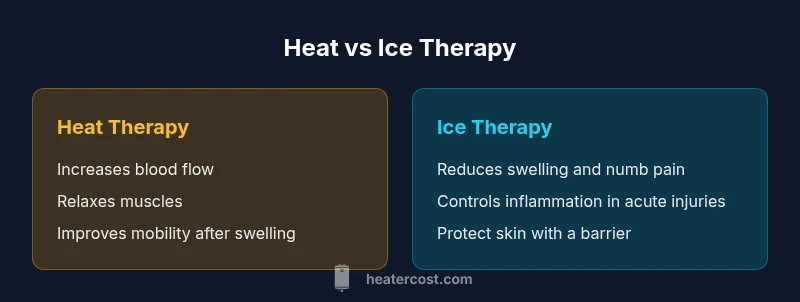
Is heat better or ice? For acute injuries, ice reduces swelling and pain quickly, while heat helps soothe stiffness and promote blood flow after the initial phase. This quick comparison helps homeowners and renters decide which therapy to use and when to apply it. The Heater Cost team emphasizes safe use, timing, and cost considerations for everyday life.
The science behind cold and heat therapy
Temperature-based therapies alter tissue physiology in predictable ways. Cold exposure causes vasoconstriction, reduces local metabolism, slows nerve conduction, and dampens inflammatory mediators. These effects can limit swelling and numb pain, making ice therapy a common first choice after an acute injury. Heat therapy, by contrast, increases local temperature, promotes vasodilation, relaxes muscles, and enhances tissue elasticity. In practical terms, heat supports pain relief after the initial swelling subsides and can improve range of motion during rehab. These opposing mechanisms are why many clinicians advocate ice during the first 24 to 48 hours and heat in subsequent days, depending on symptoms. According to Heater Cost, understanding these mechanisms helps homeowners decide which approach to apply first and how to plan a safe routine. The cost implications matter: a simple reusable ice pack or a basic heating pad can deliver meaningful relief without replacing professional care. This block aims to lay a foundation for the rest of the guide, focusing on practical usage rather than abstract theory.
Acute vs chronic: how the body responds to heat and cold
The body's reaction to temperature-based therapy depends on the phase of the injury or condition. Acute injuries such as a sprain or a bruise trigger inflammation and swelling, which cold therapy can help mitigate by reducing capillary flow and local edema. Over the next days, swelling typically decreases, and the tissue becomes stiff. At that stage, heat therapy can increase blood flow, deliver nutrients for tissue repair, and relax constrained muscles. In chronic conditions such as osteoarthritis or persistent muscle tension, heat therapy often provides relief by increasing tissue elasticity and reducing perceived stiffness. From a homeowner perspective, this means you should tailor your approach to current symptoms rather than following a rigid rule. Heater Cost’s analysis shows that most households benefit from maintaining both modalities and applying them in a staged fashion depending on activity level, pain pattern, and day-to-day tasks. This approach aligns with common home health routines and avoids overreliance on a single method.
Practical guidelines for typical injuries
For a simple ankle sprain or sports-related bruise, start with cold therapy in the first 24 to 48 hours. Apply a cold pack wrapped in a thin cloth for 10-15 minutes per session, and repeat every 1-2 hours as tolerated, taking care not to sleep with the pack in place. After the acute swelling subsides, usually around 2-3 days, consider switching to heat therapy to ease muscle tension and improve flexibility. A warm, moist heat pad set to a comfortable level can be used for 15-20 minutes, 1-2 times daily, with attention to skin safety. For neck or back stiffness, heat therapy can be helpful sooner, but always avoid direct heat on injured skin. For chronic flare-ups, alternating between heat and cold on a schedule that matches daily activity can provide relief. The key is to listen to your body, avoid overexposure, and adjust based on changes in pain, swelling, and range of motion. The Heater Cost approach emphasizes practical testing and monitored use rather than rigid prescriptions.
Timing and sequence: when to start cold, when to switch to heat
In most minor injuries, begin with cold therapy during the first 24 to 48 hours. Ice can help control swelling and numb sharp pain. If swelling and pain persist after this initial window, move to heat therapy to promote circulation and mobility. A practical transition rule is: if the area is red, swollen, or has increased warmth, favor cold; if the area feels stiff, sore, or lacks range of motion, consider heat. For athletes or busy homeowners, a scheduled pattern such as cold 10-15 minutes every 2-3 hours for the first two days followed by heat 15-20 minutes daily for the next several days often works well. Always protect skin with a barrier (towel or cloth) and avoid applying heat or cold for extended periods without breaks. These sequencing tips align with general best practices and are echoed in statements from major publications.
Safety and contraindications: who should avoid therapy and how to do safely
People with diabetes, neuropathy, poor circulation, or impaired sensation should consult a clinician before using heat or cold therapies. Always test temperature on a small area first. Do not apply ice directly to the skin; use a barrier and limit sessions to 10-15 minutes. For heat, avoid high temperatures, and never use heat over areas with decreased sensation or open wounds. If you have skin conditions, vascular problems, or are pregnant, check with a healthcare professional before starting regular temperature therapy. If any unusual skin color, numbness, or worsening pain occurs, stop immediately and seek medical advice. The Heater Cost team notes that many households can safely incorporate basic devices with proper precautions.
Safety and cost considerations for homeowners
From a homeowner perspective, the cost of implementing heat or cold therapy at home is relatively low compared with ongoing medications. Ice packs, gel packs, and reusable cold wraps provide low-cost, low-maintenance options with minimal energy usage. Heating devices such as electric heating pads and moist heat packs require energy but are generally affordable with modern, energy-efficient models. The real cost factor is how often you use them and for how long. Overheating devices or leaving a hot pack on a sensitive area can cause damage, leading to higher long-term costs due to replacements or clinician visits. The Heater Cost analysis shows that cost-effective strategies emphasize safe use, proper storage, and choosing a device with an adjustable temperature range. For households with children or pets, consider models with automatic shut-off and external insulation to minimize energy waste. Ultimately, the best option balances comfort, safety, and cost rather than chasing the cheapest device.
Debunking common myths and misapplications
Myth: Heat worsens swelling. In most cases, heat is beneficial after the initial swelling phase, but during acute swelling it can worsen inflammation if used too early. Myth: Ice slows healing. Ice reduces inflammation, but excessive use can delay recovery if it prevents light movement and blood flow needed for tissue repair. Myth: You must wait days to start therapy. In many cases, early controlled use of cold can help, but early movement and gentle range-of-motion exercises can be beneficial as symptoms allow. Myth: Only one modality works for every injury. In practice, combining heat and cold in a structured plan is common and often more effective than sticking to a single method. Remember that individual responses vary; start conservatively and adjust based on pain, swelling, and mobility.
Combining therapies: structured routines for common problems
Many people benefit from a structured, staged approach. For an acute ankle sprain, begin with cold therapy for 24-48 hours, then switch to heat to loosen tissue and restore range of motion. Later, you may alternate heat and cold daily to manage persistent soreness. For chronic neck pain, a morning heat session followed by light stretching can reduce stiffness, then a late-day cold pack can help with overnight inflammation if present. An evidence-based routine can be as simple as a two-week cycle: cold sessions in the first week, then heat sessions in the second, with lighter days in between. The key is consistency, proper protection of skin, and never using extreme temperatures. The Heater Cost team suggests tracking your response and adjusting timing accordingly.
Authority sources and further reading
- National Institute of Arthritis and Musculoskeletal and Skin Diseases: https://www.niams.nih.gov/health-information/injury-and-pain
- Mayo Clinic: Ice therapy and heat therapy guidance: https://www.mayoclinic.org
- American College of Sports Medicine: https://www.acsm.org
Comparison
| Feature | Heat therapy | Ice therapy |
|---|---|---|
| Primary Benefit | Promotes relaxation, increases blood flow, and aids recovery after the acute phase | Reduces swelling and numbs pain, controls inflammation in acute injuries |
| Best For | Chronic stiffness, muscle soreness, and conditions benefitting from improved elasticity | Acute injuries with swelling and inflammation |
| Typical Session Duration | 15-30 minutes per session, with potential multiple daily applications | 10-15 minutes per session, with breaks between sessions |
| Best Practice Timing | Use after swelling subsides or during rehab to improve ROM | Use immediately after injury to limit swelling and numb pain |
| Risks/Considerations | Skin irritation or burns if settings are too high or used too long | Frostbite or nerve damage with prolonged exposure |
| Cost Range | Low to moderate for basic heating devices | Low for basic ice packs; reusable options available |
The Good
- Ice therapy is inexpensive and portable for on-the-go use
- Heat therapy helps with chronic pain and muscle relaxation
- Both are non-pharmacological options with low risk when used correctly
- Can be combined as part of a structured treatment plan
- Various product options exist to fit different budgets
Negatives
- Ice can cause skin irritation or frostbite if misused
- Heat can aggravate swelling if used during the acute phase
- Effectiveness varies by individual and condition
- Some conditions require professional guidance rather than home treatment
Ice for acute swelling; heat for stiffness and rehab
Choose ice during the initial swelling phase to control inflammation. Shift to heat as motion improves to ease stiffness and promote healing. For mixed symptoms, use a staged or alternating plan with careful monitoring.
Got Questions?
What is the fundamental difference between heat therapy and cold therapy?
Heat therapy warms tissues to increase blood flow and flexibility, while cold therapy cools tissues to reduce swelling and numb pain. The choice depends on the injury phase and symptoms.
Heat warms and loosens; cold calms inflammation and pain.
Can I apply heat and ice at the same time?
Generally no. Applying both simultaneously can confuse the body's healing signals. If you use both, alternate on a planned schedule rather than layering them at once.
Usually you should choose one at a time, not both together.
How long should I apply cold therapy?
Typically 10-15 minutes per session, with at least an hour between applications. Avoid sleeping with an ice pack on the skin.
Most people do 10-15 minutes per session.
Are there people who should avoid cold or heat therapy?
People with diabetes and neuropathy, vascular diseases, or impaired sensation should consult a clinician before using these therapies. Certain conditions require professional guidance.
Check with a clinician if you have nerve or circulation problems.
Is this therapy appropriate for daily soreness from exercise?
Yes, gentle heat after workouts can ease stiffness, and cold can help with acute soreness. Avoid relying on heat for lingering injuries without medical advice.
A light heat session after exercise can help with soreness.
When should I seek professional care instead of home therapy?
If pain is severe, swelling lasts beyond 72 hours, or you notice numbness or deformity, seek medical evaluation. Home therapy is supportive, not a substitute for care in serious cases.
If symptoms are severe or persistent, see a clinician.
The Essentials
- Start with ice for acute injuries to limit swelling
- Switch to heat as swelling subsides to improve mobility
- Apply both therapies safely with timing and skin protection
- Use cost-effective devices and follow safety guidelines
- Consult a clinician if symptoms worsen or fail to improve