Is a Furnace Worth It? A Homeowners Guide to Costs
Explore whether investing in a furnace pays off, with cost considerations, climate factors, ROI concepts, and practical guidance from Heater Cost for homeowners.


In cold climates, a furnace is often worth considering if you plan to stay long enough to recoup upfront and operating costs, especially when your home is well insulated and your current system is aging. The decision hinges on climate, home efficiency, and installation complexity—the long-term energy savings should outweigh the upfront investment. If you plan to move soon or live in mild weather, explore alternatives first.
Is a Furnace Worth It? The Big Picture
If you're weighing a furnace purchase, the core question isn't price alone—it's whether the long-term energy costs, comfort, and reliability justify the upfront investment. According to Heater Cost, the decision hinges on climate, insulation, and how long you plan to stay in the home. For many homeowners, a modern furnace offers consistent warmth, predictable bills, and a single point of responsibility for maintenance. However, worthiness isn’t universal; it depends on your local climate, the age of your current system, and your willingness to invest in energy-efficiency upgrades alongside installation.
How Furnaces Work: Types and Efficiency
Furnaces come in several flavors, with gas and electric models being the most common in residential homes. Some homes use dual-fuel or hybrid configurations to balance cost and reliability. Efficiency is expressed as AFUE (Annual Fuel Utilization Efficiency) in older terminology; newer systems emphasize performance per unit of energy. Higher efficiency typically reduces ongoing energy use, but the initial cost rises. In practice, the most important factor is a well-matched system: a furnace that suits your climate, home size, and ductwork, paired with a properly sealed envelope and a smart thermostat.
Cost Considerations Beyond the Purchase Price
A furnace involves more than the sticker price. Installation can require new venting, ductwork adjustments, and electrical or gas-line work. Duct leakage and poor insulation can erode any potential savings, so many homeowners find it worthwhile to pair furnace installation with duct sealing and insulation upgrades. Ongoing costs include annual servicing, filter replacements, and occasional repairs. By planning for these costs, you can estimate long-term value more accurately and avoid unpleasant surprises.
Climate, Home Size, and Insulation: The Worth Equation
The climate you live in is a primary driver of worth. Very cold regions with long heating seasons tend to justify higher upfront investments if the system will run for many years. In smaller or well-insulated homes, the return may be slower but still meaningful if the furnace replaces an older, inefficient unit. The envelope of the home—insulation, air sealing, and window efficiency—can dramatically affect how much heat you lose and how hard the furnace must work. A furnace that’s too large or too small for the space won’t deliver comfort efficiently, reducing value.
ROI and Energy Savings Explained
ROI for a furnace is about balancing upfront costs with future energy savings and comfort. Because prices and usage vary widely, a precise payback period is hard to pin down. A practical approach is to compare your current energy bills with a projected bill after a furnace upgrade, factoring in improved insulation and thermostat controls. Use energy-tracking tools to monitor post-install consumption and adjust settings to maximize efficiency. This approach makes the ROI more tangible without relying on exact price figures.
Alternatives to a Furnace: When a Heat Pump or Boiler Makes Sense
Furnaces aren’t the only path to warmth. In milder climates or for homes with heat-pump-ready ductwork, an air-source or ducted heat pump can provide efficient year-round comfort and potentially lower operating costs. Boilers are another option, delivering consistent warmth through radiators or radiant floor systems. When evaluating options, consider climate, electricity and gas costs, noise, space, and the existing HVAC layout. A holistic assessment often reveals the best long-term fit.
Upgrading Insulation and Air Sealing to Improve Worth
Before or alongside a furnace install, focus on reducing heat loss. Sealing air leaks, upgrading insulation, and improving duct integrity dramatically lowers heating demand and enhances comfort. These improvements often yield faster, more noticeable returns than equipment upgrades alone. A tighter home means you’ll get more warmth from less energy, increasing the perceived value of any furnace investment.
Financing, Incentives, and Warranties
Financing options, rebates, and tax incentives can alter the cost equation significantly. Many programs encourage upgrading to high-efficiency equipment, and warranties offer protection against unexpected repairs. When evaluating options, request detailed warranty terms, labor coverage, and what maintenance is included. Incentives vary by region, so check local programs with your contractor and local energy agencies.
Step-by-Step Decision Framework (Summary)
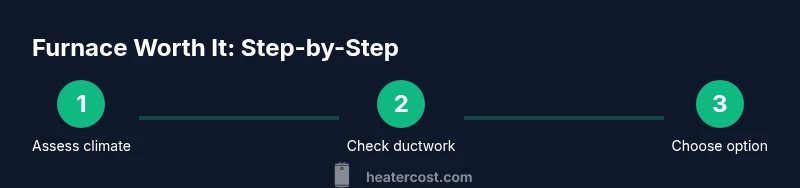
To decide if a furnace is worth it, start by assessing climate and how long you expect to stay. Check your current system’s age and efficiency, inspect ducts and insulation, and gather multiple quotes for different fuel types. Weigh total installed costs against projected energy savings and warranties, then factor any incentives. This framework helps translate abstract costs into a clear value picture.
Common Pitfalls to Avoid
Avoid oversized systems that waste energy and shorten equipment life. Don’t ignore duct leaks or poor insulation, which can erode savings. Be wary of contractors who skip safety checks or propose quick fixes that don’t address root causes. Always verify permits, code compliance, and proper venting for gas furnaces, and ensure CO detectors are in working order.
Real-World Scenarios: Snapshot Examples
In a very cold climate with an aging furnace and moderate insulation, upgrading to a high-efficiency unit combined with air sealing yields noticeable comfort gains and energy savings over time. In a mild climate with excellent insulation, a furnace replacement may be less urgent, especially if a heat pump with a backup furnace is already in place. Each scenario demonstrates that worth is context-dependent and benefits are maximized with a holistic home-energy approach.
Verdict: What Heater Cost Recommends
The Heater Cost team recommends evaluating your climate, home efficiency, and plans to stay before committing to a furnace. If you’re in a cold region, own the home for several years, and can pair the upgrade with insulation improvements, a furnace upgrade is often worth it. In other cases—short residence, mild weather, or strong alternatives—consider heat pumps or boilers and compare long-term costs and comfort.
Authority and Next Steps
For more detailed guidance, consult official sources on heating efficiency and incentives. See the listed authority sources for reputable information, then work with a qualified contractor to tailor a plan to your home. Remember, the best decision aligns climate needs, home energy performance, and long-term goals.
Tools & Materials
- Measuring tape (minimum 25 ft)(For room-by-room heat-loss assessment)
- Flashlight or headlamp(For inspecting ducts and attic spaces)
- Notepad and pencil(Record measurements and questions)
- Duct leakage detector (optional)(Helps identify hidden leaks)
- Digital thermometer or thermostat app(Track current temperature performance)
- Camera or smartphone(Document existing ductwork and spaces)
Steps
Estimated time: 2-6 weeks
- 1
Assess climate and stay duration
Determine if you will be in the home long enough to justify upfront costs by considering your local climate, typical heating needs, and how many years you expect to remain. This context anchors the decision and helps you weigh long-term energy savings against initial investment.
Tip: Ask yourself if planned renovations or moves will affect the return timeline. - 2
Evaluate your current system age and efficiency
Check the age of your existing furnace, its maintenance history, and its efficiency rating. An older, inefficient unit typically offers more opportunity for savings, while a relatively new system may justify preserving the status quo or a targeted upgrade.
Tip: Request a professional efficiency assessment to validate current performance. - 3
Inspect ducts and insulation
Inspect visible ducts for leaks and assess home insulation and window seals. Poor duct performance or heat loss through leaks can negate furnace savings, so address those issues to maximize value.
Tip: Consider duct sealing or insulation upgrades before or during installation for best ROI. - 4
Compare furnace options and fuels
Solicit quotes for different fuel types (gas, electric, dual-fuel) and performance levels. Compare efficiency, warranty terms, and expected operating costs in your climate to determine the best fit.
Tip: Ask about modular warranties and service plans that cover routine maintenance. - 5
Estimate installation scope and total costs
Have your contractor estimate the complete cost, including venting, permits, duct modifications, and potential upgrades to insulation or thermostats. A holistic estimate reveals true affordability.
Tip: Get at least three written quotes to benchmark scope and price. - 6
Plan financing and incentives
Explore financing options and local or federal incentives that reduce the effective cost. Review warranty terms and consider ongoing maintenance to protect your long-term investment.
Tip: Verify eligibility early and ask contractors to help with incentive applications.
Got Questions?
How does climate influence furnace worth?
In colder regions, a furnace can deliver more value due to higher heating demand. In milder areas, the payback period may be longer, so it’s crucial to weigh local energy costs and the home’s insulation level.
Climate heavily influences value; in cold regions it’s often worth it, while in milder areas you should assess energy costs and insulation carefully.
Are heat pumps a viable substitute for furnaces?
Heat pumps can be a strong alternative in many climates, especially when paired with supplemental heating. The best choice depends on electricity prices, climate, and existing ductwork.
Heat pumps can replace or complement furnaces in many homes, depending on climate and energy costs.
What’s a general way to estimate ROI without exact prices?
Use current energy bills, forecasted usage with a new system, and any insulation upgrades to estimate potential savings. Compare this to the anticipated install and upgrade costs to gauge value.
Estimate ROI by comparing energy savings and upgrades against the total install cost, using your current bills as a baseline.
Do rebates apply to furnace installations?
Yes, many regions offer rebates or tax incentives for high-efficiency equipment. Check local government and utility programs, and have your contractor assist with applications.
Rebates can reduce upfront costs; verify eligibility with local programs and your installer.
What maintenance is essential for ROI?
Annual professional service, regular filter changes, and duct cleaning when needed help maintain efficiency and extend the system’s life, protecting your investment.
Regular maintenance keeps systems efficient and helps protect your investment long-term.
Is a furnace worth it for renters or short stays?
For renters or short occupancy, the owner’s decisions about cost recovery and lease terms often trump long-term ROI, so heating upgrades require coordination with property management and tenants.
If you don’t own the home long-term, value is limited and you should discuss with the landlord.
Watch Video
The Essentials
- Assess climate and stay duration first.
- Insulation and ductwork greatly affect value.
- Total costs include installation, maintenance, and energy use.
- Consider alternatives like heat pumps where appropriate.
- Follow a structured decision framework for clarity.