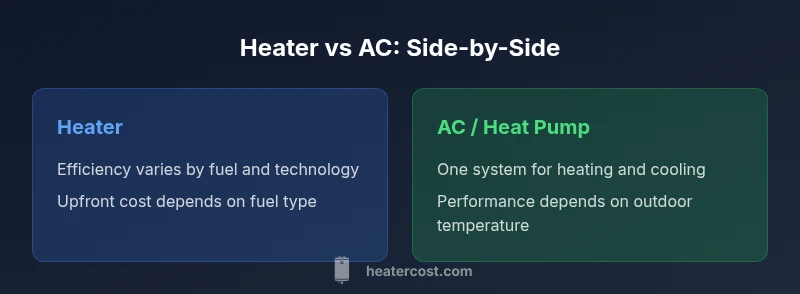
Heater vs AC: Side-by-Side Comparison for Home Heating and Cooling
Compare heater vs ac options to understand energy costs, installation, and long-term value. This guide helps homeowners, renters, and property managers choose the right heating and cooling setup.


When deciding between a heater and an AC system, the best approach is to weigh energy costs, climate needs, and reliability rather than upfront price. A heat pump can serve as both heater and cooler, offering efficiency in moderate climates, while traditional furnaces or boilers may excel in extreme cold. This comparison covers core differences and decision triggers.
Defining the heater vs ac choice
When homeowners weigh whether to install a heater, an air conditioner, or a system that does both, the starting point is simple: climate, energy pricing, and long-term reliability shape the decision more than the sticker price. The central distinction is between dedicated heating technologies (furnaces or boilers, electric resistance) and cooling technologies (central air conditioning, window units, or ductless mini splits). In many homes, a cooling system runs year round, while heating is seasonal; in others, a single heat pump installation can deliver both functions with fewer separate appliances. The heater vs ac comparison is not just about temperature; it is also about how the system uses energy and how it integrates with your home's insulation, ductwork, and thermostat controls.
According to Heater Cost, the most important question is not which gear is cheaper initially but which setup delivers reliable comfort at the lowest long term cost. The Heater Cost team found that climate, energy prices, and expected usage patterns determine total cost of ownership more than any single feature. This article dives into the core factors—efficiency, installation realities, maintenance needs, and future proofing—so you can decide based on data, not anecdotes.
Energy cost drivers in heating and cooling
Energy costs for heater vs ac come from three main sources: the efficiency of the equipment, the energy price you pay for electricity or gas, and how intensively you use the system. A high efficiency heat pump might deliver lower energy use in moderate climates, while a gas furnace can be more economical in colder regions if electricity prices are high. Central AC efficiency is governed by SEER ratings; the higher the SEER, the more cooling per kilowatt hour. However, note that actual performance depends on home tightness, insulation, and duct leakage. Seasonal demand and backup heating needs also affect annual bills.
The cost picture is further complicated by energy price volatility and local incentives. Heater Cost analysis shows that even a system with a higher upfront cost can pay for itself over time if it dramatically lowers energy consumption and reduces the need for separate heating and cooling appliances. This section helps you map out scenarios for your climate and household usage, so you can estimate long term value rather than short term expense.
Comfort and performance considerations
Comfort is not just about reaching a set point; it is about how evenly the space heats or cools, humidity control, noise, and responsiveness. Heaters that cycle on and off frequently cause drafts and temperature swings, whereas well sized systems with zoning can maintain a stable indoor climate. In AC focused homes, dehumidification during humid seasons improves perceived comfort even when outdoor temperatures are moderate. Heat pumps blend comfort with efficiency, but cold stage performance and backup heating can impact reliability in extreme winters. Thermostats with adaptive schedules and smart zoning enable finer control, reduce energy waste, and improve comfort. When comparing heater vs ac, also consider air quality features such as filtration and humidity management, since these affect daily living beyond the thermometer reading.
Efficiency and technology: a quick taxonomy
Efficiency metrics for heating and cooling differ by technology. Gas furnaces use AFUE to indicate heat delivered from fuel; electric resistance is simple but costly to run at scale. Heat pumps use ratings like HSPF for heating and SEER for cooling, and their performance depends on outdoor temperatures. Central AC systems rely on SEER ratings, while ductless systems combine SEER and HSPF with zoning flexibility. In cooling dominant homes, a high efficiency air conditioner makes sense, but in mixed climates, a heat pump designed for both roles can offer better overall energy performance. When you move toward an all electric home, consider battery backup and grid resilience in addition to efficiency ratings. This section helps you understand what those numbers mean in real terms for your home.
Price, installation, and retrofit realities
Upfront costs often dominate initial decisions, but installation realities can swing the overall value. A furnace or boiler retrofit may require duct work or venting changes, while heat pumps sometimes need upgraded electrical capacity or refrigerant lines. Ductless mini splits offer a flexible retrofit path for homes without ducts, but require careful indoor unit placement for even comfort. In older homes with limited insulation, the energy savings from any system will be significantly influenced by envelope improvements. Maintenance plans, filter costs, and potential refrigerant replacements add to total lifetime costs. While some systems come with extended warranties or service plans, the cheapest option upfront rarely holds value over the long term if it underperforms or requires frequent repairs.
Climate fit: where heat pumps shine and where they struggle
In temperate climates, heat pumps delivering both heating and cooling are often the strongest choice because they can replace two appliances with one compact system. In very cold regions, performance can dip on heat pumps during extreme cold snaps, necessitating a supplemental heat source. For homes in hot and humid zones, a well sealed and insulated envelope plus a high efficiency cooling system can dramatically reduce cooling costs. The climate factor is simple: match the system to annual usage patterns and resilience requirements. This section also discusses how climate affects peak loads, generator or backup power considerations, and service availability for different equipment types.
Hybrid strategies and zoning for flexibility
Hybrid approaches combine heats such as a heat pump with a gas furnace for backup heat, or pairing a central AC with a ductless mini split for zones with higher demand. Zoning helps maintain comfort while reducing energy waste by directing cooling and heating only where needed. Hybrid strategies can improve resilience during outages and shifts in energy prices. Choose a system that scales with your home size, occupancy, and future plans for renovations. Remember that zoning costs and controls complexity should be weighed against anticipated energy savings.
Maintenance and reliability: keeping systems efficient
Routine maintenance prevents efficiency loss, extends equipment life, and reduces the risk of unexpected failures. Filters, air sealing, duct cleaning, and coil maintenance are essential for both heating and cooling systems. For heat pumps, refrigerant checks and indoor coil cleaning are common maintenance tasks. Gas furnaces require vent inspections and combustion checks. Reliability depends on installation quality, correct sizing, and seasonal readiness. A well maintained system not only runs quietly but also preserves indoor air quality, which matters for allergies and respiratory health.
Incentives, financing, and long term planning
Tax credits and utility incentives can offset the upfront cost of efficient equipment, especially for heat pumps and high efficiency air conditioners. Financing options, lease programs, and utility rebates are common tools to spread out the investment. When planning long term, factor in maintenance costs, possible equipment replacements, and potential energy price shifts. The Heater Cost team notes that aligning incentives with a robust energy plan often yields the greatest savings over the system life. Always verify eligibility and cap amounts with local programs.
Practical decision framework: steps to decide
Start by mapping climate, typical seasonal needs, and existing ductwork or electrical capacity. List your energy priorities: comfort, energy cost, noise, and reliability. Compare available system types using a simple checklist: heating only vs cooling only vs combined heat pump, and consider envelope improvements like insulation. Evaluate installed costs, operating costs, maintenance requirements, and expected lifespan with longer term value. If you live in a mixed climate, a hybrid approach may provide the best overall result, balancing upfront costs with ongoing energy savings. Finally, consult local installers, request a detailed energy model, and run annual ownership cost projections. The Heater Cost team recommends approaching the decision with a total cost of ownership mindset rather than chasing the lowest upfront price, and prioritizing energy resilience and comfort.
Comparison
| Feature | Heater system | AC/Heat Pump |
|---|---|---|
| Energy Efficiency | Varies by model | High with heat pumps in milder climates |
| Upfront Cost | Moderate-to-high (furnace/boiler) | Moderate-to-high (heat pump) |
| Installation | Ductwork/venting required | Ductless options; refrigerant lines |
| Maintenance | Annual furnace/boiler service | Heat pump service + AC maintenance |
| Best For | Extreme cold with backup heat | Moderate climates with cooling as a priority |
The Good
- Single system for heating and cooling in appropriate setups
- Potential energy savings with modern heat pumps
- Zoning can improve comfort and reduce waste
- Opportunities for incentives and rebates
- Long-term resilience with modern equipment
Negatives
- Higher upfront costs for advanced systems
- Performance drops in extreme cold for some heat pumps
- Ductwork retrofit may be required in older homes
- Outages can affect system performance in extreme weather
Heat pumps offer the best balance for most moderate climates; in very cold regions, a hybrid setup with backup heat is often ideal.
Choose a heat pump when you need year-round heating and cooling with strong efficiency. For extreme cold, plan for backup heat or a traditional furnace as a supplement. Prioritize total ownership cost over upfront price.
Got Questions?
What is the main difference between a heater and an AC system?
A heater provides warmth, while an AC system mainly cools. A heat pump can do both, depending on climate. The choice depends on your home's climate, energy costs, and today’s technology.
A heater makes warmth. An AC cools, and a heat pump can do both in many climates.
Can a heat pump replace both heating and cooling?
Yes, in many climates a heat pump handles both heating and cooling efficiently. In very cold regions, a backup heat source may still be needed.
Yes, heat pumps can provide both heating and cooling in many climates, with backup heat when needed.
Is it cheaper to run a heater or an AC unit?
Running costs depend on energy prices, efficiency, and usage. High efficiency options can reduce ongoing costs, while older equipment may be more expensive to operate.
Running costs vary; newer high-efficiency units often save money over time, especially with favorable energy prices.
When should I consider switching to a heat pump?
Consider switching when you want a single system for heating and cooling, live in a temperate climate, and can access incentives for efficient equipment.
Switch to a heat pump if you want one system for both heating and cooling and you have access to incentives.
What incentives exist for energy-efficient heating?
Many programs offer tax credits, rebates, or utility incentives for efficient equipment like heat pumps and high-SEER air conditioners. Check local programs for eligibility.
There are often tax credits and rebates for efficient heating and cooling equipment.
How does climate affect my heating and cooling decision?
Climate dictates whether backup heat is needed, the viability of heat pumps, and the relative cost of electricity vs fuel. Your decision should align with annual heating and cooling demands.
Climate determines equipment suitability and long-term costs; match system to your yearly needs.
The Essentials
- Assess climate before choosing equipment
- Consider total cost of ownership, not just price
- Explore hybrid options for climates with harsh winters
- Use zoning and smart thermostats to maximize efficiency
- Check for local incentives and financing options